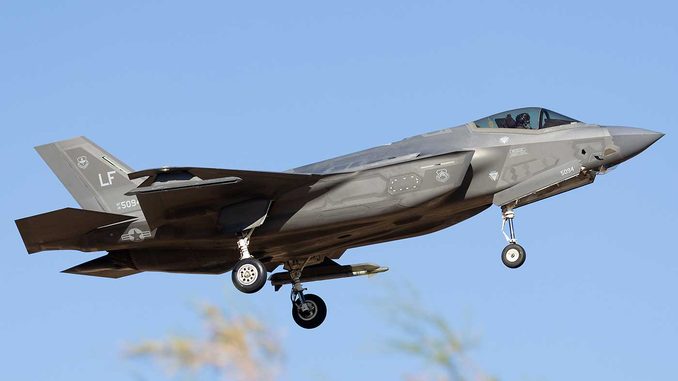
Switzerland must pay more for fewer F-35As. Parliament has approved an extension, while an investigation reveals flaws in the contract with Washington.
Summary
Switzerland had planned to purchase 36 American F-35As to replace its aging F/A-18s. Following a narrow green light from voters in 2020, Berne signed a 6.035 billion Swiss franc contract in September 2022, presented as coming with binding prices. However, in 2025, Washington demanded additional amounts estimated between 650 million and 1.3 billion francs. A parliamentary investigation published in September 2026 established that no fixed flat price had been agreed upon. To save the program, Parliament approved 394 million francs in additional credit, bringing the budget to 6.429 billion. This sum is expected to fund about 30 aircraft, rather than the 36 announced. The final number remains to be negotiated. The affair raises two distinct questions: the control of military spending and the way authorities presented a contractual guarantee to citizens that did not exist.
The choice of an American fighter presented as the least expensive
On September 27, 2020, Swiss voters authorized the purchase of new combat aircraft with 50.1% of the vote. The ceiling was 6 billion francs, expressed at January 2018 prices and thus adjustable for inflation. The vote covered neither a specific manufacturer nor a precise number of aircraft.
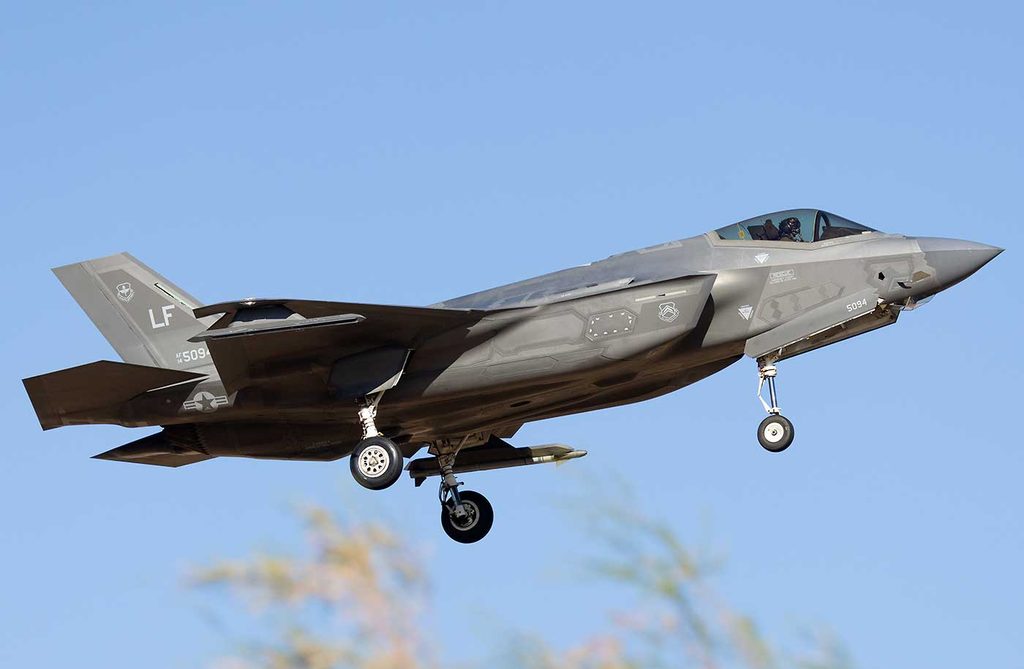
In June 2021, the Federal Council chose 36 Lockheed Martin F-35A Lightning II aircraft, notably over the Dassault Rafale, Eurofighter Typhoon, and Boeing F/A-18 Super Hornet. It accepted an acquisition offer evaluated at 5.068 billion francs in February 2021. The overall cost announced over thirty years reached 15.5 billion, including 9.4 billion in operations. This was not a guaranteed amount.
The program is intended to replace the F/A-18 Hornet aircraft whose end of life is expected around 2030. Its stealth capabilities, sensors, and data fusion justified its technical advantage, not the fragility of the contract.
The fixed price that did not exist in the American contract
In September 2022, following Parliament’s vote, armasuisse signed with Washington for 36 aircraft. The 6.035 billion credit included aircraft, weapons, initial training, logistics, equipment, risk provisions, inflation, and taxes. The DDPS stated at the time that the prices were binding.
The Foreign Military Sales mechanism
Switzerland does not buy its fighters directly from Lockheed Martin. It goes through the U.S. Foreign Military Sales (FMS) system: the U.S. government purchases from the manufacturer and then resells to the customer state. Aircraft and engines are ordered in lots. Their final prices depend on subsequent contracts concluded with manufacturers.
“Note 55” negotiated with the Americans did not waive this rule. On September 8, 2026, the Control Committee of the National Council concluded that no fixed flat price had been agreed upon. Criticism targets a guarantee presented as acquired without sufficient contractual basis.
Successive budgets and the real cost of the reduction
In August 2025, after unsuccessful discussions, the Federal Council acknowledged that it could not enforce the announced price. Washington cited inflation, raw materials, new lots, and potentially customs duties. Potential cost overruns were estimated at 650 million to 1.3 billion francs. This was a provisional range, not a payment already made.
In December 2025, the government decided to purchase the maximum number of F-35As allowed under the voted ceiling. On March 6, 2026, it estimated the sum required to maintain 36 aircraft at approximately 1.1 billion additional francs. This option would bring the initial credit to 7.135 billion, exceeding the authorized ceiling. The calculation notably assumed a dollar at 0.80 francs and a risk reserve.
Berne therefore requested only 394 million francs in additional credit. The total credit rose from 6.035 to 6.429 billion francs. The cost overrun is thus not erased: the number of aircraft decreases. Authorities estimate this budget will allow the acquisition of about 30 aircraft, subject to the price of the remaining lots to be negotiated.
The second slip in infrastructure costs
The bases at Payerne, Meiringen, and Emmen must receive simulators, IT installations, and adapted equipment. Their initial construction credit was 120 million francs. The Swiss Federal Audit Office noted an estimate of nearly 200 million in 2025, plus over 50 million in separate related projects. The 2026 real estate program added 89 million francs for this work. Added to this are 30 million for acoustic insulation. These amounts remain distinct from the aircraft purchase.
Political leaders facing the investigation’s findings
As early as 2022, the Swiss Federal Audit Office had disputed the existence of an absolute legal guarantee. The DDPS had rejected this reading. According to the parliamentary committee, few officials had read the entire contract; armasuisse’s internal legal service had been sidelined in favor of an external firm.
Another failure: armasuisse had warnings as early as August 2024. The head of the DDPS at the time, Viola Amherd, had been informed, but the Federal Council as a whole only learned of it in March 2025. The committee criticized this delay, the management of negotiations, and certain archiving deficiencies. It demonstrated no fraud; it noted a lack of management and excessively categorical communication.
Parliament grants more to obtain fewer aircraft
The Council of States approved the extension in June 2026. On September 15, the National Council validated it by 128 votes to 62, with five abstentions; the 2026 army message was definitively adopted. A proposal to add another 650 million to return to 36 aircraft was rejected. The majority wants to renew the fleet without relaunching a selection process; the minority prioritizes other military capabilities.
The compromise has military consequences: with 30 aircraft instead of 36, the number of simultaneous missions, training reserves, and endurance during crises are reduced. The DDPS even estimates that a sustainable air defense in the event of a major threat would require between 55 and 70 modern fighters. Technical superiority does not replace missing aircraft.
The first aircraft are scheduled for training in the United States starting in 2027, prior to arrivals in Switzerland beginning in 2028. The final number must be communicated to Washington by the second quarter of 2027 to secure industrial production slots. The affair raises questions about all fighter jet procurement: equipment can pass its technical evaluation and fail its contractual examination. It is this contradiction, more than the amount of the extension alone, that weakens confidence in the Swiss program.