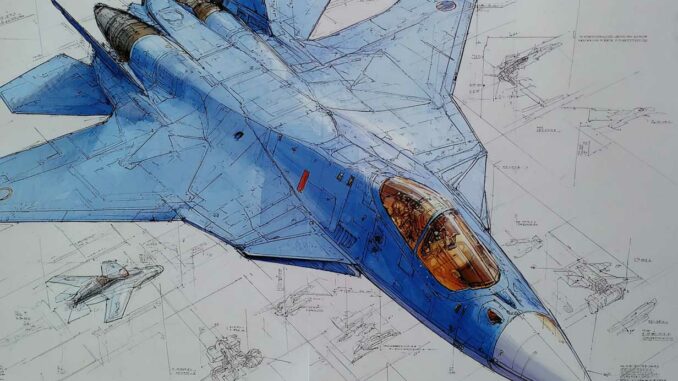
Berlin has set mid-April as the deadline to save the SCAF. Between Airbus and Dassault, the industrial deadlock reveals a far deeper strategic divide.
In summary
The Future Combat Air System [FCAS], or SCAF [Future Combat Air System], is entering a critical phase. Germany has set a deadline of mid-April 2026 to break the deadlock between Airbus and Dassault over the program’s central pillar: the New Generation Fighter [NGF], the next-generation manned fighter jet. Éric Trappier, CEO of Dassault Aviation, has chosen blunt language: if Airbus refuses to work within the framework desired by Dassault, the project is dead. This word is not a rhetorical exaggeration. It reflects a long-standing disagreement over project leadership, industrial sharing, intellectual property, and, more fundamentally, the very vision of military sovereignty in Europe. The SCAF remains officially alive at this stage. But its political and industrial coherence is now weakened. Behind the dispute between manufacturers, it is the Franco-German relationship on defense matters that is cracking, with the risk of a split into competing programs.
The project that Europe wanted to present as its major aviation gamble
The FCAS is not just an aircraft. It is a system of systems. Its architecture combines a new-generation manned fighter, accompanying drones—often called Remote Carriers—and a combat cloud, that is, a digital layer designed to connect sensors, platforms, effectors, and command centers in real time.
On paper, the ambition is considerable. The program is intended to pave the way for replacing the Rafale on the French side and the Eurofighter on the German and Spanish sides by 2040. Its total cost is regularly estimated at around 100 billion euros. This figure alone encapsulates the industrial, military, and political stakes. This is not simply a matter of purchasing aircraft. It is a technological foundation for several decades, with implications for engine manufacturers, electronics, stealth technology, data links, weaponry, onboard artificial intelligence, and mission architectures.
The project was launched politically in 2017 by Paris and Berlin, before Spain joined. From the outset, it was presented as a symbol of European strategic autonomy. But this slogan has always masked a harsher reality: France, Germany, and Spain do not share the same strategic culture, the same operational needs, or the same industrial interests.
The impasse centers first on the aircraft, and thus on the heart of the program
The sticking point is not a minor one. It concerns the most sensitive pillar: the NGF. In short, who is leading the design of the manned fighter jet? And with what actual level of authority?
Dassault Aviation is demanding a clear leadership role in this segment.
Its argument is simple. The company has designed complete fighter aircraft, from the Mirage to the Rafale, with a level of technical continuity rare in Europe. For Éric Trappier, there can be no credible fighter program if the prime contractor cannot decide on the architecture, interfaces, suppliers, and technical choices. He reiterates that such a program cannot be steered through constant compromise among industrial partners who are, on paper, equal.
Airbus, which represents Germany and Spain on several components of the SCAF, refuses to be relegated to a secondary role at the heart of the project. This is where political logic clashes with industrial logic. Berlin wants industrial returns commensurate with its financial commitment. Airbus wants to preserve its expertise, influence, and ability to shape the future of European combat aviation. From Germany’s perspective, letting Dassault hold the reins alone on the NGF would amount to funding a project dominated by France.
The problem is therefore crystal clear. Dassault thinks like an aerospace prime contractor. Airbus thinks in terms of balance among partners. The two logics are incompatible unless a political authority steps in to decide.
The rift between Paris and Berlin that goes far beyond the mere Airbus-Dassault dispute
Reducing the current crisis to a clash of egos among leaders would be a mistake. The substance of the issue is strategic.
France wants an aircraft that meets its own sovereign needs. This means, in particular, potential compatibility with airborne nuclear deterrence and the ability to operate from an aircraft carrier. These constraints weigh heavily on the airframe, the weight, the architectures, the robustness, and the overall design of the aircraft. They also imply that Paris refuses to relinquish control over critical technologies.
Germany, for its part, has neither a sovereign airborne nuclear mission comparable to France’s nor a naval air group organized around a CATOBAR aircraft carrier. Its interpretation of the program is different. Berlin views the SCAF more as a large-scale cooperative project, one that shapes its industry, in which the sharing of the burden and governance must be visible and balanced.
In other words, France wants an aircraft that meets its military requirements. Germany wants a program that meets its industrial and political requirements. Both dimensions can coexist, but only if a command agreement is accepted. Yet this is precisely what is missing.
This divergence recalls an old European dispute. In the 1980s, France had withdrawn from the project that ultimately produced the Eurofighter, precisely because it refused a framework in which its specific requirements would be diluted within a multinational governance structure. The SCAF is reigniting this industrial trauma. Many in Paris fear reliving the same scenario, with ten years lost and an aircraft compromised by political compromises.
The German ultimatum showing that the budget timeline is catching up with the issue
The new development in March 2026 is Berlin’s direct intervention with a deadline in mid-April. The signal is significant. Germany is no longer content to merely observe the deadlock. It wants a swift resolution to the crisis, as federal budget decisions are approaching and the uncertainty surrounding the SCAF is becoming politically costly.
Chancellor Friedrich Merz confirmed his intention to defend the program and announced the appointment of Franco-German mediators tasked with proposing solutions in the coming weeks.
This development shows that the conflict has moved beyond the industrial sphere. When governments must appoint mediators to get two groups—supposedly cooperating on a key defense project—to communicate, it means that ordinary governance has failed.
This does not mean the breakdown is already a done deal. Officially, the program still exists. But the pressure of the timeline is changing the nature of the discussion. Until now, the SCAF has moved forward through postponements, provisional compromises, and ambiguous wording. Now, a choice must be made. Either a leadership structure is accepted, or the next phase—which was supposed to focus on the NGF flying demonstrator—will derail even further. And a combat program that fails to produce visible milestones always ends up losing its political credibility.
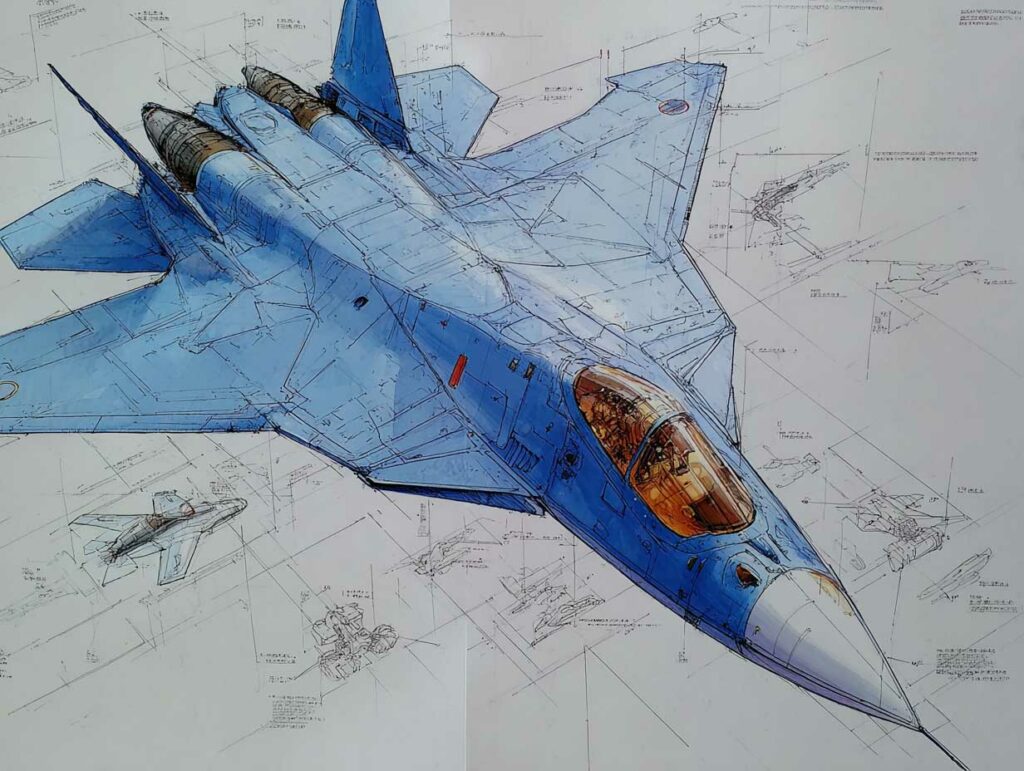
Éric Trappier’s statement that directly raises the question of the program’s demise
When Éric Trappier says the project is dead if Airbus maintains its position, he is not merely issuing a warning. He is putting the possibility of a split on the table.
This statement matters because it comes from the head of the only European manufacturer that has recently delivered, modernized, and exported a complete fighter jet under national sovereignty. Dassault is not in a position of absolute weakness. The Rafale continues to exist, evolve, and generate business. This shifts the balance of power. Paris and Dassault know they still have an autonomous industrial base, even if developing a successor on their own would represent a colossal effort.
Several scenarios are now circulating, more or less quietly. A continuation of the SCAF with governance compromises. A partial split, with cooperation on drones and cloud-based combat but divergence on manned aircraft. Or, in the worst-case scenario, complete fragmentation with a return to national or quasi-national paths.
The scenario in which the program is officially maintained but stripped of its industrial substance is perhaps the most likely in the short term if no clear agreement emerges. This would be the worst solution. It would allow the announcement of a political failure to be avoided while prolonging a deadlock that erodes timelines, costs, and confidence.
The question of the FCAS’s end must be raised without unnecessary dramatization
We must be precise. As of March 28, 2026, the FCAS is not formally dead. To say it is already dead would be inaccurate. To say it is out of danger would be absurd.
The project is, in reality, in a situation where institutional survival no longer guarantees industrial viability. This is a crucial point. In defense, a program can remain politically announced for years even as its technical momentum has already stalled. Yet the SCAF depends on a complex sequence: definition, decision-making, demonstrator, testing, integration, qualification, and industrialization. Every initial delay triggers a chain reaction.
The risk is not merely additional costs. The risk is a European capability gap. The United States is moving forward with its new generation of air combat systems. The GCAP, led by the United Kingdom, Italy, and Japan, is making progress on its own.
If the SCAF gets bogged down further, continental Europe risks falling behind politically, technologically, and industrially—a gap that will be difficult to close.
There is also a more subtle but decisive risk: the loss of trust among partners. Defense cooperation does not function on contracts alone. It requires a shared belief in the project’s purpose. Yet today, that belief is under attack. When a major manufacturer publicly declares the program dead and a government sets an ultimatum of just a few weeks, the diplomatic veneer no longer holds.
The Choice Facing Paris and Berlin on Sovereignty, Not Just on Work Organization
The real question, therefore, is not merely: who does what? The real question is: what kind of European defense do the French and German governments truly want to build?
If Paris believes that operational sovereignty requires a strong national prime contractor for the aircraft, it will have to see this through to the end. If Berlin considers that no joint project is politically defensible without visible parity in governance, it will have to see that through as well. But maintaining both positions simultaneously no longer works.
The SCAF has long been presented as proof that Europe could overcome its industrial rivalries. In 2026, it tells almost the opposite story. It shows that when it comes to armaments, cooperation does not erase national interests. It simply makes them harder to reconcile.
In the coming weeks, this issue will reveal far more than we realize about the true state of the Franco-German partnership. Either Paris and Berlin will impose a clear compromise, with an industrial hierarchy finally acknowledged. Or the SCAF will join the long list of major European projects that remain famous mainly for what they never managed to become.
War Wings Daily is an independant magazine.