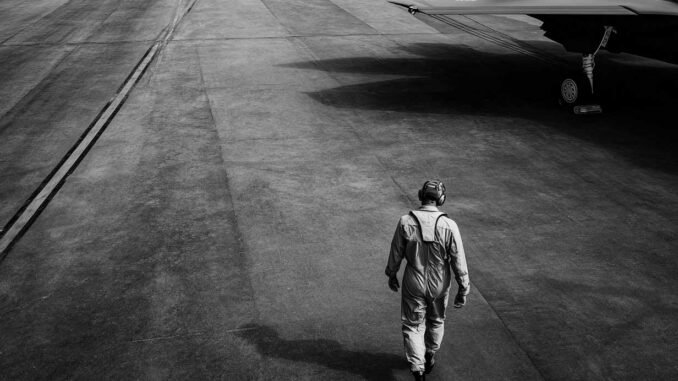
Cold Lake is preparing to receive the first F-35As in 2028, while pilots will begin training in the United States as early as 2026. The real bottleneck remains the human factor.
In summary
Canada is finally entering the practical phase of its transition to the F-35A. Infrastructure is progressing at Cold Lake and Bagotville; the first aircraft are scheduled to be delivered to the United States for training in 2026 and 2027, and the first planes will arrive in Canada in 2028. Ottawa has confirmed a timeline aiming for initial operational capability in 2029 and full operational capability in 2033. On paper, the program is well-structured. In reality, it depends on a factor far less visible than hangars, runways, or simulators: personnel. The fill rate for Canadian fighter pilots remains insufficient, at around 66% according to data reported in early 2026, although other more recent official figures suggest an improvement to around 70.5% for fighter pilots. The challenge is therefore no longer just industrial. It is human. An F-35 without a qualified pilot, without an experienced technician, and without a robust training program remains merely a delivered aircraft, not a truly available military capability.
The program transitioning from procurement to actual operational deployment
The Future Fighter Capability Project is no longer just a procurement initiative. Canada has already begun the transition to a fleet of 88 F-35As intended to replace the CF-18s. The general framework has been known since the 2023 announcement, but the period from 2026 to 2028 is when the project changes in nature. We are no longer talking only about contracts, but about aircraft delivery, training, security, maintenance, and bases ready for operation.
The Canadian government states that the first eight aircraft are to be delivered between 2026 and 2027 for training at Luke Air Force Base in Arizona. The arrival of the first aircraft in Canada remains scheduled for 2028, at Cold Lake, with initial operational capability in 2029 and full operational capability in 2033. This timeline has been included in several official documents, notably the National Defense project pages, the Auditor General’s report, and parliamentary documents from 2025 and 2026.
This point is important because many modern fighter programs fail not at the time of purchase, but at the time of integration. Receiving a 5th-generation aircraft requires much more than a parking lot and a squadron. It requires a hardened base, secure maintenance facilities, specialized IT systems, highly restricted-access facilities, parts logistics, simulators, and training tailored to U.S. and NATO procedures. The F-35 demands a much heavier support infrastructure than older aircraft.
The Cold Lake project becomes the program’s litmus test
The case of Cold Lake alone sums up the challenge. Canada has confirmed the construction of new facilities to accommodate the future fighter, with infrastructure contracts awarded to Cold Lake and Bagotville. Defence Construction Canada mentions two large super hangar-style complexes, incorporating operational headquarters, maintenance, security, IT, and training facilities. The total value of the construction contracts announced for the two sites amounts to 525 million Canadian dollars.
The project is not limited to large buildings. Official documents also mention more sensitive components, such as Tactical Special Access Program Facilities—secure enclosures essential for processing classified information and systems related to the F-35. A contract worth 15.8 million Canadian dollars was awarded in January 2025 for these facilities, with deliveries scheduled between September 2026 and May 2027 at Cold Lake, to facilitate the arrival of the first F-35A in Canada in 2028.
In other words, Canada isn’t just building hangars. It is building the security and support environment for an aircraft whose military value depends heavily on data processing, software, and specialized maintenance. This is a point that many public debates overlook. The F-35 isn’t just an airplane. It is a connected weapons system that is demanding and costly to support. A base that isn’t ready on time would automatically delay operational conversion.
Cold Lake therefore plays a pivotal role. On one hand, the CF-18s must be maintained during the transition. On the other, the infrastructure must be prepared for the new fleet. This overlap complicates everything: human resources, security, maintenance, runway organization, and chains of command. Transitions are never clean. They inevitably create a period where the old fleet still incurs costs while the new one has not yet fully come into its own.
Training in the United States as a bridge before arrival in Canada
The Canadian timeline follows a logical sequence. The first aircraft do not arrive in Canada first. They go to Luke AFB to train the first pilots and personnel. Documents from the Canadian Department indicate that Canada is set to receive its first CF-35As at Luke as early as 2026, with the launch of training for Canadian pilots on-site. This approach is standard for a new F-35 operator. It allows for entry into the U.S. training ecosystem before full national operational capability is achieved.
This choice has several advantages. It provides access to a well-established training chain. It reduces startup risk. It also allows Canada to produce its first conversion course graduates even before the entire national infrastructure is delivered. But it comes with a trade-off: it makes Ottawa dependent on its ability to identify, early enough, pilots who are available, medically fit, proficient in English at the required level, and releasable from existing units.
This is where the debate over recruitment ceases to be a secondary issue. Training pilots in the United States is useful. But there must still be pilots to send. And once they return, they must in turn be able to train, mentor, and ramp up the national fleet.
The recruitment problem poses a greater threat than construction sites
The real bottleneck in the Canadian program today is not concrete. It is flight and support personnel.
The figure highlighted by the Canadian press in early 2026 is a 66% fill rate for fighter pilots. Other official documents submitted to Parliament in the fall of 2025 reported an improvement to 70.5% for fighter pilot staffing levels relative to identified needs. These two figures do not necessarily contradict each other entirely, as they may refer to different dates, scopes, or counting methods. But the conclusion remains the same: Canada is still far from a comfortable situation.
We need to be blunt. An air force can buy aircraft faster than it can produce experienced pilots. That is a harsh reality. Training an operational fighter pilot takes years. Training an instructor takes even longer. The problem is therefore less quantitative than it appears. It is not enough to simply increase recruitment. We must also retain intermediate and senior pilots—those who pass on their experience, oversee conversion training, and lead the squadrons.
Several factors explain this strain. First, the military aviation sector competes with the civilian sector for qualified candidates. Second, training is long, costly, and selective. Finally, military life entails geographic mobility, family constraints, and an operational pace that is difficult to sustain over the long term. Canada has, in fact, more broadly acknowledged its retention challenges in several critical trades, and its assessment of Armed Forces retention highlights that certain trades enter the “red zone” as soon as they experience more than 10% understaffing. Technical and specialized trades are particularly vulnerable.
In the case of fighter pilots, the risk is even higher, as replacements cannot be found quickly. A gap in personnel today has repercussions several years later. It is a long-term shortage.
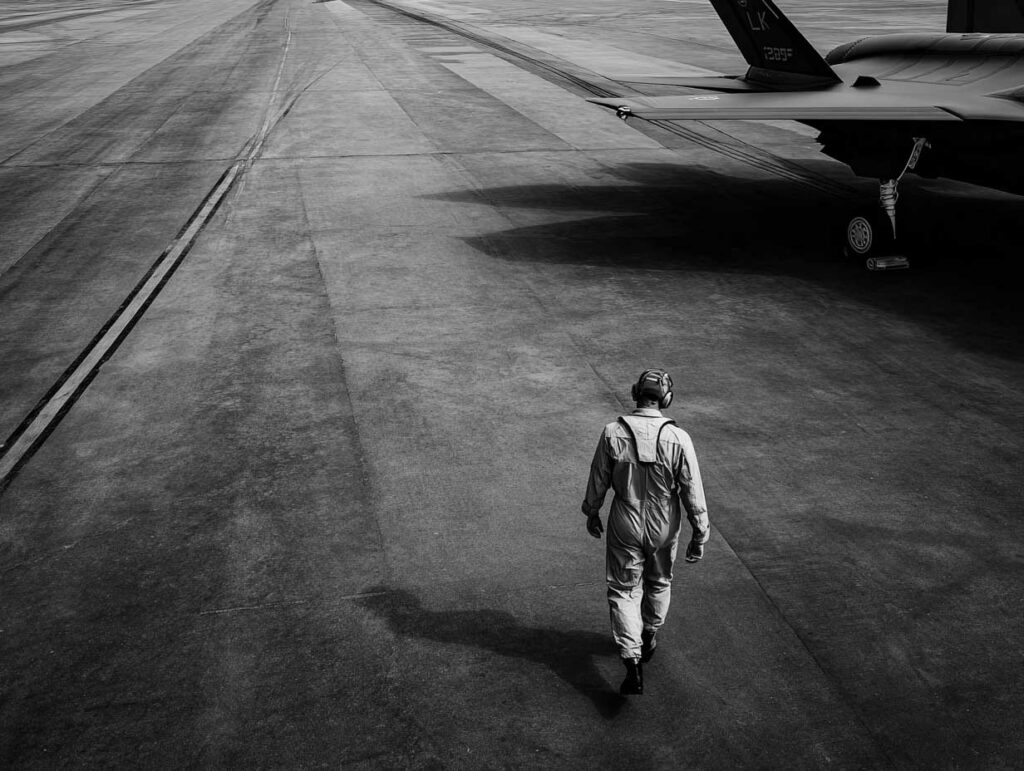
A Phenomenon That Extends Far Beyond Canada
Canada is not an isolated case. The shortage of pilots and instructors affects several Western air forces.
In the United States, the issue is longstanding and structural. Analyses released in early 2025 noted that the U.S. Air Force was still facing more than 1,100 vacancies for fighter pilots in 2024, amid a broader global shortage of military pilots. At the same time, the Air Education and Training Command explained that it is working to produce 1,500 pilots per year starting in fiscal year 2026, specifically to increase the training output. This clearly shows that even the world’s leading military aviation force considers the issue critical.
In the United Kingdom, the problem also exists, but it is most evident in the training crisis. The Strategic Defence Review 2025 was very clear: current fighter jet training is deemed inadequate, to the point that British pilots are being sent abroad for training. This point is highly significant. When an air force must outsource part of its advanced training due to a lack of sufficient domestic capacity, it means the constraint is not marginal.
The comparison is useful. It shows that Canada does not suffer from a unique or shameful weakness. It faces a challenge common to air forces modernizing their fleets with more complex aircraft, even as the pool of potential pilots remains limited. The problem is therefore not just about recruiting more. It is about recruiting early enough, training better, and retaining personnel longer.
The concrete consequences for air forces
The shortage of pilots has very concrete military effects.
The first effect is the underutilization of delivered aircraft. An air force may have aircraft in service but not enough crews to fly them at the desired rate. This impacts operational readiness and collective training.
The second effect is the fragility of the transition. Moving from an older aircraft to an F-35 requires a significant skill-building process. If the initial core of pilots is too small, the dissemination of expertise takes longer. The aircraft is there, but the fleet takes longer to reach maturity.
The third effect is staff burnout. When an air force is short-staffed, those who remain fly more, teach more, take on more responsibilities, and sometimes leave sooner. It’s the classic vicious cycle. The shortage feeds on itself.
The fourth effect directly impacts strategy. A combat aviation force relies not only on the number of aircraft purchased, but on the number of sorties it can generate, the depth of its crews, the robustness of its training, and its ability to sustain operations over time. An F-35 fleet with too few pilots does not deliver the expected military effect, especially for a country like Canada that must cover a vast area, fulfill its NORAD commitments, and contribute to NATO.
The Canadian challenge, which is now less industrial than systemic
Canada has therefore reached an important milestone. Infrastructure is progressing. The delivery schedule is in place. The first training sessions in the United States are planned. The project is not stalled.
But the core of the problem has shifted. The success of the Future Fighter Capability Project now depends less on the act of purchasing than on the Royal Canadian Air Force’s ability to turn that purchase into real combat capability. This requires a rare alignment: infrastructure ready, pilots available, sufficient instructors, trained technicians, enhanced security, mastered software, and a stable support chain.
The issue is broader than a mere temporary shortage. It touches on the ability of Western democracies to absorb increasingly complex combat systems as their human resources become strained. Canada illustrates this paradox almost perfectly. It can finance the fighter. It can build the base. It can sign the contracts. But it still needs to fill the cockpit and provide everything that makes the cockpit useful.
This is likely where the true success of the Canadian F-35 will be determined. Not the day the first aircraft lands at Cold Lake, but the day the Canadian Air Force has enough pilots, enough technicians, and enough depth to operate this fleet at the pace demanded by the North American continent and by allied commitments. A fifth-generation aircraft changes the shape of an air force. Only personnel change its substance.
War Wings Daily is an independant magazine.