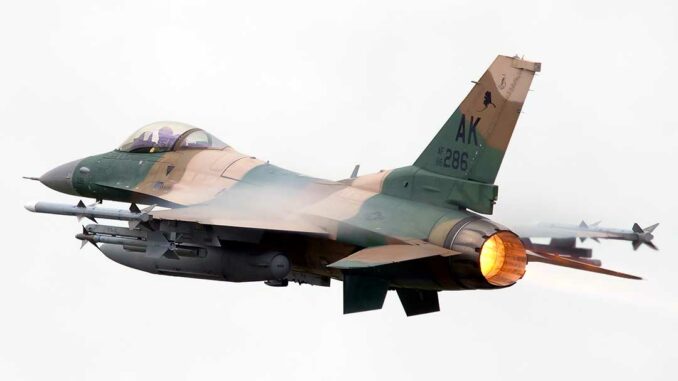
CycloKinetics promises 32% more energy for aircraft, missiles, and rockets. A useful innovation, but one still shrouded in uncertainty.
In summary
The American company CycloKinetics claims to have developed a family of aero-superfuels capable of offering up to 32% more energy density compared to conventional fuels such as Jet A, JP-8, RP-1, or JP-10. The announcement is primarily aimed at the defense market. The potential gains are considerable: greater range, longer endurance, higher payload, and less reliance on refueling. CycloKinetics presents its products as “drop-in” fuels, meaning they can be used without major modifications to engines or infrastructure. This is the key selling point. If this promise is validated on a large scale, it could improve fighter jets, drones, long-range missiles, and space launch vehicles without waiting for a new generation of engines. But the cost has not been disclosed. Industrial-scale production volumes remain to be proven. And a better fuel alone does not transform a limited platform into a revolutionary weapon.
Fuel is becoming a strategic lever that has been neglected for too long
The defense sector loves to talk about engines, stealth, artificial intelligence, and hypersonic missiles. It talks less about fuel. That is a mistake. In military aviation, the energy available on board determines almost everything: range, altitude, endurance, payload, speed, tactical reserve, and dependence on refueling aircraft.
CycloKinetics fills precisely this gap. The Salt Lake City-based company positions itself as an American firm specializing in liquid propellants for aerospace and defense. It officially launched its operations in May 2026, highlighting fifteen years of cooperation with the U.S. military. Its message is simple: the United States can achieve a significant performance gain without completely redesigning its aircraft, missiles, or rockets.
The figure highlighted is impressive: 32% more energy per volume or per formulation, depending on the claimed applications. Taking the example provided by the specialized media, an aircraft capable of traveling 2,778 kilometers (1,500 nautical miles) on standard fuel could theoretically exceed 3,611 kilometers (1,950 nautical miles) with this new fuel. This calculation remains a projection. It depends on the engine, flight profile, altitude, payload, and aerodynamics. But it illustrates the challenge.
The promise is not just to go farther. It is to change the trade-off between fuel and payload. In a missile, every liter of fuel saved can translate into range, a heavier warhead, or additional space for sensors. In a drone, the same gain can provide greater endurance. In a rocket, higher energy density can free up mass for the payload.
The technology relies on energy density and hydrocarbon chemistry
To understand CycloKinetics, two concepts must be distinguished. The first is mass energy density, that is, the energy contained per kilogram of fuel. The second is volumetric energy density, or the energy contained per liter. In aviation and missiles, volumetric density is crucial. Fuel tanks have a fixed volume. If a fuel contains more energy in the same volume, the aircraft can fly farther without increasing in size.
Conventional fuels like Jet A, JP-5, or JP-8 are already very efficient. Jet A contains approximately 43 megajoules per kilogram. But these fuels are industrial compromises: cost, stability, freezing point, safety, global availability, engine compatibility, and logistics. Military fuels must also withstand extreme conditions: cold at high altitudes, heat in fuel lines, prolonged storage, vibrations, and safety aboard ships or at forward bases.
CycloKinetics does not disclose all of its chemistry, which is standard for defense technology. But the company speaks of molecules with unique properties and high-energy-density hydrocarbon fuels. In this field, research often focuses on cyclic, polycyclic, or strained structures. These molecules can store more energy within a given volume. They can also improve certain combustion properties.
The idea isn’t magic. It stems from the way carbon and hydrogen atoms are arranged. Certain molecular architectures allow for increased liquid density, modified heat of combustion, and improved thermal stability. In missiles, JP-10 is already a well-known example of a high-energy-density fuel, used notably for compact turbomachines. CycloKinetics claims that CK-10 represents a new generation designed for long-range systems.
The three products target aircraft, missiles, and rockets
CycloKinetics structures its offering around three main products: CycloJP, CycloRP, and CK-10.
CycloJP is aimed at aviation. It is presented as a replacement for Jet A, JP-5, JP-8, and JPTS. It is the product most directly linked to fighter jets, drones, high-altitude ISR aircraft, and future Collaborative Combat Aircraft. The benefit is clear: increasing range without adding external fuel tanks, and thus without compromising stealth, drag, or payload capacity. The company also claims that CycloJP offers better thermal stability, improved performance at low temperatures, and cleaner combustion, with less soot than Jet A.
CycloRP is aimed at the space sector. It is designed as a replacement for RP-1 and RP-2, the kerosenes used in rocket engines. The argument is twofold: greater payload per launch and less carbon buildup in reusable engines. This point is important. In a kerosene rocket engine, soot can complicate maintenance, especially in a reusable context. If the promise of cleaner combustion is fulfilled, the economic benefit may extend beyond energy efficiency alone.
CK-10 is intended for long-range missiles. It is presented as a replacement for JP-10. This is likely the most sensitive product from a military standpoint. In a cruise missile or a long-range expendable missile, internal space is at a premium. A denser fuel can increase the range or allow for the same range with a more compact airframe.
The company emphasizes one word: “drop-in.” This means the fuel can replace existing fuel without fundamentally changing the engine, tanks, lines, pumps, or infrastructure. If this compatibility is real, the advantage is significant. Military forces dislike solutions that require rebuilding the entire supply chain.
A 32% gain does not always mean a 32% increase in range
Let’s be honest: the figure of 32% is appealing, but it can be misunderstood. An increase in energy density does not automatically translate to an identical increase in range. An aircraft consumes energy to carry its fuel. If the fuel is denser but heavier, the net result depends on the total mass. Whether the flight profile is subsonic, supersonic, or high-altitude, the gain varies. If the aircraft is limited by maximum takeoff weight rather than fuel tank volume, the result changes again.
For a military aircraft, the benefit is most significant when fuel volume is the primary constraint. This is often the case with drones, missiles, and stealth aircraft, as their internal configurations are highly constrained. On a stealth fighter, adding external fuel tanks increases range but compromises stealth and increases drag. A denser fuel can therefore offer a cleaner gain.
For a missile, the reasoning is even more straightforward. The airframe cannot easily be enlarged. The internal volume is fixed. More energy in the same tank can increase range or terminal velocity, depending on the engine and mission profile. In a Pacific conflict, where distances are immense, this difference can become operationally significant.
For a rocket, the effect can be spectacular in theory, but depends on the fuel-oxidizer combination, specific impulse, density, cooling, tank mass, and structure. CycloKinetics claims that its fuels could more than double certain payloads in ground tests conducted by an unnamed space company. This is a bold claim. It should be treated with caution until it is demonstrated in flight and published with a precise engine profile.
Cost remains the major industrial unknown
CycloKinetics does not publish the price of its fuels. This is the main gray area of the announcement. To assess economic efficiency, one must compare not only the price per liter, but the price per successful mission.
Conventional military fuel remains relatively inexpensive compared to the cost of the platforms. The Defense Logistics Agency has set a standard price for bulk JP-8 at $3.67 per U.S. gallon for fiscal year 2026, or approximately $0.97 per liter. JP-5 is priced at $3.70 per gallon, or about $0.98 per liter. The more specialized JPTS is listed at $5.11 per gallon, or about $1.35 per liter. These prices do not necessarily reflect the full cost in forward operations, where transportation, security, and distribution can make each liter much more expensive.
A superfuel like CycloJP will almost certainly be more expensive than standard fuel. The question is not whether it costs more. The question is whether the tactical gain justifies the premium. For a civilian aircraft, a significant increase in fuel prices would be difficult to accept.
For a long-range missile, a strategic drone, or a rare ISR aircraft, the calculation is different. If a more expensive fuel allows for avoiding a refueling stop, striking farther away, or reducing the number of sorties, it can be cost-effective.
The cost will also need to be assessed at the scale of production. Producing a few batches for testing is one thing. Supplying entire fleets is another. CycloKinetics claims that its Salt Lake City facility has been operational since 2025 and that deliveries have begun under contracts with the Department of Defense. This is encouraging, but it does not yet prove a capacity for mass production.
Efficiency will depend as much on logistics as on the molecule
The U.S. defense sector has no shortage of fuel in the lab. It lacks robust solutions in challenging theaters of operation. That is where CycloKinetics’ promise must be put to the test.
A military fuel must remain stable in storage. It must be safe to transport. It must be compatible with existing seals, tanks, pumps, filters, and procedures. It must perform in cold, heat, humidity, forward operating bases, and on ships. It must also be available in sufficient quantities at the right location.
CycloKinetics highlights flexible raw material production, with the ability to optimize manufacturing based on locally available resources. This is an appealing argument for the Indo-Pacific. In a war against a power like China, U.S. bases would be exposed. Fuel resupply would become a strategic vulnerability. Reducing the volume required per mission can therefore increase operational resilience.
But this promise raises a simple question: what is the industrial reality behind “theater-based” production? Producing advanced fuel near a conflict zone requires inputs, equipment, quality control, energy, security, and specialized personnel. It is not impossible. Nor is it trivial.
Military applications are more credible than immediate civilian uses
CycloKinetics’ natural market is defense, not mass commercial aviation. The reasons are obvious. Airlines purchase fuel in massive volumes and with a fixation on cost. A premium fuel would only be viable if it significantly reduced total consumption, maintenance costs, or operational constraints.
Defense operates on a different logic. A patrol aircraft may need to remain in the area longer. A HALE drone may need to fly at very high altitudes in extreme cold. A missile may need to reach a target beyond enemy defenses. A military rocket may need to place more satellites into orbit with fewer launches. In these cases, performance often takes precedence over unit cost.
The systems most affected are therefore long-endurance drones, ISR aircraft, Collaborative Combat Aircraft, cruise missiles, expendable missiles, kerosene rocket engines, and air-breathing hypersonic platforms. The company also mentions detonation engines and high-speed systems, where thermal stability and combustion become critical.
However, we must avoid getting carried away. Better fuel does not replace a good airframe, a good engine, or sound operational doctrine. It can extend a mission. It does not correct poor stealth. It does not make a system invulnerable to air defense. It does not eliminate the constraints of maintenance, piloting, targeting, or communication.
The promise comes at the right time for the Pentagon
The announcement comes at a favorable time. The United States is seeking to increase the range of its weapons and platforms. The Indo-Pacific region involves distances far greater than those in Europe. Air refueling aircraft are vulnerable. Forward operating bases can be targeted. Stocks of long-range missiles are costly and limited.
In this context, a fuel that increases range without changing platform design is highly attractive. It offers a middle ground between two difficult options: waiting for a new generation of engines or accepting the limitations of existing systems.
The technology can also fit into the Replicator framework and the rise of expendable systems. An inexpensive drone with more efficient fuel can cover a larger area, remain on standby longer, or carry a heavier payload. In a war of attrition, such gains can make a difference.
China, Russia, Iran, and other actors are also working on range, payload, and cost reduction. The competition is no longer just about the best aircraft or the best missile. It is about the ability to produce military effects at long range, in volume, with viable logistics. Fuel is once again becoming a factor in military power.
Caution remains necessary in the face of an ambitious industrial announcement
CycloKinetics is making a bold promise, but several points remain unproven publicly.
The first is independent validation. The announced performance figures come primarily from the company and communications relayed by specialized media. Detailed testing is needed, including specific platforms, mission profiles, consumption measurements, temperature, emissions, compatibility, and fuel aging.
The second is cost. Without a public price, it is impossible to judge whether CycloJP, CycloRP, or CK-10 can be used widely or only on highly targeted missions. The difference is significant. An innovation reserved for a few strategic missiles does not have the same impact as a fuel usable by an entire fleet of drones or aircraft.
The third is certification. A “drop-in” fuel must demonstrate real compatibility, not just theoretical compatibility. Aircraft and rocket engines do not tolerate surprises well. Viscosity, pour point, lubricity, deposits, combustion, thermal stability, and material interactions must be rigorously tested.
The fourth is scale. An army does not win with fuel that is excellent but scarce. It wins with fuel that is available, storable, transportable, and produced in large quantities.
The real challenge is not the miracle, but operational performance
The best assessment of CycloKinetics can be summed up in one sentence: the technology appears credible in principle, but its real impact will depend on cost, production, and operational testing. The claimed gain of 32% is significant enough to warrant attention. It is also spectacular enough to warrant caution.
If CycloKinetics delivers on its promise, the consequences could be substantial. A drone could remain airborne over an area for longer. A missile could strike farther. An aircraft could reduce its reliance on refueling. A rocket could carry more payload. These are not minor details. In modern warfare, a few hundred kilometers can alter an entire plan.
But this fuel should not be marketed as a standalone revolution. Modern defense advances through a stack of advantages: better sensors, better software, better production, better logistics, better engines, and better fuels. CycloKinetics is tackling a discreet but essential layer of this equation.
The challenge is therefore less glamorous than a new stealth fighter. It may be more useful. Because in a protracted war, the decisive question is not merely who possesses the best platform. It is who can make it fly farther, longer, with more payload, and at a cost the industry can sustain.
War Wings Daily is an independant magazine.