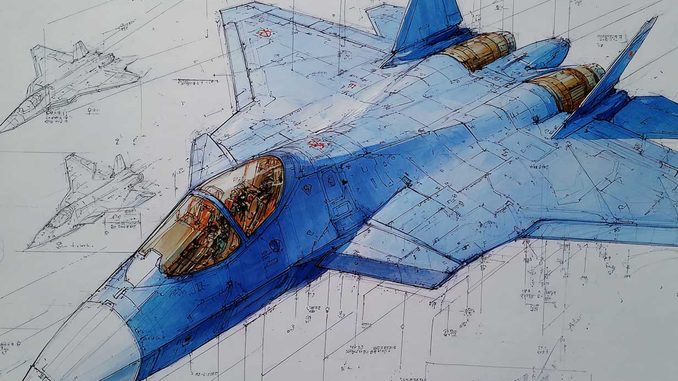
The NGF is halted. Berlin hesitates between GCAP, a European solution, F-35, and Eurofighter, with a major risk of technological fragmentation.
In Summary
The cancellation of the New Generation Fighter—the sixth-generation combat aircraft intended to form the core of the Franco-German-Spanish FCAS—upends the European financial equation. Certain pillars of the system of systems, notably the Combat Cloud, are to continue, but the next phase of joint aircraft development is no longer engaged. Phase 1B already represented €3.2 billion, and the full contract could approach €8 billion with the optional Phase 2. Germany must now choose between joining the British, Italian, and Japanese GCAP, supporting an Airbus-led solution, or extending its investment in F-35A and Eurofighter aircraft. What is at stake goes beyond selecting an airframe. Sixth-generation aircraft concentrate massive expenditures in stealth, propulsion, sensors, artificial intelligence, combat cloud, and collaborative drones. Without joint financing, each country pays more to access less technology.
Joint Funding for the NGF Ends with Phase 1B
In June 2026, Emmanuel Macron and Friedrich Merz acknowledged that Dassault Aviation and Airbus could no longer reach an agreement on a common fighter aircraft. The joint NGF is halted. Nevertheless, Berlin and Paris intend to pursue certain building blocks of FCAS, particularly the Combat Cloud and the system-of-systems concept linking aircraft, drones, sensors, and effectors.
Thus, the financial rift primarily impacts the future fighter aircraft. In December 2022, France, Germany, and Spain had allocated €3.2 billion to Phase 1B for roughly three and a half years. The French Ministry of Armed Forces indicated that the total cost could reach nearly €8 billion with the optional Phase 2.
Airbus now specifies that the Phase 1B contracts will conclude at the end of 2026. Phase 2 of the NGF is therefore no longer engaged in its initial form. The common financial mechanism intended to support the demonstrator disappears along with the shared aircraft.
The German Choice Pits Sovereignty Against Timeline and Costs
Boris Pistorius outlined three potential paths: acquiring more F-35s, joining another international program, or launching a project under German leadership. Airbus has already formed Team Gen 6 around eight German defense companies, alongside an associated Spanish structure.
GCAP Offers an Already Funded Program
GCAP possesses a decisive advantage: it is progressing. The United Kingdom, Italy, and Japan are targeting 2035 for entry into service. In July 2026, they awarded Edgewing a joint contract worth £4.6 billion. In parallel, London plans an investment of £8.6 billion over four years.
German participation would allow the country to join an already structured governance and financial framework. However, Berlin would need to negotiate its contribution, industrial workload, and access to intellectual property. While joint funding reduces the cost of accessing technologies, it never guarantees their full transfer.
This topic is particularly sensitive for Airbus, MTU Aero Engines, Hensoldt, MBDA Deutschland, and the other members of Team Gen 6. Joining GCAP late would mean accepting an industrial architecture largely defined by BAE Systems, Leonardo, and Japan Aircraft Industrial Enhancement Co.
F-35 and Eurofighter Buy Time
Germany has already ordered 35 F-35A jets to replace the Tornado and specifically fulfill NATO’s nuclear sharing mission. It has also ordered 20 additional Eurofighters, with deliveries scheduled between 2031 and 2034.
The F-35 Lightning II reduces operational capability risks, but reinforces the integration of the Luftwaffe into an American technological ecosystem. The Eurofighter Typhoon can evolve into electronic warfare roles and serve as a command node for uncrewed platforms, yet it remains an aircraft designed under a previous-generation architecture.
These acquisitions can secure the transition into the 2040s. They do not replace a European policy for sixth-generation technologies.
Technology Sharing is Also Cost Sharing
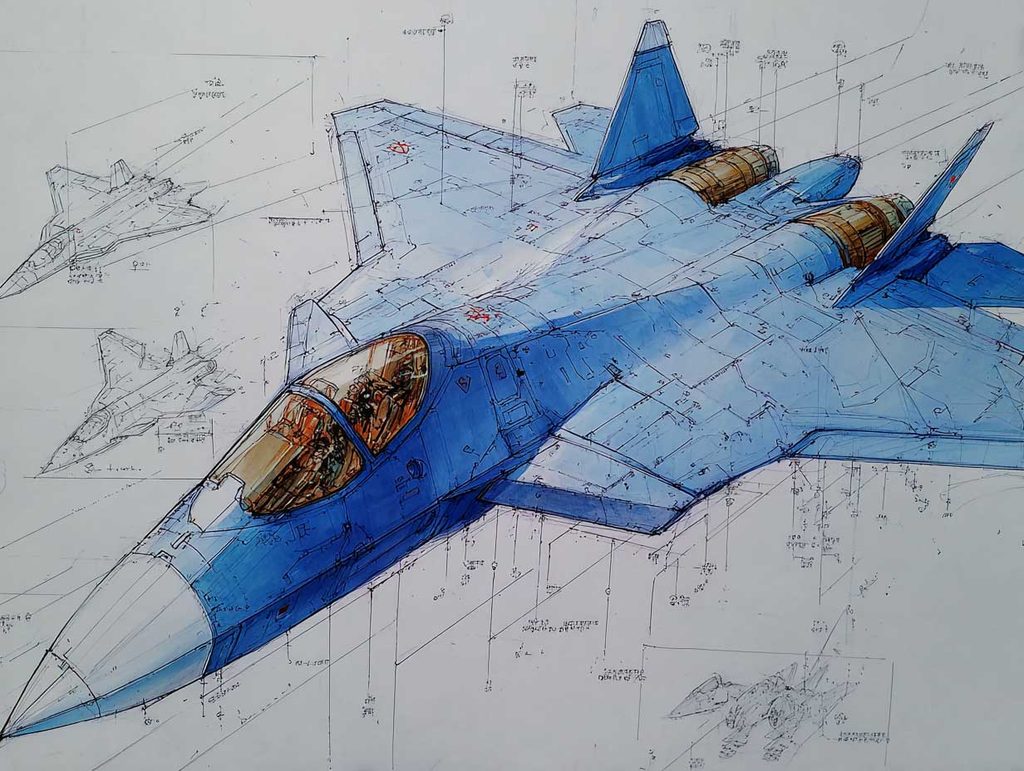
A sixth-generation combat system is no longer merely about developing a stealth airframe. It requires funding new propulsion systems, materials with low radar and infrared signatures, AESA radars, passive sensors, electronic warfare suite, onboard computers, data fusion software, secure networks, and collaborative combat drones.
A major portion of these expenditures corresponds to non-recurring research and development costs. Sharing them makes it possible to pool prototypes, test beds, qualification campaigns, and specialized expertise. A partner can thus gain access to certain technologies for a fraction of what national development would have cost.
This was one of the fundamental economic justifications for FCAS.
However, the program also illustrates its limitations. The more strategic a technology is, the more defense contractors want to retain design authority, know-how, and intellectual property. Cooperation reduces costs only when partners truly agree to share. When governance stalls, financial pooling loses much of its benefit.
European Fragmentation Becomes a Risk of Delay
France is now evaluating a national demonstrator or proceeding with new partners. Germany may join GCAP or push Team Gen 6 forward. GCAP is already advancing on its schedule. Meanwhile, Sweden is funding Saab to develop its future air combat technologies.
Europe therefore risks multiplying technological tracks at the precise moment when the cost of next-generation aircraft is rising.
In the meantime, the United States awarded Boeing the development of the F-47 in March 2025. The US Air Force aims for a first flight in 2028. China has been testing several large tailless stealth airframes since late 2024, often referred to as J-36 and J-50 by observers, with a test flight pace that appears to be accelerating.
The European delay is no longer abstract. Every year spent recreating governance structures, distributing industrial responsibilities, and negotiating new funding delays demonstrators. It also increases the probability that certain critical technologies will ultimately be purchased rather than developed in Europe.
The Real Stake is Funding a Generation
The failure of the NGF does not doom all European cooperation. Above all, it serves as a reminder that a sixth-generation capability can no longer be funded like an isolated aircraft. The fighter jet becomes one node among others, connected to drones, sensors, satellites, tactical networks, and long-range weapons.
If Berlin joins GCAP, Europe will likely have two major technological hubs. If Germany develops its own solution, fragmentation will be even greater. If it compensates primarily with additional F-35s, its reliance on American technologies will grow.
Funding thus becomes an issue of sovereignty just as vital as technology transfer. Whichever entity funds the research controls the skill set, participates in setting standards, and retains the capacity to evolve the system over time.
Germany’s next choice will therefore decide less on the design of a new aircraft than on the distribution of technological power in Europe. And against the backdrop of US and Chinese programs already underway, lost time is now becoming a cost in its own right.
War Wings Daily is an independant magazine.