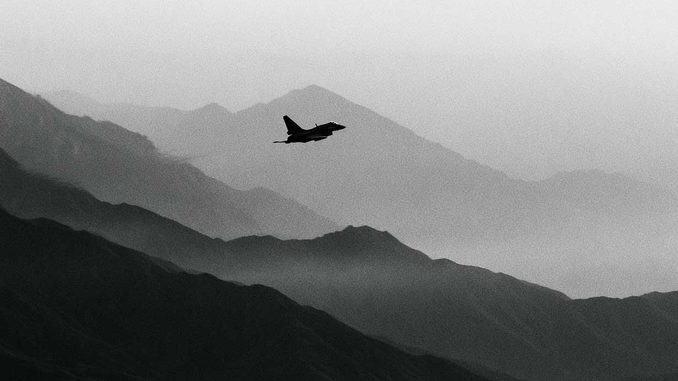
Uzbekistan becomes the second foreign operator of the Chinese J-10CE. A military choice that reduces its historical dependence on Russia.
In brief
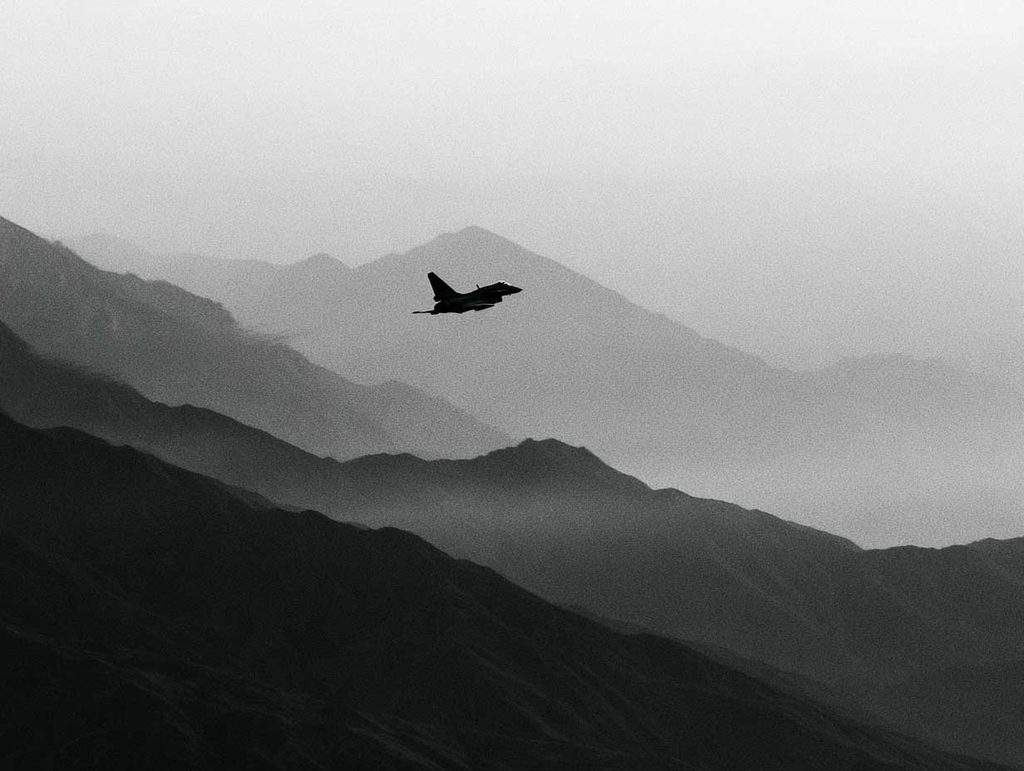
Uzbekistan has just confirmed the arrival of the Chengdu J-10CE in its air force. At least six aircraft were officially displayed in late August 2026, making Tashkent the second foreign operator of the J-10CE, after Pakistan. Unconfirmed reports suggest a total order of 24 fighters for approximately $1 billion. The choice is strategic. Uzbekistan must replace a fleet of MiG-29s and Su-27s inherited from the Soviet Union. The J-10CE provides it with an AESA radar, long-range PL-15E missiles, and a modern architecture for a lower cost than many Western or heavy Russian fighters. It also deepens a military relationship already underway with China in air defense. However, the move does not signal a rupture with Moscow. And contrary to some speculation, there is no public evidence indicating a technology transfer of the J-10CE to Russia via Uzbekistan.
The Uzbek confirmation turns rumor into military reality
For more than a year, Uzbekistan’s purchase of Chengdu J-10CEs remained in the category of plausible but unverified information.
The situation changed at the end of August 2026.
On the occasion of the country’s 35th anniversary of independence, state television O’zbekiston 24 broadcast images showing J-10CEs bearing Uzbek colors. At least six aircraft appear on the ground and in formation. One of them lands using its brake parachute before the aircraft are welcomed by water cannons.
The Uzbek Ministry of Defense subsequently released its own footage with commentary stating that the country’s airspace borders were now protected by modern fighter aircraft.
This sequence constitutes the first solid confirmation of their presence in service. Aviation Week, the South China Morning Post, and several specialized aviation publications now consider Uzbekistan to be the second confirmed export customer of the J-10CE after Pakistan.
This distinction matters. Indonesia studied the aircraft and Bangladesh is currently negotiating with Beijing, but neither of these two countries had operationally joined Pakistan at the time the Uzbek aircraft were revealed.
The 24-aircraft contract remains highly likely real but not officially detailed
The main pitfall in this file concerns the numbers.
Numerous publications cite 24 J-10CEs ordered by Tashkent. Several also put forward a value close to $1 billion.
These data points are credible. They are not, however, confirmed by a public contractual document from Uzbekistan, Chengdu Aircraft Industry Group, AVIC, or the Chinese government.
What is certain is more limited: at least six aircraft were officially shown in August 2026. The total number ordered, the final price, the complete delivery schedule, and the exact contents of the weapons package have not been made public.
If the estimate of $1 billion for 24 aircraft were accurate, simple division would yield approximately $41.7 million per aircraft. This calculation is misleading, however.
A fighter contract normally includes far more than airframes. It can cover spare engines, simulators, ground equipment, spare parts, pilot training, mechanic training, infrastructure, and especially missiles.
The actual price of the J-10CE cannot therefore be properly deduced from the assumed contract amount.
The Pakistani precedent gives an order of magnitude. Documents reported by Quwa attributed a value of $1.525 billion to the Pakistani contract for 20 J-10CEs, ten additional WS-10B engines, and 240 PL-15E missiles. These figures have not been officially detailed by Islamabad or Beijing, but they illustrate why the value of a complete package can be much higher than the standalone price of the aircraft.
Uzbekistan must replace an air force inherited from the Soviet Union
The Chinese choice is explained first by an extremely concrete problem: the age of the fleet.
The Uzbek air force inherited Soviet MiG-29s, Su-27s, Su-25s, and other aircraft designed in the 1970s and 1980s.
A significant portion is no longer operational or is held in reserve.
The Military Balance listed 12 active MiG-29s and MiG-29UBs, with 18 other aircraft stored, while a large portion of the Su-27s was also in reserve.
Even if perfectly maintained, this fleet imposes limits.
Airframes age. Engines require overhauls. Avionics become obsolete. Mechanical radars or passive electronically scanned array (PESA) radars from previous generations offer performance levels vastly different from those of modern AESA systems.
Above all, maintaining these aircraft creates dependence on a Russian industry currently prioritized for the needs of the war in Ukraine.
Russia and Uzbekistan had nevertheless discussed a logical solution.
As early as 2017, Tashkent took an interest in the Su-30SM. In 2019, Russian officials confirmed that Uzbekistan was considering acquiring this fighter through a Russian state loan, complete with weaponry, ground equipment, spare parts, and training.
The deal ultimately did not result in a fleet of Su-30SMs comparable to what was envisioned at the time.
A few years later, Chengdu occupies the spot.
The J-10CE responds precisely to the needs of a country without expeditionary ambitions
Uzbekistan does not need a large heavy fighter designed to cover thousands of kilometers.
Its territory is landlocked.
It shares borders with Kazakhstan, Kyrgyzstan, Tajikistan, Turkmenistan, and Afghanistan. Its priorities are airspace surveillance, interception, strategic infrastructure defense, and the capability to react quickly to a regional threat.
In this configuration, a single-engine fighter like the J-10CE is rational.
The aircraft measures approximately 16.9 meters in length with a wingspan of 9.8 meters. It utilizes a delta-canard airframe and fly-by-wire controls. Its divertless supersonic inlet (DSI) avoids the use of a heavy, traditional boundary-layer separation system.
Its WS-10B engine allows it to reach approximately Mach 1.8 according to open-source data generally attributed to the model.
Its size and architecture make it lighter than the twin-engine Su-30SM.
This translates potentially into lower operating costs, even if no reliable data currently allows for a precise comparison of the flight-hour cost of the two aircraft in Uzbek service.
A detail observed on the new aircraft is particularly revealing.
The J-10CEs displayed in Uzbekistan appear to lack the fixed inflight refueling probe visible on many J-10s. Tashkent possesses no aerial refueling tankers and pursues no known long-range power projection strategy.
This configuration would be entirely consistent with an essentially national air defense mission. The aircraft presented did, however, carry three external drop tanks to extend their range.
The AESA radar represents a generational leap for Tashkent
The primary difference from Uzbekistan’s older MiG-29s or Su-27s lies not in top speed.
It is found in the sensors.
The J-10CE is equipped with an AESA radar, for Active Electronically Scanned Array.
An AESA antenna is composed of a large number of transmit-receive modules. The radar beam can be steered electronically without mechanical movement of the antenna.
The shift is considerable.
The radar can shift very rapidly from one area to another. It can track multiple targets. It can adapt its operating modes. It is generally more difficult to jam and more reliable than a system using a mechanical antenna.
This technology places the J-10CE in the category of 4.5-generation fighters.
It does not possess the structural stealth of an F-35 or a J-20. But its sensors, electronic warfare, datalinks, and weapons give it an effectiveness that far exceeds that of early-generation MiG-29s.
For Uzbekistan, it is therefore less a numerical replacement than an operational shift.
The PL-15E is likely the most important weapon in the package
The value of the J-10CE becomes much more evident when paired with the PL-15E air-to-air missile.
The PL-15 has become one of the Chinese weapons most closely monitored by Western air forces.
Its export version, the PL-15E, is officially credited with an advertised range of approximately 145 km (90 miles). It uses an active radar seeker and can be guided during mid-course flight via data updates.
The version reserved for Chinese forces is reportedly capable of engagements at significantly greater distances, although its exact performance parameters remain classified.
Pakistan employs the J-10CE and PL-15E combination.
It was precisely this pairing that gained international prominence following the Indo-Pakistani air engagements of May 2025. American officials cited by Reuters estimated with a high degree of confidence at the time that Pakistani J-10s had shot down at least two Indian aircraft, including at least one Rafale.
This does not prove that the J-10CE is superior to Western fighters.
It proves something commercially almost as important: the Chinese aircraft is no longer perceived as a theoretical system that has never encountered a modern adversary.
For Tashkent, this operational credibility likely mattered.
Chinese air defense was already present in Uzbekistan
The J-10CE does not arrive on virgin territory.
Uzbekistan had already purchased FD-2000 systems—the export version of the HQ-9 family—from China.
The first known deliveries date back to 2018. In 2019, Uzbek forces conducted a first public test of their Chinese air defense system. Janes noted at the time that this purchase allowed Tashkent to diversify its suppliers beyond Russia.
The J-10CE continues this trajectory.
This continuity can offer advantages in training, doctrine, and potentially integration with Chinese command-and-control systems.
Precision is necessary, however: there is no public evidence today demonstrating that Uzbek J-10CEs and FD-2000s are integrated into a common architecture enabling a full exchange of radar tracks comparable to the most advanced Chinese or Pakistani networks.
The potential compatibility exists. Its actual level remains unknown.
China is becoming a strategic supplier, not just an arms seller
The military rapprochement rests on a much broader economic relationship.
China is now one of Uzbekistan’s top economic partners. According to the Uzbek Ministry of Foreign Affairs, bilateral trade reached $13.07 billion in 2024.
Both governments now describe their relations as an “all-weather” comprehensive strategic partnership.
Chinese investments cover infrastructure, energy, industry, transport, and technology.
The purchase of the J-10CE is therefore integrated into an ecosystem that extends far beyond the Ministry of Defense.
For Beijing, the sale holds particular importance.
Pakistan was a natural customer. Islamabad has maintained an exceptionally close military relationship with China for several decades and even co-develops the JF-17 with Chinese industry.
Uzbekistan is different.
Its air force was historically Russian-equipped.
Seeing a J-10CE potentially replace a MiG-29 in a former Soviet republic represents a symbolic breakthrough for Beijing.
Russia loses a sale, but not Uzbekistan
It would be excessive, however, to present this acquisition as a complete geopolitical pivot toward China.
Tashkent continues to maintain deep military relations with Moscow.
In January 2025, the Russian and Uzbek defense ministers signed a military strategic partnership program covering the 2026–2030 period.
The cooperation plan for the year 2025 alone provided for 50 joint activities between the two ministries.
An implementation plan for the 2026–2030 partnership was subsequently signed in May 2025.
Uzbekistan is not necessarily seeking to replace Russia with China.
It is seeking to no longer depend on a single supplier.
That is a major distinction.
This diversification strategy is seen elsewhere in Central Asia. The war in Ukraine has highlighted the risk of over-dependence on the Russian defense industry for deliveries, repairs, and spare parts. At the same time, China, Turkey, and several Western countries are increasingly offering equipment to these states.
Could the J-10CE enable technology transfers to Russia?
The question is worth asking given that Uzbekistan maintains very close military ties with Moscow.
The current answer is clear: there is no public evidence showing any such transfer.
No available evidence indicates that Russian engineers have gained access to the radars, computers, software, PL-15E missiles, or WS-10B engines of the new Uzbek aircraft.
Multiple levels of access must also be distinguished.
Viewing an aircraft, observing it during an exercise, or even conducting joint training is not equivalent to accessing its technology.
To truly exploit a system like the J-10CE, one would need to inspect its radar, record its emissions precisely, disassemble components, study its software, analyze its materials, or access its missile parameters.
Nothing indicates that Tashkent has authorized such access.
It is even difficult to see why Beijing would use Uzbekistan as an intermediary if it genuinely wished to transfer certain technologies to Moscow.
China and Russia already maintain direct military and industrial relations. Sensitive cooperation exists across various domains. Russia even continues to possess certain technologies that Beijing purchases or studies directly.
Intentionally routing strategic information on the J-10CE through a Central Asian customer would be needlessly complex.
Chinese technology could nevertheless strongly interest Moscow
This does not mean Russia would lack interest.
The technological balance between Moscow and Beijing has shifted profoundly.
China once depended heavily on Russian aero-engines and aerospace expertise. Early versions of the J-10 notably used the Russian AL-31FN engine.
The current J-10CE, by contrast, uses the Chinese WS-10B engine according to open sources.
Even more significantly, China has made huge strides in AESA radars, electronic components, datalinks, and modern air-to-air missiles.
In certain domains, the technological relationship is no longer simply one of China learning from Russia.
The J-10CE features solutions that Russian engineers could legitimately wish to evaluate, particularly the architecture of its AESA radar and the integration of the PL-15E.
However, interest does not equal access.
And access does not equal technology transfer.
To date, any assertion that Russia is obtaining J-10CE secrets through Uzbekistan remains speculative.
Uzbek success opens a market long closed to Beijing
The strategic significance of the contract ultimately lies elsewhere.
The J-10CE was still a limited export success when Pakistan purchased it in 2021. Its reputation changed profoundly after May 2025. Beijing is now seeking to convert that visibility into orders.
Bangladesh has entered formal discussions with China. Indonesia has also studied the aircraft, particularly for its performance-to-cost ratio.
Uzbekistan, however, is a particularly prized customer.
It demonstrates that China can sell a modern fighter not only to a historical military ally like Pakistan, but also to a former Soviet republic long equipped by Moscow.
The stakes extend beyond six aircraft photographed on a runway.
If reports of an eventual fleet of 24 J-10CEs are confirmed, Tashkent will have established Central Asia’s first modern Chinese fighter force.
Russia will remain an important security partner. But it will no longer hold the technological monopoly that once almost naturally accompanied the Soviet legacy.
For Chinese industry, this is perhaps the most significant outcome of the sale: the J-10CE is no longer merely attempting to compete with the F-16, Gripen, or Rafale in emerging markets. It is also beginning to replace Russian aircraft in the former Soviet space.
War Wings Daily is an independant magazine.