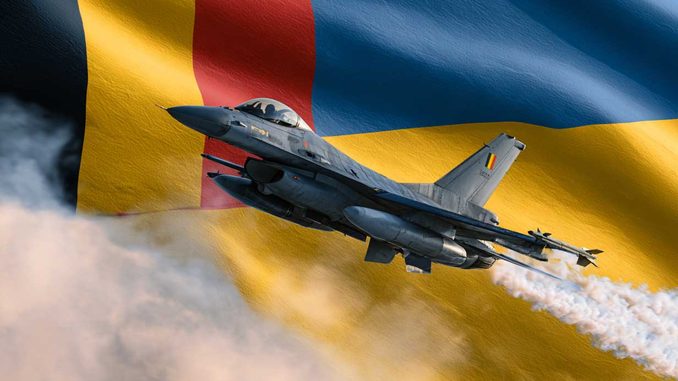
Brussels pledges ten F-16s to Kyiv before the end of 2026. Missions, training, availability, and replacement by F-35s: the key challenges of this transfer.
Summary
Belgium has committed to transferring ten F-16 fighter jets to Ukraine before the end of 2026, following an announcement by Prime Minister Bart De Wever on October 15. This decision accelerates a program long delayed by the delivery of American F-35As intended to replace the Belgian fighters.
In June, Brussels planned for seven aircraft, including three operational jets and four intended for spare parts. The breakdown of the ten newly announced aircraft remains to be clarified.
These F-16s are intended to strengthen Ukrainian air defenses against jet-powered Russian drones and cruise missiles. Their 20 mm cannon is of particular interest against targets where the use of expensive air-to-air missiles is not always cost-effective.
However, their effectiveness will depend on the availability of pilots, technicians, munitions, and infrastructure. For Belgium, this transfer accompanies a delicate transition to the F-35 without compromising its NATO obligations.
Belgium Accelerates a Long-Delayed Transfer
On October 15, 2026, in Brussels, Prime Minister Bart De Wever announced the delivery of ten F-16s to Ukraine before December 31. The declaration came after a meeting with President Volodymyr Zelenskyy on the sidelines of the European summit.
The commitment marks a significant acceleration. In May 2024, Belgium pledged 30 fighters to Ukraine by 2028. Their transfer was scheduled to follow the gradual phase-out of Belgian F-16s, which are being replaced by Lockheed Martin F-35As.
On June 18, 2026, Defense Minister Theo Francken announced an initial delivery of seven aircraft: three combat-ready jets and four intended for spare parts. On September 29, Zelenskyy confirmed the accelerated transfer of the three operational aircraft.
The new target of ten aircraft represents an increase in the announced volume, though Brussels has not specified how many will be airworthy. An F-16 delivered for cannibalization does not represent additional combat capability; however, it helps keep other airframes flying, providing essential maintenance support.
Belgian F-16s Will Strengthen Ukrainian Air Defense
The aircraft in question belong to the F-16A/B family upgraded under the Mid-Life Update (MLU) program. This modernization extended their service life through improvements to avionics, mission systems, and weapons integration.
The Lockheed Martin F-16 Fighting Falcon is a multirole fighter capable of performing air interception, ground attack, and select suppression of enemy air defense (SEAD) missions.
In Ukraine, its primary mission remains protecting national airspace against Russian aerial attacks.
The 20 mm Cannon Becomes a Weapon Against Fast Drones
The evolution of Russian military drones is shifting Ukrainian requirements. Jet-powered models—faster than piston-engine Shahed drones—reduce the time available to detect and engage targets.
The F-16 features an M61A1 Vulcan 20 mm rotary cannon fed by 20 × 102 mm ammunition. It can also fire AIM-9 Sidewinder and AIM-120 AMRAAM missiles, depending on the aircraft configuration and available ordnance.
The cannon allows crews to engage certain drones without expending an air-to-air missile. However, its use requires a close approach, an accurate firing solution, and careful consideration of falling ground debris.
Bart De Wever mentioned the potential supply of 20 mm ammunition produced by FN Herstal, though this option has yet to materialize.
F-16s can also intercept cruise missiles. Conversely, they are not a suitable solution against Russian ballistic missiles, which require specialized anti-missile defense systems.
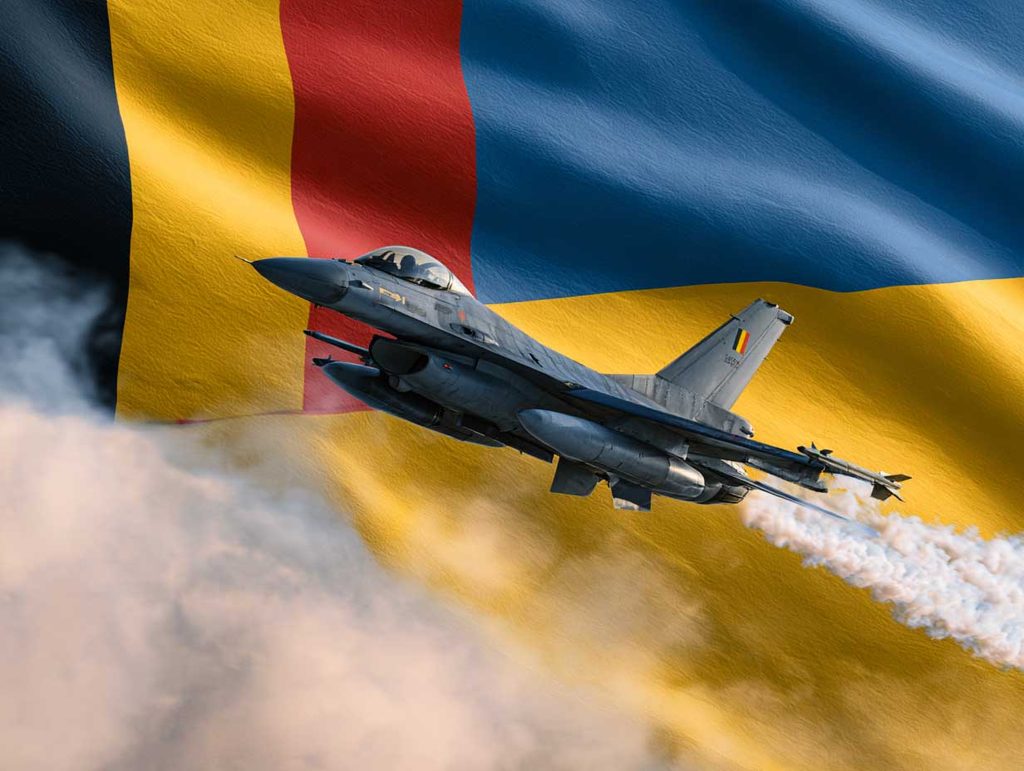
Ukrainian Training Dictates Operational Readiness
The delivery of an aircraft does not equate to immediate combat readiness.
Since 2023, Belgium has participated in the international coalition responsible for training Ukrainian personnel on the F-16. In March 2024, it dispatched approximately 50 military personnel and two F-16s to Denmark for an eight-week training mission.
This cooperation encompasses pilots, mechanics, and mission planners. Ukrainians are also being trained at the European F-16 Training Center in Fetești, Romania, where instruction combines academics, flight simulators, and real flights.
Mastering the airframe is only the first step. Crews must master interception tactics, tactical communications, and coordinated weapons employment.
Maintenance presents another critical constraint. Each F-16 requires routine inspections, spare parts, and qualified ground crews to maintain flight availability.
The December 31 deadline applies to the transfer of the aircraft, not necessarily their immediate entry into operational service. No official public timeline has been released for the initial operational missions of the ten announced aircraft.
Replacing F-16s with F-35s Sets the Belgian Timeline
Belgium must simultaneously modernize its fighter fleet while retaining necessary resources for national and allied missions.
The first F-35A Lightning II fighters arrived at Florennes in October 2025. Three additional aircraft arrived on September 25, 2026, bringing the total number of F-35As on Belgian soil to seven. Eight others were stationed in the United States for training at the time.
Belgium originally ordered 34 F-35As in 2018. Its fleet target was subsequently raised to 45 aircraft, with eleven additional units planned.
This transition involves more than swapping one aircraft for another. It requires training pilots, qualifying maintainers, upgrading base infrastructure, and progressively validating operational capabilities.
F-16s continue to fulfill critical missions, including continuous quick reaction alert (QRA) duties and NATO air policing commitments. In August 2026, four Belgian aircraft participated in monitoring Icelandic airspace.
The retirement of the legacy fighters must therefore remain synchronized with the ramp-up of the F-35 fleet. This constraint is precisely what previously delayed transfers to Ukraine.
The True Measure Will Be Combat Availability
For Kyiv, ten additional airframes represent a significant resource. However, they do not automatically equate to ten fighters capable of conducting daily combat sorties.
The ultimate impact will depend on the number of truly operational aircraft, their technical condition, ammunition stockpiles, and the capacity of Ukrainian ground crews to keep them mission-ready.
For Brussels, the operation is a balancing act. Belgium seeks to accelerate its military support without compromising its own air defense capabilities during the transition to the F-35.
By late 2026, the decisive factor will be less about the total number of F-16s transferred, and more about how many are genuinely ready to take off, intercept threats, and sustain high sortie rates. It is on this long-term capability that the true military impact of the Belgian transfer will be judged.