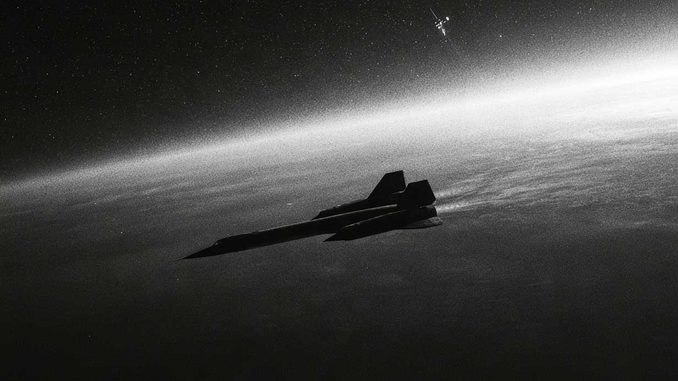
U-2, Global Hawk, F-35, and spy satellites: discover how aerial surveillance works and why Starshield is changing military intelligence.
In summary
Despite spectacular advances in military satellites, spy planes retain an essential role in intelligence strategies. Platforms such as the Lockheed U-2, the RC-135 Rivet Joint, or the RQ-4 Global Hawk drone collect images, intercept electromagnetic emissions, and monitor opposing military movements.
Their main advantage lies in their ability to loiter for hours over a target area and adapt their sensors to unfolding events. Satellites offer global coverage without exposing pilots, but their observations depend on orbits, weather conditions, and transmission delays.
However, the rise of Starshield—developed by SpaceX for government requirements—is altering this balance. The United States is investing in reconnaissance constellations capable of significantly increasing observation frequency. Russia, China, and European powers are also reinforcing their surveillance capabilities. The issue is no longer choosing between planes and satellites, but effectively exploiting their complementary data.
Spy planes maintain exceptional performance
A spy plane is an aerial platform specialized in military intelligence gathering. Unlike a fighter jet, its primary mission is not to destroy a target, but to detect, identify, and track its activities.
The Lockheed U-2 Dragon Lady, which entered service during the Cold War, illustrates this specialization. Still used in reconnaissance missions today, it operates above 70,000 feet (21,300 meters) with photographic, infrared, and electronic sensor suites.
The Northrop Grumman RQ-4 Global Hawk drone prioritizes endurance. According to characteristics published by the US Air Force, it can fly for over 34 hours and reach altitudes of 60,000 feet (18,300 meters). This range enables persistent surveillance over a region without an onboard crew.
The US Navy’s MQ-4C Triton applies a similar concept to maritime surveillance, remaining airborne for more than 24 hours above 50,000 feet (15,200 meters).
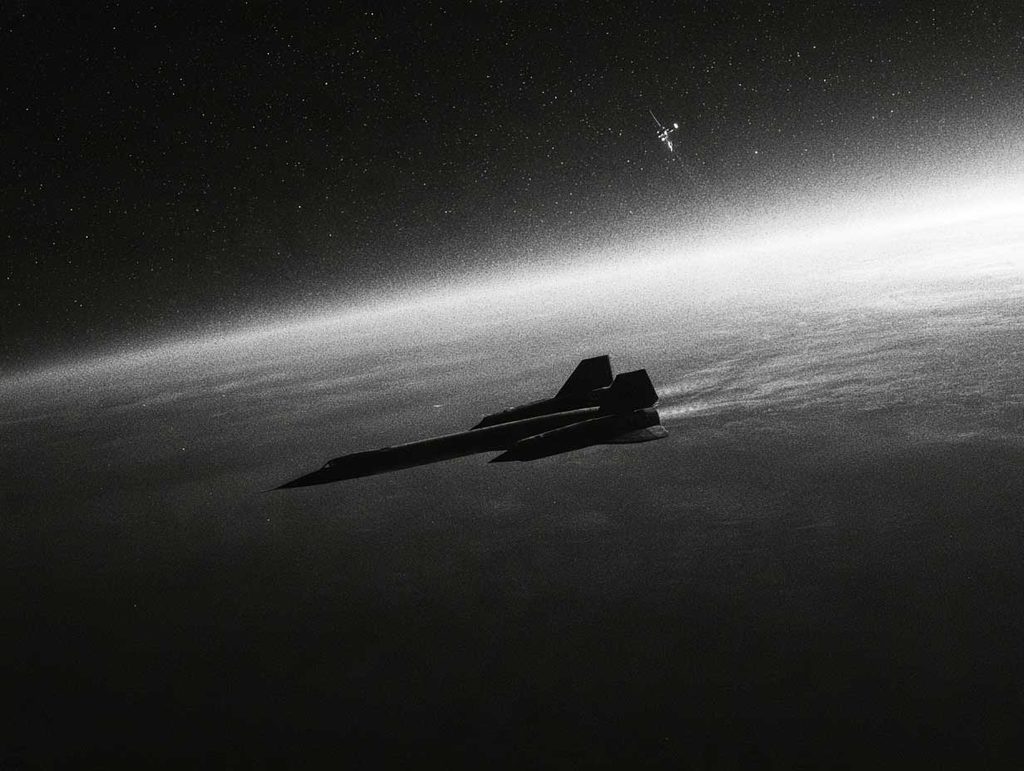
Historically, the Lockheed SR-71 Blackbird adopted a radically different strategy: flying above Mach 3 at altitudes exceeding 85,000 feet (25,900 meters). Permanently retired from military service in 1998, it demonstrated that extreme speed could complicate interception.
Today, endurance, stealth, and sensor quality generally take precedence over speed.
Sensors allow photographing and eavesdropping on adversaries
Optical and radar reconnaissance reveals military movements
Reconnaissance aircraft use several complementary technologies.
Electro-optical sensors produce detailed images of military installations. Infrared cameras detect differences in thermal radiation, particularly from engines and machinery.
Synthetic Aperture Radar (SAR) works differently. It emits radio waves and analyzes their reflections to reconstruct an image of the terrain.
This technology functions at night and through cloud cover, making it possible to detect changes at an airbase or port facility without relying on sunlight.
Ground Moving Target Indicator (GMTI) radars can also track vehicles or naval vessels. Their performance, however, depends on distance, terrain, and target characteristics.
Electromagnetic intelligence identifies enemy emissions
Aerial spying does not consist solely of taking photographs.
SIGINT (Signals Intelligence) exploits electromagnetic emissions. It includes COMINT, focused on communications, and ELINT, which analyzes electronic signals—particularly those from radars.
The Boeing RC-135V/W Rivet Joint is a benchmark in this field. Its crew, which can exceed 30 personnel, detects, characterizes, and geolocates adversary emissions.
In France, the ARCHANGE program plans for three Dassault Falcon 8X aircraft equipped with intelligence systems developed by Thales. Their entry into service is expected between 2028 and 2030.
The objective is to gather information on enemy radar and communications systems and transmit it to military intelligence analysis centers.
Fighter jets are becoming intelligence platforms themselves
Modern fighters also participate in reconnaissance missions.
The Lockheed Martin F-35 Lightning II combines an AESA radar, infrared sensors, and electronic warfare equipment.
Its data fusion aggregates gathered information into a shared tactical picture, allowing the pilot to identify threats and transmit intelligence to other units.
Its stealth features facilitate certain missions within heavily defended airspace.
However, the F-35 does not replace an RC-135 or a Global Hawk. Its sensors prioritize combat, and its capacity for prolonged surveillance remains lower than that of specialized platforms.
Spy satellites offer global coverage without overflight restrictions
Satellites present a decisive geopolitical advantage: they can observe foreign territories from space without entering sovereign airspace.
An optical satellite captures high-resolution imagery. A SAR satellite can likewise observe at night and through cloud cover.
The European Sentinel-1C and Sentinel-1D satellites orbit at approximately 693 kilometers altitude. Their constellation offers a nominal repeat pass cycle of six days at the equator. While these are civil observation satellites rather than military spy platforms, their technology illustrates the capabilities of spaceborne radar.
Specialized commercial constellations go even further. ICEYE advertises radar resolution down to 25 centimeters in certain acquisition modes, with revisit times of under six hours globally.
These capabilities, however, guarantee neither permanent observation of a precise location nor the identification of all objects.
Aircraft retain the advantage of being able to adjust their flight path and observe a target for hours, whereas a satellite generally passes overhead according to a fixed orbit.
The Starshield program transforms US space espionage
Confusion often persists between Starlink and Starshield.
Starlink is primarily a satellite telecommunications network; its commercial satellites are not, by nature, a constellation of spy cameras.
Starshield, also developed by SpaceX, meets government requirements. The program encompasses Earth observation capabilities, secure communications, and hosted military payloads.
In March 2024, Reuters revealed the existence of a classified $1.8 billion contract between SpaceX and the National Reconnaissance Office (NRO) for a intelligence satellite architecture.
The NRO is concurrently developing a distributed constellation of small satellites. In March 2026, its director indicated that the agency had launched over 200 satellites in preceding years.
This figure does not apply exclusively to Starshield satellites.
The goal is to reduce revisit intervals between observations and accelerate intelligence transmission. In August 2026, the NRO also awarded HawkEye 360 a contract for commercial radio frequency data exploitation.
Space espionage now extends far beyond simple photography.
Geopolitical tensions make reconnaissance operations riskier
Intelligence gathering can trigger diplomatic or military incidents.
In March 2023, an American MQ-9 Reaper drone went down in the Black Sea following an interaction with Russian Su-27s. Washington released video footage showing the contact between the aircraft.
In April 2025, Japan also reported activity involving a Chinese Shaanxi Y-9 intelligence aircraft and two military drones near its territory.
These operations illustrate a clear reality: observing an adversary is itself a strategic act.
International law reinforces the distinction between platforms. The Chicago Convention recognizes state sovereignty over territorial airspace, whereas the 1967 Outer Space Treaty prohibits national appropriation of outer space.
Satellites therefore enjoy far greater freedom of movement than aircraft, even if they remain vulnerable to jamming, cyberattacks, and anti-satellite weapons.
Intelligence superiority now depends on complementary assets
Satellites provide vast geographic coverage. Spy planes bring endurance, flexibility, and specialized eavesdropping capabilities. Stealth combat aircraft can gather data closer to enemy defenses.
None of these assets is sufficient on its own.
The competition among the United States, China, Russia, and European powers now centers on the ability to fuse this multi-source intelligence and exploit it rapidly.
The next decisive breakthrough may not be a plane flying higher or a satellite taking clearer pictures. It could well come from systems capable of identifying a threat, verifying it, and delivering actionable intelligence before the adversary has time to react.