From the Sahel to the Maghreb, Turkish and Chinese drones, Su-25s, and L-39s are transforming African air forces around a less expensive model.
Executive summary
From Mali to Burkina Faso, African air forces are increasingly prioritizing armed drones, simple attack aircraft, and second-hand platforms over large fleets of heavy fighters. The Turkish Bayraktar TB2 symbolizes this evolution: enduring, armed, and relatively affordable, it enables the surveillance of vast territories and fast strikes against mobile groups. China is also making progress with its Wing Loong and CH-4 drones. At the same time, aircraft like the Su-25 or the L-39 are extending their operational life thanks to their simplicity and lower costs compared to modern multirole fighters. However, this trend mainly concerns the Sahel. The Maghreb continues to invest in heavy fighter aviation, with Algerian Su-30s and Su-57s or Moroccan F-16s. Africa is therefore not giving up on modern combat aircraft; it is adapting its aviation to the type of warfare it actually fights.
Sahelian warfare favors simple and long-endurance platforms
The aviation model emerging in the Sahel primarily answers an operational constraint.
Forces in Mali, Niger, or Burkina Faso mostly face mobile armed groups dispersed across vast territories. These adversaries generally possess very few sophisticated anti-aircraft assets. In this context, supersonic speed or the ability to engage another fighter jet becomes secondary.
The priority lies elsewhere: identifying a column, tracking a group for several hours, transmitting real-time video feed to command, and quickly engaging a target.
This is precisely what an armed MALE drone provides.
According to SIPRI, arms imports to Sub-Saharan Africa increased by 13% between the 2016–2020 and 2021–2025 periods. China accounted for 22% of deliveries, ahead of Russia at 12% and Türkiye at 11%.
This growth reflects not only a shift in suppliers, but also a shift in doctrine.
The Bayraktar TB2 combines surveillance and strike at low cost
The Bayraktar TB2 has become one of the key symbols of this transformation.
The aircraft has a maximum takeoff weight of around 700 kg. It can carry a 150 kg payload and remain airborne for more than 18 hours. Its maximum speed is close to 220 km/h. It generally operates at an operational altitude of around 4,900 m (16,000 ft).
These specifications seem modest compared to a Rafale or an F-16. Yet, they are perfectly tailored to Sahelian missions.
The drone can monitor a road, a village, or a desert area for hours before engaging a target with light precision-guided munitions.
Persistence replaces speed.
Its price tag is another advantage. Available estimates often place the TB2 at a few million euros per airframe. However, this figure must be viewed with caution. A complete operational capability also includes ground control stations, spare parts, training, munitions, sensors, and technical support.
For example, Croatia paid approximately €67 million before tax for a package of six TB2 drones along with equipment and support.
Mali builds a hybrid air force
Mali offers one of the most advanced examples of this transformation.
Bamako operates Bayraktar TB2s, Mi-8 and Mi-24 family helicopters, L-39 aircraft, as well as Su-25s. Since 2026, the Malian military has also been receiving Bayraktar Akıncı drones.
The latter represents a scale shift.
The Akıncı reaches approximately 6 tons at takeoff and can carry up to 1,500 kg of payload. Its endurance exceeds 20 hours. It can accommodate AESA radar, electronic warfare equipment, satellite communications, and longer-range guided weapons.
Mali thus acquires a capability that closer resembles an air combat system than a simple surveillance drone.
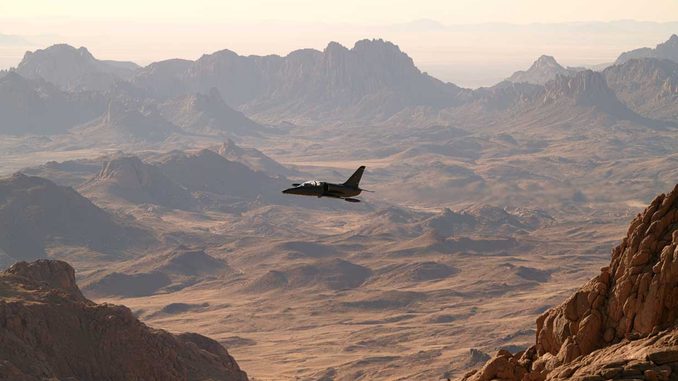
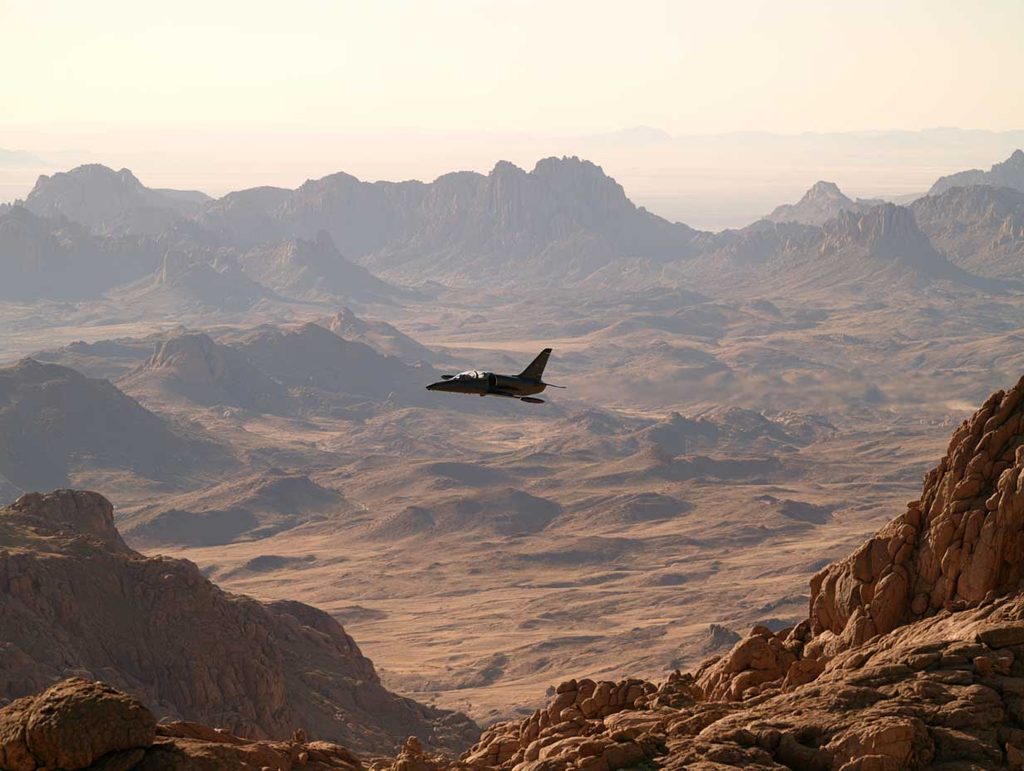
L-39s complete this fleet.
A clarification is necessary: the L-39 is not Russian. The aircraft was designed in Czechoslovakia by Aero Vodochody. However, it belongs to the aviation ecosystem inherited from the Warsaw Pact and remains widely present in countries historically reliant on Soviet military hardware.
The L-39 and Su-25 offer affordable firepower
The L-39C is primarily a trainer aircraft. However, certain light attack variants can carry unguided rockets and light bombs.
Its maximum weight remains under 5 tons and its speed is around 750 km/h. Operating it is far simpler than managing a modern multirole fighter jet.
The Su-25 follows a similar logic with more firepower.
Designed specifically for close air support, it is twin-engined, armored, and capable of carrying several tons of munitions. Its design dates back to the 1970s, but it remains fully relevant when the adversary lacks modern air defense systems.
An aircraft of this type is more than sufficient to strike vehicles, fortified positions, or troop concentrations.
Sophistication becomes unnecessary if the mission does not require it.
China and Türkiye reduce reliance on Moscow
The shift also affects suppliers.
For decades, Russia and the Soviet Union dominated a large portion of the African military market. MiG, Sukhoi, and Mil aircraft formed the backbone of many air forces.
This position is weakening.
Global Russian arms exports plunged by 64% between 2016–2020 and 2021–2025, according to SIPRI. At the same time, Türkiye is rapidly expanding its drone exports, and China is selling complete systems combining drones, aircraft, radars, and air defense capabilities.
Chinese Wing Loong and CH-4 drones are now present across several African air forces.
The main advantage of Beijing and Ankara is straightforward: their systems are available, relatively accessible, and often sold with fewer political restrictions than Western systems.
The Maghreb retains its heavy fighters
The trend is very different in North Africa.
Algeria and Morocco must prepare for potential state-on-state conflicts. Their air power must be capable of confronting opposing fighters, penetrating air defenses, and protecting national airspace.
Algeria operates a large fleet of Su-30s and is pursuing its integration of the Su-57E. Russian industrial sources confirmed in 2026 that the country was among the initial export customers for the aircraft.
Morocco follows a comparable approach with the F-16. In 2019, the United States authorized the sale of 25 F-16C/D Block 72 aircraft with associated equipment and support, for an estimated maximum amount of $3.787 billion.
In these countries, drones complement fighter jets rather than replacing them.
Low cost masks several limitations
Drones are not a universal solution.
The TB2 performs particularly well when enemy air defenses remain weak. Facing modern surface-to-air missile systems, electronic jamming, or active interceptor fighter jets, its vulnerability increases rapidly.
The Ukrainian experience demonstrated this. Following initial successes at the start of the conflict, TB2s were gradually pushed back from heavily contested zones as Russia reinforced its air defenses and electronic warfare capabilities.
Financial calculations must also factor in sensors, ground stations, satellite bandwidth, munitions, and sustainment.
A cheap drone can turn into an expensive ecosystem when relying on a full network of communications and maintenance.
Africa builds an air force adapted to its wars
The shift currently observed does not announce the end of the modern combat aircraft.
Instead, it reflects a much more rational segmentation of resources.
In the Sahel, keeping a drone airborne for fifteen hours over a zone often delivers more operational value than sending a supersonic fighter for forty minutes. An L-39 or a Su-25 can provide sufficient close air support against a lightly equipped adversary.
In the Maghreb, the logic is different. Facing the risk of conventional warfare, platforms like the Rafale, F-16, Su-30, or Su-57 retain irreplaceable strategic value.
The true breakthrough lies elsewhere. For a long time, a credible air force was measured by the number of fighter jets it fielded. In a growing part of Africa, it is now measured by its capacity to see long, strike fast, and sustain its aircraft at low cost.
It is this equation—rather than the pursuit of technological prestige—that explains the success of Turkish drones, Chinese systems, and second-hand attack aircraft.