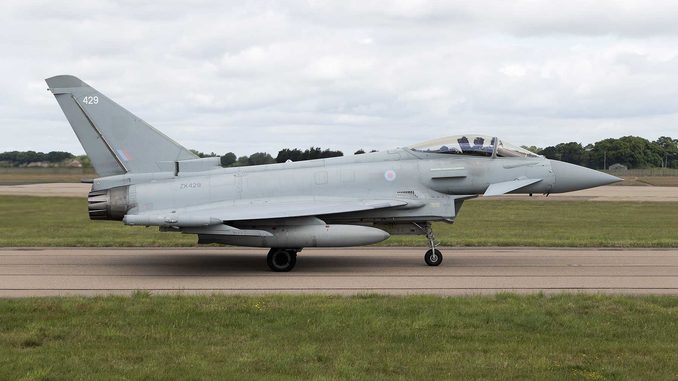
Eurofighter aims for over 250 additional Typhoons. Buyer countries, contracts, prices, and comparison with sales of Dassault Aviation’s Rafale.
Summary
The Eurofighter consortium is showcasing new commercial ambitions. On November 4, 2026, at the International Fighter Conference in Munich, European defense contractors outlined prospects for more than 250 additional Typhoons. This estimate reflects market opportunities, not firm orders.
Three markets stand out: Saudi Arabia with 54 potential aircraft, Austria with 36, and Turkey with 24. Additional export campaigns target Portugal, Poland, and Bangladesh.
The program also benefits from recent orders placed by Germany, Spain, Italy, and Turkey. Eurofighter now totals 769 ordered aircraft, compared to 533 Rafales for Dassault Aviation at the end of 2025.
However, the Rafale maintains a major commercial advantage: 323 export orders and a backlog that is already heavily secured. The competition between the two European fighters now hinges on price, operational capabilities, industrial partnerships, and delivery timelines.
The Eurofighter Consortium Announces Potential for Over 250 Aircraft
In Munich on November 4, 2026, Eurofighter unveiled an estimate of its future commercial opportunities. Aviation Week reported over 250 potential aircraft, while FlightGlobal and Breaking Defense adopted a more cautious phrasing of over 200 jets.
The presentation identifies 114 aircraft across three countries alongside roughly 150 other opportunities. These are not signed contracts; these figures represent commercial campaigns whose final outcome remains uncertain.
The program totals 769 Eurofighters ordered and 619 delivered as of September 30, 2026. It brings together four partner nations: the United Kingdom, Germany, Italy, and Spain. Airbus Defence and Space, BAE Systems, and Leonardo handle its manufacturing.
This renewed ambition pursues two goals: meeting the rising demand for European combat aircraft, and sustaining production lines until the arrival of future sixth-generation fighters.
European Orders Secure Typhoon Production
Germany, Spain, and Italy have recently reinforced their investments in the Eurofighter Typhoon.
In October 2025, Berlin ordered 20 Tranche 5 Eurofighters for €3.75 billion, scheduled for delivery between 2031 and 2034. These join the 38 aircraft ordered under the Quadriga program.
Spain has ordered 45 aircraft under the Halcón I and II programs. The first contract, signed in 2022, is valued at €2.043 billion for 20 fighters. The second contract covers 25 aircraft with an acquisition budget of approximately €4 billion, intended primarily to replace its F/A-18 Hornets.
In December 2024, Italy signed a contract for up to 24 Eurofighters. The overall program represents €7.47 billion, including logistical support.
These already recorded orders should not be confused with the new commercial prospects.
Saudi Arabia Could Order 54 Additional Eurofighters
Saudi Arabia represents one of the Typhoon’s principal potential export markets. Riyadh already operates 72 aircraft acquired under the Salam program, signed in 2007 for £4.43 billion.
The consortium is now targeting a new order of 54 Eurofighters.
This acquisition would strengthen Saudi air defenses while maintaining logistical continuity with its existing fleet. Infrastructure, pilot training, and maintenance setups are already tailored to the Typhoon.
Competition remains open, however. Saudi Arabia also operates Boeing F-15s and is evaluating new American options. No contract for the 54 additional Typhoons has been signed, and the contract value remains undisclosed.
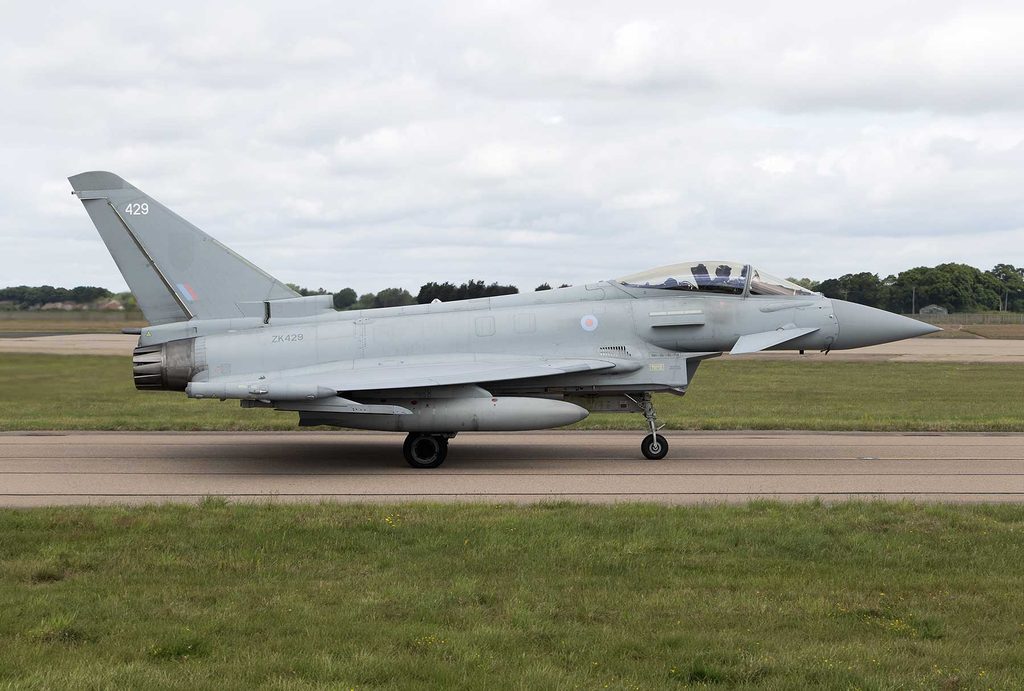
Turkey Confirms Interest in a Second Order
Ankara became a major customer of the program in October 2025, signing a contract for 20 Eurofighter Typhoons valued at £5.4 billion for aircraft, weapons, and integration. Including additional support and training services, the overall deal exceeds £8 billion.
Deliveries are scheduled to begin in 2030.
The consortium is evaluating a second batch of 24 new-build aircraft, separate from Turkish discussions regarding second-hand Typhoons from Qatar and Oman.
Turkey is seeking to modernize its aging F-16 fleet following its exclusion from the U.S. F-35 program after purchasing the Russian S-400 air defense system.
The Typhoon would allow Ankara to rapidly reinforce its air force while awaiting the development of its indigenous fighter, the TAI KAAN. However, an additional order of 24 aircraft has not been confirmed.
Austria Considers 36 Fighters to Replace Its Fleet
Austria currently operates 15 first-generation Eurofighters. Delivered starting in 2007, these aircraft possess more limited capabilities than newer versions.
In October 2026, Austrian Defense Minister Klaudia Tanner highlighted a requirement for 36 new fighters to replace the current fleet by 2035.
Eurofighter views this procurement as a major opportunity. However, Vienna has not yet selected the Typhoon for this acquisition. The F-35 and other platforms remain under consideration.
This would be a replacement program that also expands fleet capacity, rather than an order of 36 aircraft simply added to the existing 15.
Portugal, Poland, and Bangladesh Represent Three Other Markets
In Portugal, Airbus is pitching the Typhoon to replace 28 aging F-16Ms. The manufacturer highlights air defense missions and potential industrial cooperation opportunities.
Competition includes the Lockheed Martin F-35, the Saab Gripen E, and the Dassault Rafale. Lisbon has not yet opened a formal acquisition process.
Poland is considering 32 additional fighters to reinforce its air superiority capabilities. While the Typhoon could fulfill this need, Warsaw already operates an F-35 program and favors close military cooperation with Washington.
In Bangladesh, Leonardo signed a letter of intent in December 2025 with the air force for the acquisition of Typhoons. No final quantity or contract amount has been announced. Dhaka is simultaneously examining Chinese Chengdu J-10CE jets.
These three campaigns illustrate the program’s prospects, but also the challenge of converting sales discussions into firm orders.
Rafale Retains a Major Lead in Export Markets
Comparing the Eurofighter Typhoon and the Dassault Rafale highlights two distinct industrial strategies.
By the end of 2025, Dassault Aviation recorded 533 Rafales ordered, including 323 for export. As of June 30, 2026, its backlog still stood at 208 aircraft to deliver, 165 of which are destined for foreign customers.
Recent contracts illustrate this commercial momentum:
- United Arab Emirates: 80 Rafale F4s for approximately €16 billion including weaponry, signed in 2021 and entered into force in 2022.
- Serbia: 12 Rafales for €2.7 billion in August 2024.
- India: 26 Rafale Marine jets for approximately $7.4 billion in April 2025.
Per-aircraft pricing figures vary widely because contracts include different packages of equipment, weaponry, simulators, and maintenance services. Simply dividing total contract value by the number of fighters does not reflect unit manufacturing costs.
The Rafale also benefits from a centralized sales organization. Dassault negotiates alongside the French government, whereas Typhoon export sales require consensus among multiple European partner nations.
Technical Upgrades Aim to Sustain Competitiveness for Both Fighters
The Typhoon remains tailored for air superiority. Its twin Eurojet EJ200 engines each generate 90 kN with afterburner, enabling a top speed near Mach 2.
New ECRS Mk1 and Mk2 AESA radars enhance target detection, tracking, and electronic warfare capabilities. Their integration is planned to maintain operational effectiveness past 2060.
The Rafale relies on its RBE2 AESA radar, SPECTRA electronic warfare suite, and omnirole capability to carry out diverse missions during a single sortie. Its future F5 standard is set to introduce collaborative combat features with uncrewed loyal wingmen.
Neither platform, however, provides the native stealth of an F-35 fighter jet.
Commercial Outlook Depends on Signed Contracts
Eurofighter aims to increase production to 30 aircraft per year, up from roughly 12 prior to the ramp-up announced in 2025. Achieving this ambition depends directly on securing new firm orders.
The potential for 250 aircraft represents a major industrial outlook, but it constitutes neither guaranteed revenue nor a commercial victory over Dassault.
The Rafale possesses a firmly contracted export backlog. For its part, Eurofighter relies on four solid domestic markets and an expansive European industrial base.
The next phase will be decisive: formal contract signings in Saudi Arabia, Turkey, and Austria will determine whether the Typhoon’s sales resurgence turns into sustainable growth or remains a stated goal.