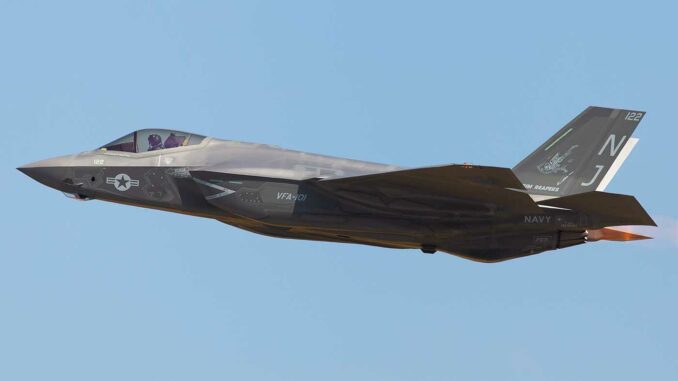
The F-35 is not considered essential to NORAD by its commander. In Ottawa, the debate over the 88 aircraft raises a simple question: Does Canada really need them?
In summary
The debate over the F-35 in Canada took a sharp turn following a statement by General Gregory Guillot, commander of NORAD and USNORTHCOM. During a U.S. Senate hearing on March 19, 2026, he stated that 5th-generation fighters were not necessary to defend North American borders, arguing that a modernized fleet of 4th-generation aircraft could suffice for this mission. This statement immediately weighed on Ottawa, where the Canadian program still calls for 88 F-35As. The problem is simple: if the priority mission is interception over the continent, the argument for stealth loses some of its force. But when considering interoperability with the United States, network-centric warfare, the contested Arctic, and NATO commitments, the F-35 makes much more sense. The truth is less black-and-white than the political debate. For NORAD alone, the F-35 is not indispensable. For the full range of Canadian missions over the next twenty to thirty years, it remains a coherent choice, but an expensive, demanding, and politically fragile one.
The remark that reignited the entire controversy in Ottawa
The statement that ignited the debate did not come from an editorial or a think tank. It came from the commander of NORAD himself. Testifying before the U.S. Senate Armed Services Committee, General Gregory Guillot stated: “Frankly, we don’t need 5th generation aircraft to defend our borders.” He added that these capabilities were better utilized overseas, where stealth, penetration, and air-to-ground weapons matter more. He even explained that a fleet of modernized 4th-generation aircraft, including F-15EX-type aircraft at certain locations, would meet the command’s needs. This statement dates from March 19, 2026. While it truly shook up Ottawa around April 2, 2026, the substance of the remarks is clearly established by the official transcript of the hearing.
This point is crucial, as it cuts the Canadian argument in two. For years, advocates of the F-35 have argued that this aircraft is necessary to fulfill Canada’s obligations within both NORAD and NATO. Guillot, however, has clearly separated the two issues.
For the strict defense of the continent, his reasoning is as follows: NORAD primarily handles alerting, identification, interception, air policing, and surveillance of air approaches. This type of mission requires availability, responsiveness, a good range, adequate payload capacity, and robust sensors. On the other hand, it does not always require all the advantages of a 5th-generation stealth aircraft. In other words, he shifted the debate from the realm of technology to that of mission suitability.
NORAD’s Mission, Which Is Not to Be Confused with NATO’s
It is important to distinguish between the roles. NORAD is a binational command responsible for aerospace surveillance, warning, and control in North America. In this context, a significant part of the work involves detecting, tracking, identifying, and then intercepting aircraft or threats approaching the continent. Guillot’s testimony also emphasizes a multi-layered approach that includes over-the-horizon radars, airborne early warning, mobile target indicators, and detection and defense architectures across multiple domains. The fighter jet is therefore not everything. It is one link in a larger system.
In this context, a robust modernized 4th-generation aircraft can remain highly credible. For taking off quickly, climbing to altitude, identifying a target, escorting a bomber, tracking an unknown aircraft, or maintaining operational readiness, stealth is not always decisive. This is precisely what Guillot meant. He wasn’t saying that the F-35 is bad. He was saying that it is not essential to the continental mission when considered in isolation. It’s a nuance, but a significant one. It undermines a central political argument in Canada: the claim that the F-35 is automatically required by NORAD.
The Canadian program whose costs have significantly spiraled
The debate would be simpler if the F-35 were inexpensive. That is not the case. In January 2023, Canada confirmed the acquisition of 88 F-35As to replace the CF-18s, with an initial estimate of 19 billion Canadian dollars. The stated goal at the time was to receive the first aircraft starting in 2026 and to complete the transition by the end of 2032, the scheduled date for the complete retirement of the CF-18s.
But the outlook has darkened. The report by the Auditor General of Canada published in June 2025 found that the project’s overall estimate had risen to 27.7 billion Canadian dollars in 2024, nearly 50% higher than the initial estimate. The report specifically points to the impact of exchange rates, rising infrastructure costs, delays in facility construction, pilot shortages, and management shortcomings. This changes the nature of the debate.
When a program costs nearly 28 billion Canadian dollars before it even reaches full operational capacity, the question is no longer simply “which aircraft is the best?” It becomes “which aircraft truly meets Canada’s needs, at what cost, and with what constraints?”
The Canadian Case for the F-35 Goes Beyond Stealth
It would be misleading, however, to reduce the F-35 issue to a dispute over stealth. The Canadian government continues to defend the purchase by explaining that it must ensure the country’s security and fulfill Canada’s international obligations. Official documentation emphasizes that the fleet of 88 aircraft must serve national sovereignty, NORAD missions, and commitments to NATO. It also stresses that the F-35 was designed and developed as a coalition platform, operated alongside the United States and numerous allies.
This is where the pro-F-35 camp has a strong argument. Canada is not just buying an interceptor to patrol over the Far North. It is buying a system designed to last for decades, to operate in an interconnected environment, to exchange data with U.S. forces, to participate in allied operations, and to avoid falling behind technologically. An older Canadian document on the service life of the CF-18 already stated that, as the United States modernizes its own fleets, future NORAD operations might also require interoperability considerations comparable to those of coalition operations. This point is fundamental. Even if pure stealth is not essential for every NORAD mission, NORAD’s technical environment is becoming increasingly demanding.
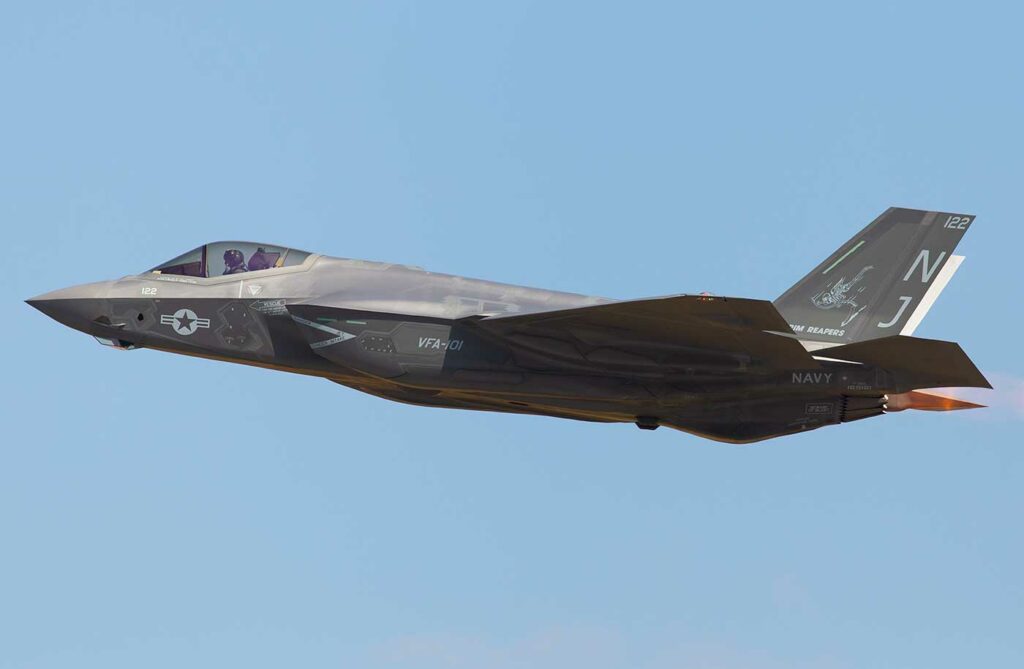
The Real Value of the F-35 for Canada, Mission by Mission
To answer the question “Is the F-35 really useful?” honestly, we need to break it down by mission.
For air policing and conventional interception, the answer is nuanced. A less expensive, less complex, and potentially more rugged aircraft might suffice in many cases. This is exactly the logic of the NORAD commander. If we were limited to alert sorties, escorting intruding aircraft, monitoring air approaches, and protecting the continental territory within a relatively permissive framework, the F-35 is not the most obvious choice. It is technologically superior, but not necessarily the most efficient.
For network-centric warfare, situational awareness, and cooperation with the United States, the answer changes. The F-35 offers more than just a low radar signature. Above all, it provides sensor fusion, a modern mission architecture, high-level data exchange capabilities, and native integration into a very broad allied ecosystem. In the Arctic of tomorrow, facing more complex threats, cruise missiles that are harder to detect, multi-domain approaches, and a growing need to share intelligence and data, this advantage matters more than a simple performance spec sheet.
The U.S. command itself, in its written testimony, emphasizes the need for advanced sensors, integrated systems, and a multi-layered defense against increasingly sophisticated Russian and Chinese threats.
For NATO missions and overseas operations, the utility of the F-35 becomes even clearer. This is, in fact, the implicit core of Guillot’s argument: he states that these capabilities are “better utilized overseas.” This amounts to acknowledging their value, but within a different context. Yet Canada is not a country that voluntarily limits itself to the defense of its own airspace alone. It remains a coalition ally. If Ottawa wants to maintain an air force capable of operating alongside the Americans, British, Italians, Dutch, Norwegians, or Danes in contested environments, the F-35 is a logical choice.
The Mixed Fleet Option: Politically Appealing but Complicating Everything
Guillot’s remark automatically revives the idea of a mixed fleet. This scenario would be simple on paper: purchase a more limited number of F-35s for high-intensity missions and supplement them with a more conventional, less expensive aircraft for territorial and alert missions. Politically, the idea has its appeal. It would help reduce some of the costs, calm the controversy, and address the criticism that Ottawa is purchasing a tool that is too sophisticated for a primarily defensive continental mission. Recent public debates in Canada have indeed revolved around this hypothesis.
But militarily and logistically, this solution comes at a price. Two fleets mean two maintenance chains, two training curricula, two spare parts inventories, two technical cultures, two support systems, and constant trade-offs regarding mission allocation. For an air force already grappling with the aging of the CF-18s, a pilot shortage, and the ramp-up of new infrastructure, adding a second platform could become a source of disruption rather than a net cost savings. A mixed fleet isn’t absurd. But it isn’t a magic formula. It trades a cost problem for a complexity problem.
The verdict we must face head-on
So, is the F-35 in Canada useful? Yes, but not for the reason its advocates most often cite. For NORAD alone, strictly in the context of North American territorial defense, the aircraft is not indispensable. The NORAD commander has made this clear, and his reasoning holds up. For this mission alone, a good modernized 4th-generation fighter could likely do the job at a lower cost.
But if Canada wants a credible combat aviation force over the long term—integrated into allied networks, capable of operating with NATO, compatible with the evolution of U.S. forces, and adapted to an increasingly challenging technical environment—then the F-35 remains a viable option.
The real issue, therefore, is not its uselessness. The real issue is its fit within Canada’s strategic framework. If Ottawa wants a purely continental asset, the F-35 is likely overkill. If Ottawa wants to remain a leading ally in complex operations, it becomes much more defensible. That is the crux of the Canadian debate. Not between a good and a bad aircraft, but between two visions of the country’s military role.
Sources
U.S. Senate Armed Services Committee, March 19, 2026 hearing on the posture of USNORTHCOM and USSOUTHCOM, official transcript
Government of Canada, Future Fighter Capability Project
Government of Canada, Announcement regarding the F-35 acquisition, January 9, 2023
Auditor General of Canada, Report 2—Delivering Canada’s Future Fighter Jet Capability, June 10, 2025
Government of Canada, Supplementary Estimates, December 4, 2025
Government of Canada, briefing materials for the Standing Committee on National Defence, October 23, 2025
Government of Canada, archived note on the service life of the CF-18s and interoperability issues
USNORTHCOM / NORAD, posture statement from March 2026
War Wings Daily is an independant magazine.