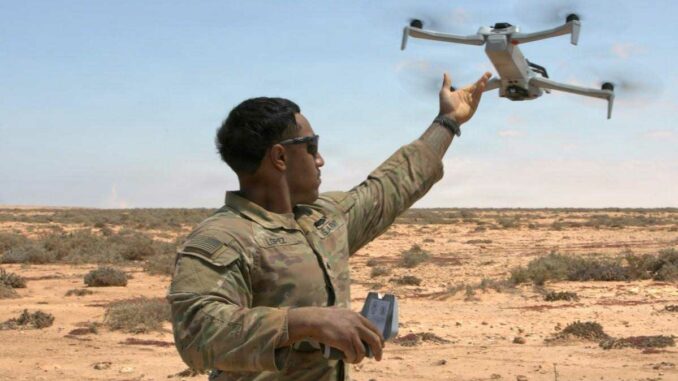
From Nigeria to Morocco, African militaries seek to produce, maintain, and control their drones to counter armed threats and end foreign dependencies.
In Summary
Military drones have become indispensable to African armed forces. They monitor borders, track armed groups, protect critical infrastructure, and guide targeted strikes. Yet a large portion of these capabilities still relies on imported platforms, sensors, software, and spare parts. Nigeria is determined to change this reality. On July 22, 2026, its House of Representatives called for structured financial support for domestic manufacturers, including Terra Industries, Beirech UAS, Proforce, and the Air Force Institute of Technology. This decision follows African Lion 2026, where over 5,600 participants tested tactical drones, loitering munitions, and counter-drone systems. The momentum is genuine, but it remains fragile. Manufacturing an airframe or assembling a quadcopter is not enough. Sovereignty requires control over data, communications, maintenance, critical components, and mass production. The primary hurdles will be less technological than financial, administrative, and industrial.
Nigeria Elevates Drones to a National Industrial Priority
The political signal is unambiguous. On July 22, 2026, the Nigerian House of Representatives urged the federal government to draft a national drone industrialization policy.
The resolution directly targets domestic companies and entities already operating in the sector. It specifically names Beirech UAS, Terra Industries, Elites Group, Proforce, and the Air Force Institute of Technology (AFIT). It proposes granting them access to public funding through the Bank of Industry, the Defence Industries Corporation of Nigeria, and specialized investment vehicles.
Parliament did not stop at calling for subsidies. It also requested defense-dedicated industrial zones, tax incentives, intellectual property protections, and local-content priority in military procurement. The relevant parliamentary committees were directed to submit their findings within four weeks.
This initiative acknowledges a structural vulnerability. Nigeria possesses talented engineers, laboratories, and multiple working prototypes, but it still lacks a mass-production capability comparable to that of its primary foreign suppliers.
The challenge is no longer proving that a drone can fly. It is demonstrating that a domestic industry can deliver dozens of identical units, maintain consistent quality control, supply spare parts, and rapidly fix defects identified in operational environments.
Terra Industries Represents a New Generation of Manufacturers
Terra Industries exemplifies this industrial shift. The Abuja-based startup initially developed surveillance platforms for the energy, mining, and industrial sectors. It also manufactures autonomous surveillance towers, unmanned ground vehicles, and a proprietary data management software called ArtemisOS.
In April 2026, the company unveiled interceptor drones, demining vehicles, and battlefield intelligence software. The Defence Industries Corporation of Nigeria publicly endorsed the initiative, particularly for its potential to reduce casualties caused by improvised explosive devices.
Terra Industries states that it operates a 15,000-square-foot (1,394 m²) facility near Abuja, with a theoretical capacity of up to 30,000 drones annually. However, this figure should be interpreted with caution. An announced maximum production capacity does not equal delivered units, nor does it guarantee military-grade standards, steady component supply, or acceptable industrial yield rates.
The company claims to manufacture its airframes, specific battery packs, propellers, and parts of its software locally. However, it still imports several sensors and electro-optical cameras. While expected for an emerging enterprise, it highlights that drone sovereignty cannot be measured solely by the location of final assembly.
AFIT Brings Legacy Experience, but Output Remains Limited
Nigeria is not discovering drone technology for the first time in 2026. AFIT has been researching aeronautical engineering and unmanned systems for years.
Its Tsaigumi drone was inducted into service in 2018. Designed for intelligence, surveillance, and reconnaissance (ISR), it is capable of day and night missions. Published specifications indicate an endurance exceeding ten hours, an operational radius of 100 kilometers, and a service ceiling of approximately 15,000 feet (4,570 meters).
The Tsaigumi represents a genuine technical milestone, demonstrating Nigeria’s ability to design an aerial system, integrate an electro-optical camera, and secure a data link. Yet, an operational prototype does not automatically create an industrial manufacturing base.
Transitioning to serial production demands certified suppliers, standardized quality control procedures, comprehensive documentation, and strict configuration management. Every modification to the engine, autopilot, or software must be meticulously tracked so that two theoretically identical aircraft behave identically under the exact same conditions.
This is precisely the stage where many domestic defense programs stall.
Lessons From African Lion 2026 Highlight the Central Role of Drones
African Lion 2026 took place from April 20 to May 8 across Morocco, Ghana, Senegal, and Tunisia. Led by United States Africa Command, the exercise brought together more than 5,600 military and civilian personnel from over 40 countries.
Drones were not treated as secondary assets. They were fully integrated into reconnaissance, targeting, deep strikes, unit defense, and counter-unmanned aerial systems (C-UAS) operations.
Public reports describe a defense architecture combining sensors, interceptor drones, anti-drone systems, loitering munitions, and intelligence assets. This setup aims to compress the sensor-to-shooter loop. A target detected by a surveillance drone can be identified, transmitted to a command post, and engaged by a secondary strike system within minutes.
This acceleration fundamentally alters battlefield operations. In African conflict zones, military units often operate over vast geographic areas with limited aircraft, few helicopters, and inadequate road networks. A tactical drone can loiter over an area, monitor a convoy, or scout a route without placing aircrews at risk.
The First Multinational Drone Training Course Identifies Essential Skills
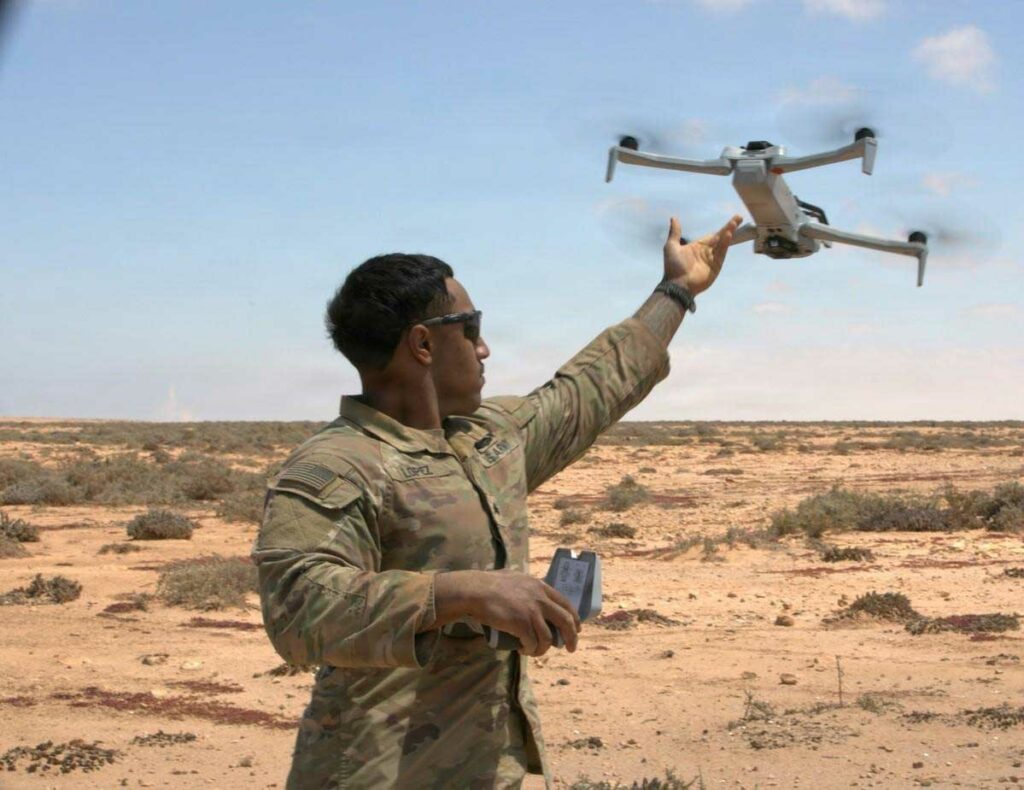
African Lion 2026 featured its first multinational training course specifically dedicated to drone operations. Over 20 military personnel from Morocco, Nigeria, Ghana, and the United States participated.
The curriculum included an eight-day course for mission planners and a ten-day track for operators. Trainees were instructed in meteorology, battery management, camouflage, night flying, emergency procedures, maintenance, and airspace coordination.
This comprehensive curriculum is telling. Training a pilot to operate a remote control is insufficient. Operators must know how to integrate drones into combined arms maneuvers, prevent mid-air collisions, protect operating frequencies, and transmit actionable video feeds to commanders.
Airspace coordination is particularly critical. A small drone operating at low altitudes can easily cross paths with a helicopter, light aircraft, or friendly artillery round. Without standardized joint procedures, an asset intended to enhance tactical awareness becomes a hazard to friendly forces.
Electronic warfare represents another major hurdle. Adversaries can jam data links, disrupt satellite navigation, or locate operators by tracking their radio emissions. Armed forces must therefore train to operate in signal-degraded environments, execute frequency hops, and recover aircraft that have lost command connectivity.
Counter-Drone Operations Become Inseparable From Drone Employment
African Lion 2026 also tested several countermeasures against small unmanned aerial vehicles. The Bumblebee system—a compact, rapidly deployable interceptor—was evaluated as a low-cost defense option.
This dual focus is essential: any military deploying its own drones must simultaneously learn how to detect and neutralize enemy platforms.
Anti-drone defense rarely relies on a single technology. It combines specialized radars optimized for small radar cross-sections, electro-optical sensors, radio frequency detectors, jammers, and kinetic interceptors.
Countermeasures must also make economic sense. Destroying a commercial quadcopter worth a few thousand dollars with a surface-to-air missile costing hundreds of thousands is financially unsustainable. Reusable interceptors, anti-aircraft guns, directional jammers, and hunter-killer drones directly address this cost asymmetry.
Geographic Realities Make Drones Indispensable
African operational requirements do not simply copy European or American doctrines; they address distinct geographic constraints.
Many nations must monitor land borders that stretch across vast deserts, dense forests, or rugged mountain ranges. Outposts are isolated, telecommunications infrastructure is sparse, and manned aircraft are expensive to operate and incapable of maintaining a constant presence.
Drones help bridge this gap. Fixed-wing platforms can patrol border corridors for hours, vertical takeoff and landing (VTOL) drones can be launched by isolated units without a runway, and small quadcopters can scout terrain beyond the next hill or village.
Operational demands extend well beyond counter-terrorism. They encompass pipeline protection, maritime surveillance, combating illegal fishing, securing mining sites, and monitoring electrical grid infrastructure.
This versatility creates a viable domestic market. The same technological baseline can serve military units, customs agencies, border guards, and infrastructure operators. This convergence between civil and defense applications can help manufacturers generate necessary production volumes.
However, it also presents risks. Commercial-off-the-shelf models do not automatically satisfy military specifications. Tactical systems must withstand dust, extreme heat, vibrations, and harsh handling. Their data links must be encrypted, and their software must operate reliably without requiring persistent connections to foreign servers.
Armed Groups Rapidly Close the Technological Gap
Demand is driven not only by geography, but also by an evolving threat environment.
In the Sahel, non-state armed groups regularly employ commercial drones to conduct reconnaissance, film combat operations, and prepare attacks. Jama’at Nusrat al-Islam wal-Muslimin has progressively expanded its use of drones to include tactical scouting, assault guidance, and, in some cases, improvised explosive delivery.
In Niger, ACLED documented the first reported use of a drone in an attack attributed to the Islamic State in the Sahel Province in 2026. In Nigeria, authorities report that Boko Haram and the Islamic State West Africa Province regularly modify commercial off-the-shelf aircraft for use against military forces.
Non-state actors do not need sophisticated military-grade drones to be effective. A commercial quadcopter fitted with a camera can expose troop positions, track vehicle movements, or adjust mortar fire. A modified drone can drop small explosive payloads, while aerial footage serves propaganda and recruitment efforts.
In East Africa, offensive drone usage remains less documented. Al-Shabaab uses drones primarily for intelligence gathering, surveillance, and media production. Regular weaponized drone attacks have not reached the levels observed in the Sahel.
Nevertheless, the risk is escalating. Reported ties between Ansar Allah in Yemen, Al-Shabaab, and the Islamic State in Somalia could facilitate transfers of technical expertise, components, or operational tactics. An armed group does not require complete weapon systems; a few technical advisors, electronic components, and assembly schematics are enough to accelerate local capability.
The proliferation of low-cost drones is shifting the asymmetric balance. While national militaries retain superior firepower, their adversaries can monitor force movements at negligible cost.
Reliance on Foreign Suppliers Remains High
African armed forces have purchased foreign unmanned systems extensively over the past decade. Chinese Wing Loong and Rainbow (CH) series drones, Turkish Bayraktar TB2s, and various Israeli platforms are deployed across the continent.
According to data from the Stockholm International Peace Research Institute, China accounted for 26% of major arms exports to West Africa between 2020 and 2024. France followed at 14%, while Russia and Türkiye each accounted for 11%.
While these figures cover all heavy weaponry rather than drones alone, they illustrate the fragmentation of African defense supply chains.
Nigeria operates or has ordered multiple categories of foreign drones, including Chinese Wing Loong II systems. These platforms offer significantly higher payload capacities and endurance than locally developed options, granting immediate access to strike capabilities that domestic industry cannot yet manufacture.
Yet this dependency comes at a cost. Imported systems can be grounded if spare parts are delayed, maintenance contracts expire, or foreign suppliers restrict software access. Financial disputes between governments and defense contractors can also halt repair pipelines.
Russia remains a key military partner for several Sahelian nations, but its presence in the African drone market is less influential than that of China or Türkiye. Turkish drones have gained market share due to their balance of affordability, flight endurance, payload integration, and short delivery timelines.
Breaking foreign dependency does not require immediately replacing every imported system. A pragmatic strategy involves mastering accessible drone categories first, then progressively scaling up technical complexity.
Sovereignty Depends on Components Over Airframes
A drone is a system of systems. Its structural airframe is often the easiest component to manufacture.
The critical, high-value components are the engine, flight controller, inertial navigation system, satellite receiver, secure radios, antennas, electro-optical payloads, and mission software. For armed platforms, targeting designators, weapons integration, and safety-interlock mechanisms must also be added.
A domestic firm can manufacture a composite airframe locally while remaining dependent on a foreign supplier for its infrared sensor. It can design flight control logic while using satellite navigation susceptible to electronic jamming, or own the physical platform without controlling the data stream it transmits.
Software dependency is frequently overlooked. A system can be rendered inoperable if a manufacturer halts software updates, disables features remotely, or mandates connectivity to foreign servers.
Maintaining control over sovereign data is therefore as critical as holding the physical platform. Video feeds, troop coordinates, and intelligence datasets must be processed and stored on infrastructure controlled exclusively by the operating state.
A credible industrial policy must prioritize open architecture. Armed forces must retain the ability to swap cameras, modify radio systems, or integrate new software modules without requesting permission from the original equipment manufacturer.
Local Production Must Pass the Public Procurement Test
The primary barrier to domestic production is not a lack of engineering talent, but the inconsistency of government orders.
A defense manufacturer cannot retain skilled engineers or amortize capital equipment based on a handful of prototypes ordered for ceremonial handovers. Industry requires multi-year procurement schedules, predictable order volumes, and state-funded test programs.
However, public procurement must remain rigorous. Supporting domestic industry should not mean accepting unreliable hardware. Domestically produced drones must pass tests for flight range, endurance, environmental tolerance, and cybersecurity.
Militaries must also adopt an iterative procurement model. An initial batch can be issued for operational field trials, a second batch can fix identified defects, and full-scale production should begin only after the design is finalized.
Technical training is equally vital. Operational maintenance determines actual fleet availability. A fleet of 50 drones where 30 are grounded for maintenance does not represent a sovereign military capability.
This logic extends to spare parts inventories. Operational units require continuous supplies of batteries, motors, propellers, antennas, and circuit boards. A failure to stockpile minor, low-cost components can leave complex systems grounded for months.
The Continent Advances Through Divergent Industrial Models
South Africa possesses the continent’s longest-standing defense aerospace experience. Denel developed the Seeker family of drones, while Milkor manufactures the Milkor 380, a medium-altitude long-endurance (MALE) platform. These programs demonstrate that an African defense industry can build complex unmanned systems.
Morocco is pursuing a different strategy by attracting foreign partners and combining direct acquisition with local assembly and technology transfers. Joint ventures with BlueBird Aero Systems and Turkish defense firms aim to establish local production of tactical drones and loitering munitions.
Egypt relies on its broader public defense sector and continues to expand partnerships with foreign firms. The EDEX 2025 defense exhibition highlighted its ambition to serve as a regional hub for unmanned systems and counter-drone technologies.
Nigeria uses a more decentralized model, combining a military research institute, a state-owned defense enterprise, and several private startups. While this diversity fosters innovation, it risks creating redundant efforts and market fragmentation without clear national technical standards.
The broader challenge for the continent will be avoiding dozens of micro-industries that lack the scale for sustainable mass production. Regional initiatives could pool flight-testing infrastructure, component procurement, pilot training centers, and maintenance hubs.
The True Test Begins After Delivery
The push for industrial autonomy in unmanned aerial systems is a rational response to immediate security threats, clear geographic demands, and politically costly foreign dependencies.
However, factory announcements and prototype displays alone will not deliver sovereignty. True autonomy is measured when an aircraft breaks down, when a foreign supplier denies a spare part, or when an adversary jammers a navigation link.
African armed forces must prioritize their industrial goals. Producing small tactical drones, simple loitering munitions, and counter-drone interceptors is achievable in the short term. Manufacturing an armed MALE drone entirely in-country will require significantly more time, capital investment, and strategic partnerships.
Nigeria’s legislative inquiry raises a fundamental question: why continue importing systems that could be designed, adapted, and maintained locally? The answer depends on long-term policy continuity. Without predictable procurement, strict quality control, and access to critical subcomponents, domestic manufacturers will remain technological showcases rather than industrial suppliers.
Initial test flights attract media coverage, but the true measure of success is the ability to manufacture the hundredth unit, sustain it for a decade, and update its mission software without foreign reliance.
War Wings Daily is an independant magazine.