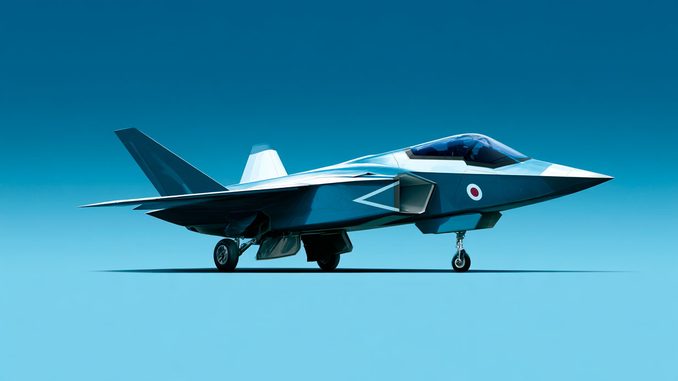
The RAF has announced flights of uncrewed fighters as early as 2027. With Tempest expected in 2035, it is preparing its pilots and industry for autonomous aerial combat.
Summary
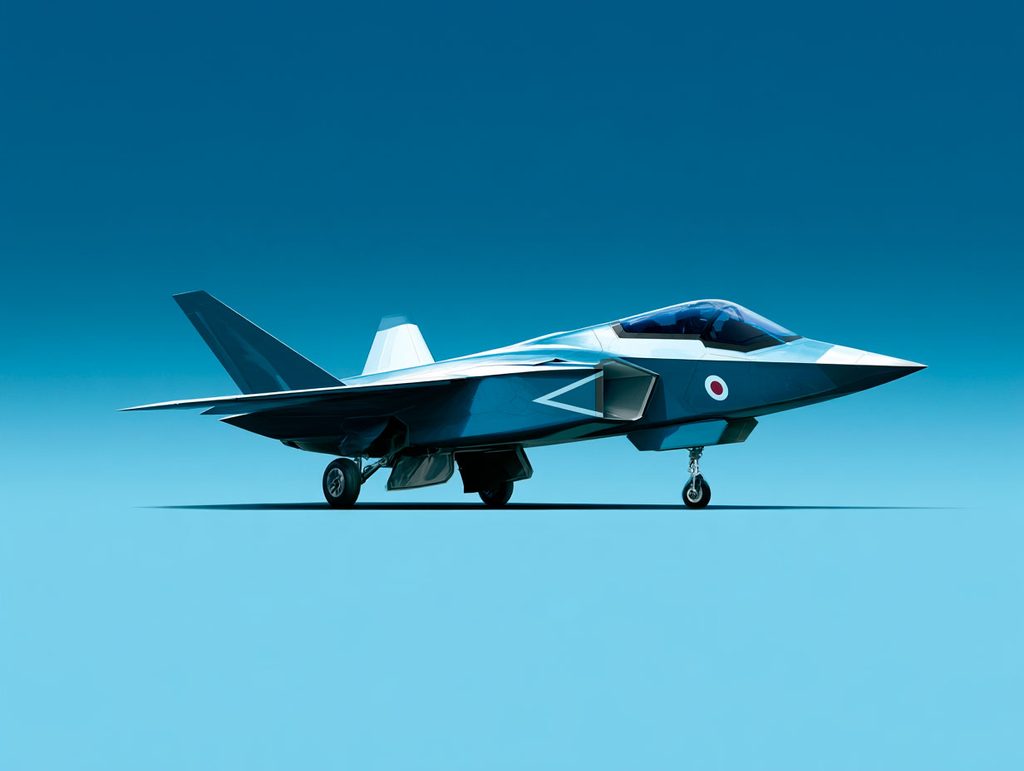
Tempest will “perhaps be the last manned fighter we ever build,” Air Chief Marshal Sir Harv Smyth wrote in The Telegraph on November 21, 2026. The Chief of the Air Staff also announced that uncrewed fighters will fly in British airspace as early as 2027. These two timelines concern different aircraft. Tempest, developed with Italy and Japan under the Global Combat Air Programme, will retain a pilot and is slated to enter service in 2035. Drones will be able to accompany it, just as they are set to support the Typhoons and F-35s already in service. London began with electronic warfare via StormShroud, while the Royal Navy is preparing to test a jet demonstrator aboard an aircraft carrier. For British aviators, the most immediate shift concerns in-flight command: a pilot will need to assign a task to another aircraft, understand what it is executing, and decide when to take back manual control.
RAF Chief Sets a Timeline for the Uncrewed Fighter
In his op-ed, Sir Harv Smyth used the conditional tense when referring to the final manned fighter, yet he was far more definitive about next year. Uncrewed fighters will begin flying in British airspace in 2027, he wrote. He announced flights—providing neither an operational service date for an autonomous squadron nor a retirement schedule for current fighters.
Historical context also matters. As early as 2018, one of his predecessors, Sir Stephen Hillier, publicly envisioned an RAF featuring more uncrewed aircraft. He noted that the demise of the manned fighter had been predicted since at least 2010, while judging the technology insufficient to set a firm date. Eight years later, Smyth goes further, singling out a specific aircraft—Tempest—as the potential endpoint of that lineage. His remarks specifically concern the fighters the United Kingdom will build; British pilots will continue flying these jets for decades to come.
GCAP Funds a Manned Aircraft Built to Work With Drones
The Global Combat Air Programme brings together the United Kingdom, Italy, and Japan. Its goal is to field a sixth-generation fighter, known as Tempest in the UK, by 2035. The three nations entrusted design responsibility to Edgewing, a joint venture formed by BAE Systems, Leonardo, and Japan Aircraft Industrial Enhancement Co. In July 2026, Edgewing secured a £4.6 billion contract covering eighteen months of design work through December 2027.
What does the concept of “sixth generation” mean here? The future jet must process information from multiple platforms and operate alongside uncrewed wingmen. A wingman might, for example, gather intelligence and transmit it back. From the cockpit, the Tempest pilot must assess the reliability of that data while continuing to fly the jet and monitor the surrounding battlespace. This represents a core challenge for the Tempest program: every additional drone can enrich available intelligence, yet simultaneously monopolize the pilot’s attention.
Britain’s First Platforms Have Distinct Missions
The RAF already has experience with uncrewed flight through the Protector, which a pilot operates from a ground control station at RAF Waddington. This aircraft illustrates the difference between remote piloting and autonomy. In the former, the pilot controls the aircraft from afar; in the latter, the system executes specific tasks without receiving human instructions at every step. The degree of autonomy therefore depends on the task at hand.
StormShroud on Land and Talon at Sea
Entering service in May 2025, the StormShroud electronic warfare drone pairs a Tekever AR3 airframe with Leonardo’s BriteStorm electronic warfare payload. No. 216 Squadron conducted its first unit flight in June 2025 at RAF Spadeadam. Testing subsequently progressed to operating multiple platforms simultaneously, giving the RAF hands-on coordination experience well ahead of Tempest’s arrival.
At sea, Project Vanquish addresses a different question. In 2027, the Royal Navy plans to launch Northrop Grumman’s Talon jet demonstrator from one of its two Queen Elizabeth-class aircraft carriers. The trial is designed to show the Navy what role such an aircraft could play within its carrier air wing. This naval schedule is separate from Smyth’s announcement regarding British airspace.
The Pilot’s Role Expands to Commanding Autonomous Wingmen
A recent American test offers a glimpse of the workload ahead. In October 2026, in California, an F-22 Raptor pilot transmitted in-flight instructions to a YFQ-44A Fury. The drone interpreted the commands and selected its own maneuvers to execute simulated tasks, enabling the pilot to direct a second aircraft without touching its flight controls.
For the RAF, training will need to focus on this division of roles. A pilot might know the exact position of a wingman while remaining uncertain whether it has properly interpreted its latest instruction. Simulators will allow crews to rehearse these scenarios, evaluate cognitive workload, and measure the time required to abort an action. Smyth upholds a foundational principle for future sixth-generation fighters: decision-making accountability remains human. Navigational autonomy and the authority to employ weapons remain two distinct issues.
British Industry Must Maintain Software as Much as Airframes
Britain’s investment plan allocates £8.6 billion over four years to GCAP. More than 4,500 people work in the UK on the program and the domestic combat air technologies feeding into it. Engine makers, avionics specialists, and airframe manufacturers retain their central roles, while teams focused on simulation, cockpit interfaces, and software validation are gaining prominence.
For British defense, the primary expected payoff is measured in reduced human exposure: assigning an electronic warfare mission to a drone avoids placing an aircrew in the same contested zone. Financial savings are less certain, as each platform demands maintenance, communications infrastructure, and qualified personnel. While the 2027 maiden flight will capture headlines, a different test will matter far more to operational squadrons: after a software update, how long will it take to verify that a pilot and autonomous wingmen can still work together seamlessly?