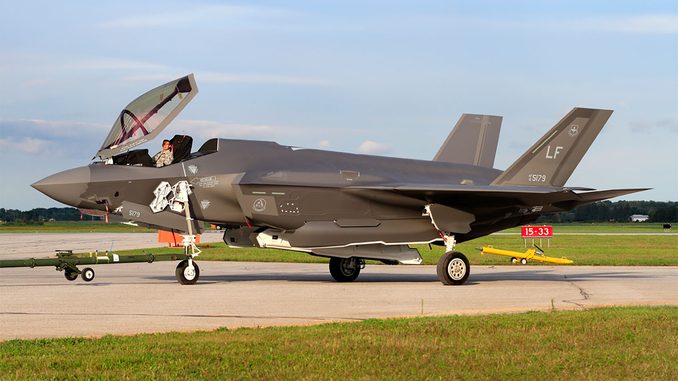
The Canadian Air Force is studying a fleet of F-35s and domestically built drones. Ottawa is keeping the Gripen option open, under pressure from the Pentagon.
Summary
The Gripen remains among Mark Carney’s options. Yet it is absent from the document in which the Royal Canadian Air Force outlines its future fighter fleet. Unveiled by CBC on November 24, 2026, Project Arrow proposes continuing the integration of the American F-35, pairing it with drones whose intellectual property Canada would own, and moving closer to the sixth-generation GCAP fighter program. Canada’s Department of National Defence authenticated the working document. The government retains the final decision on the 88 planned F-35s and on the potential introduction of the Swedish fighter into its squadrons. The day before CBC’s revelations, the Pentagon had publicly warned Ottawa that a mixed fleet would worsen its personnel shortages. Behind the choice of aircraft, two Canadian ambitions converge: the air force seeks to secure a replacement for the CF-18s, while the government also wants to decide which industrial capabilities the country will retain for decades to come.
The Gripen Vanishes From the Canadian Military Scenario
The most revealing detail of Project Arrow is the place it reserves for a second manned fighter. Its authors envision a sixth-generation aircraft eventually joining the F-35, proposing increased Canadian participation in the Global Combat Air Programme, led by the United Kingdom, Italy, and Japan. Saab’s Gripen E—which Ottawa could purchase and have assembled in Canada well before that timeframe—appears nowhere in their scenario.
For political scientist Justin Massie, interviewed by CBC, this absence is further evidence that the Royal Canadian Air Force does not want the Gripen. The department assigns a more limited scope to the document. Drafted by the team responsible for collaborative autonomous platforms, it is meant to inform internal thinking and commits the government neither to a fleet composition nor to a procurement. The disconnect therefore lies in the order of priorities. The military officers who authored Arrow take the F-35 as their starting point, whereas Mark Carney keeps the choice between the F-35 and the Gripen open by citing aircraft capabilities, strategic dependencies, and economic spin-offs.
The First F-35s Already Commit Canadian Squadrons
The agreement announced in January 2023 covered 88 F-35As intended to replace the CF-18s. Three figures illustrate Ottawa’s room for maneuver: Canada has committed to an initial batch of 16 aircraft; according to CBC, it has also begun disbursing funds for 14 additional jets; and finally, two Canadian F-35s were delivered in the fall of 2026. An advance payment, a purchase commitment, and a delivery correspond to three distinct stages.
The transition begins in the United States. The Canadian schedule calls for assigning the first eight aircraft to Luke Air Force Base in Arizona for pilot training. The first arrival in Canada is expected in 2028 at Cold Lake, Alberta, with Bagotville, Quebec, also set to host the new fleet. Regardless of its decision on the Gripen, Ottawa will therefore have to fund the entry into service of the F-35, along with its instructors, simulators, and maintenance facilities.
Canadian Drones Shift the Debate Over Sovereignty
Project Arrow proposes entrusting Canadian companies with the development of collaborative drones designed to fly alongside the F-35s. The principle of collaborative aerial combat consists of dividing specific tasks across multiple platforms. A drone could, for instance, gather intelligence and transmit it to the manned fighter. The value of the system as a whole would depend on the ability of both aircraft to exchange data that the pilot can readily interpret.
The most consequential proposal concerns intellectual property. If Canada held the rights to the drone, it would have greater latitude to entrust maintenance or upgrades to its domestic industry. One issue would still need to be resolved with F-35 program partners: modifying a piece of Canadian equipment and getting its operation certified alongside an American fighter are two separate decisions. Sharing rights over software and interfaces would matter just as much as the manufacturing location.
The Pentagon Puts Personnel Shortages at the Center of the Debate
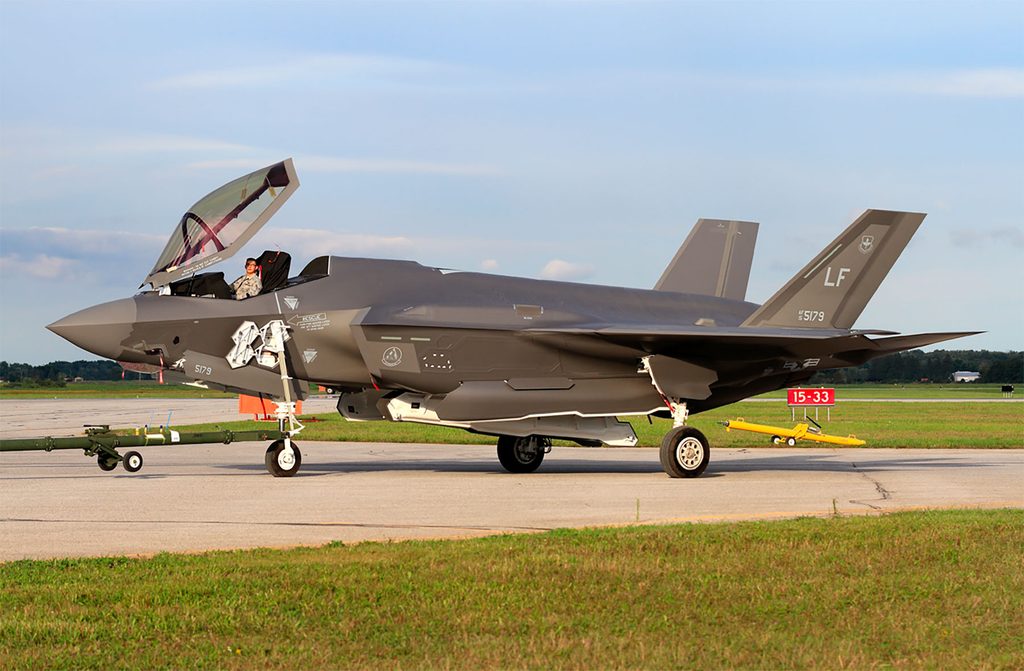
In a fact sheet released on November 23, Washington explicitly criticized the review of the Canadian order. Its most specific argument concerns manpower. Operating F-35s and Gripens simultaneously would force the Canadian Air Force to maintain two separate qualification pipelines for pilots and mechanics. A spare part available or a technician qualified at one base would no longer necessarily meet the needs of a neighboring squadron.
The Pentagon cites a 41.9% aircraft serviceability rate within the Royal Canadian Air Force for the 2025–2026 fiscal year. This figure applies to the entire air fleet and illustrates a readiness challenge without measuring the additional cost the Gripen would entail. By making its warning public, Washington nevertheless places Ottawa in an awkward position: in American rhetoric, a Canadian procurement decision becomes a test of the country’s ability to uphold its continental defense commitments.
Canadian Manufacturers Hold Several Cards
Saab has put names to its proposal. On October 27, the manufacturer named CAE, IMP, and Magellan Aerospace as its primary partners should Ottawa select the Gripen E. Magellan is notably exploring the domestic manufacturing of aerostructures and composite components in Canada. Meanwhile, the F-35 already has its own industrial footprint in the country: according to National Defence, more than 110 Canadian companies have secured contracts totaling over US$3.6 billion under the program.
A third path is beginning to take shape. Canada joined GCAP as an observer in July, and on October 28, Bombardier and BAE Systems signed a memorandum of understanding to explore cooperation, particularly in mission systems design and digital engineering. Ottawa must now weigh fundamentally different offers. How many aircraft will its squadrons actually be able to keep serviceable? Which equipment will its companies have the right to modify on their own? It is by these two outcomes that the true impact of Canada’s choice will be measured, long after the next contract is announced.