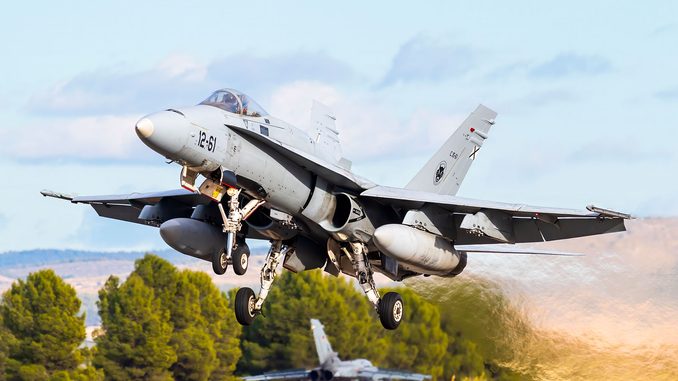
From the Ukrainian Mirage to Spanish F-18s in Romania, the drone threat is forcing Europe to rethink its fighter and air defense spending.
Summary
On November 22, 2026, the Ukrainian Air Force released a video showing what it said was a Mirage 2000 shooting down a Russian jet-powered drone with its cannon. That same day, in Halifax, a Dutch official confirmed that European governments were in talks with the Pentagon over transferring F-16s from the U.S. Air National Guard. Kyiv is also expecting its first Swedish Gripens starting in January 2027. In Romania, the scrambling of two Spanish F-18s on November 24 illustrates a different mission: the aircraft monitored the situation after a radar detection on the Ukrainian side of the border, with no incursion into Romania reported. These events highlight a key budgetary choice for Europe. Interceptor drones offer an affordable response to repeated attacks, while fighter jets retain their value for covering vast airspace, identifying unknown aircraft, and countering multiple categories of threats. Even so, the true cost of each mission must be tallied.
The Ukrainian Mirage Illustrates the Challenge Posed by Jet-Powered Drones
In the footage released on November 22, an explosion appears above a cloud layer. The Ukrainian Air Force attributed the kill to a French-supplied Mirage 2000 and identified the target as a Russian jet-powered drone. The pilot reportedly used the aircraft’s 30 mm cannon. The video alone makes it impossible to determine the exact model of the drone or to calculate the cost of the interception.
Propulsion explains why this episode matters. The standard Shahed-136 relies on a piston engine and a propeller. The jet-powered variants troubling Kyiv travel significantly faster. At an equal detection range, the time available to identify the threat and protect the population shrinks. Results achieved against propeller-driven drones therefore do not automatically carry over to the newer platforms. According to the Ukrainian account, the Mirage footage establishes that a fighter jet was able to intervene without expending a missile—leaving open the question of how often an air force can sustain such a sortie.
Requested F-16s and Expected Gripens Follow Two Distinct Timelines
On November 22, on the sidelines of the Halifax International Security Forum, Dutch State Secretary for Defence Derk Boswijk confirmed to Politico that European governments were in discussions with the Pentagon to secure Air National Guard F-16 Fighting Falcons for Ukraine. Volodymyr Zelenskyy had requested 40 additional F-16s from his partners—a figure reflecting Kyiv’s stated requirement. The talks reported in Halifax set neither the number of airframes Washington would agree to transfer nor their delivery schedule.
The Swedish file is further along. On November 23, Zelenskyy said he expects the first Saab JAS 39 Gripens starting in January 2027. Sweden plans to supply an initial tranche of 16 Gripen C/Ds as military aid, while a separate agreement covers the purchase of 16 newer-generation Gripen Es. The distinction matters when assessing the effort asked of allies. As early as November 22, Ukraine’s Ministry of Defense assigned the Swedish jets two missions: protection against jet-powered drones and defense against Russian aircraft carrying glide bombs. Judging this investment solely by the number of Shaheds destroyed would understate its scope.
Romanian Air Policing Answers a Different Question
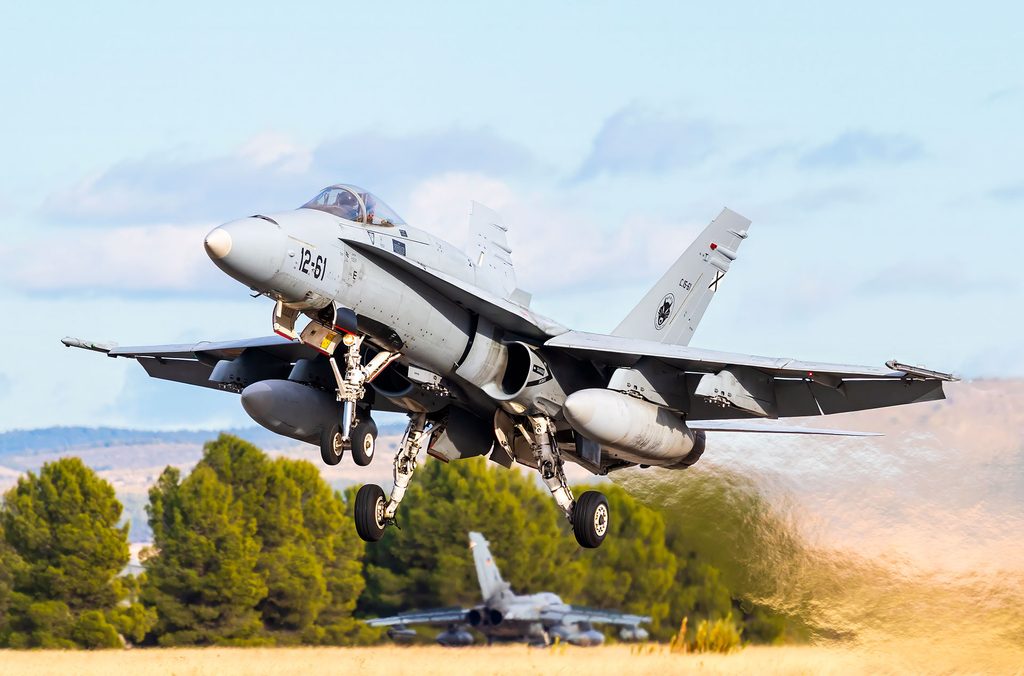
On the morning of November 24, Romanian radar detected a target north of Tulcea, inside Ukrainian airspace. Two Spanish F-18s conducting air policing duties scrambled from Mihail Kogălniceanu Air Base. The alert ended at 11:51 a.m. local time, and according to Romania’s Ministry of National Defence, no violation of national airspace was reported.
This sortie exposes the limitation of a metric frequently cited in public debate: the number of drones downed per flight hour. In Romania, military authorities had to assess an uncertain situation near a NATO border. The value of standing air patrols also lies in this ability to resolve ambiguity and, when the situation warrants, stand down the alert without opening fire.
The Cost of an Interception Goes Beyond the Price of the Munition
A study by Harvard’s Belfer Center puts the unit price of several interceptor drones deployed in Ukraine between US$1,000 and US$8,000, depending on the model. Meanwhile, the French Institute of International Relations estimates the cost of a Russian-built Shahed-136 family drone at between $30,000 and $80,000. That second range applies to the standard model; applying it to the jet-powered drone filmed by Kyiv would create a misleading impression of precision.
For a fighter jet, the unit of account changes. In its fiscal year 2026 reimbursement rate schedule, the Pentagon lists roughly $15,000 per flight hour for a U.S. Air Force F-16C, depending on the billed entity. This American rate provides an order of magnitude, though the exact bill for the Ukrainian sortie remains unknown. An aircraft already on patrol and one scrambled specifically for an alert do not incur the same marginal expense. On the drone side, detection systems, operating crews, and unsuccessful attempts must also be factored in.
Investments Must Match the Missions Being Funded
For repeated attacks against which interceptor drones have already proven effective, budget priority should go to mass production, along with the surveillance assets required to deploy them. Such spending preserves fighter flight hours and missile stockpiles. Its success is measured by the cost per threat actually neutralized and the sustained protection achieved over time—neither of which is captured by a drone’s unit price alone.
Investing in fighter aviation—including pilot training, spare parts, and maintenance for aircraft already delivered—remains justified. The Romanian alert provides the simplest reason: at the moment of takeoff, authorities still did not know how the situation would unfold. In Ukraine, the same fleet must also help defend against threats beyond drones. For a European defense budget, the dividing line is clear: fund volume with proven interceptors while keeping enough fighters ready for alerts whose outcome no one can yet predict.