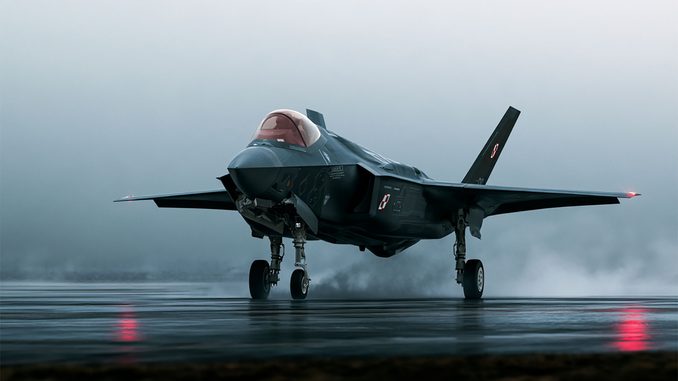
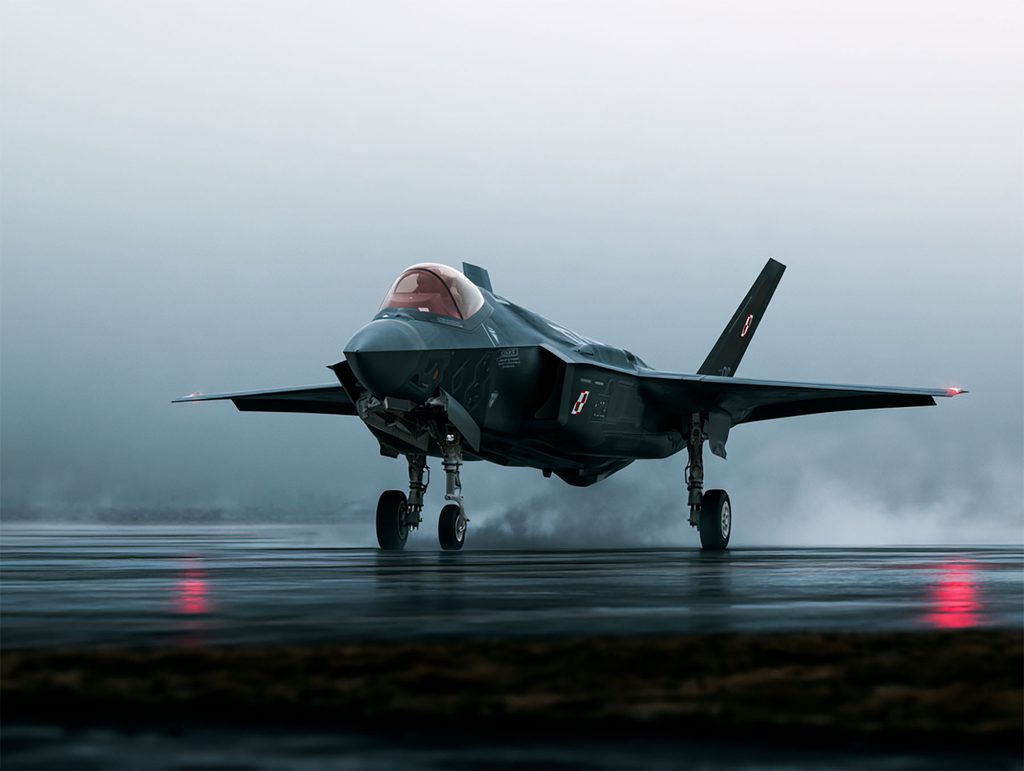
Poland now has 12 F-35A Husarz jets on its soil. Why does Warsaw favor American fighters over European combat aircraft?
Summary
Two new F-35A Husarz aircraft arrived at Łask Air Base in Poland on November 26, 2026. Assembled at the Italian plant in Cameri, they bring the number of stealth fighters stationed on Polish territory to twelve. Twenty of the 32 aircraft ordered in 2020 have now been delivered, with eight remaining in the United States for pilot training. Warsaw plans to have 14 aircraft on its soil before the end of the year, then receive twelve more in 2027. The F-35A is meant to complement the F-16s and South Korean FA-50s, while completing the replacement of Soviet-designed aircraft. The American choice responds to operational, technological, and geopolitical imperatives. Facing the Russian threat, Poland favors its military alliance with Washington and interoperability within NATO. This strategy fits into a European trend that heavily benefits Lockheed Martin, to the detriment of French and European manufacturers.
F-35A Husarz deliveries accelerate in Poland
Polish Defense Minister Władysław Kosiniak-Kamysz confirmed on November 26, 2026, the arrival of two new stealth fighters at Łask. The aircraft, tail numbers 3519 and 3520, come from the Italian plant in Cameri, operated by Leonardo with Lockheed Martin.
This assembly line is slated to produce half of the 32 F-35As ordered by Warsaw. The remaining aircraft come from the American facilities in Fort Worth, Texas.
Poland signed a $4.6 billion contract on January 31, 2020, covering the aircraft, training, and logistics support. Final deliveries are expected in 2029.
The program is now entering a decisive phase: acquiring the skills needed for day-to-day operation of the fighter. Sixteen Polish pilots have already been trained, while six continue their instruction in the United States. Four mission simulators have also been installed at Łask.
Initial specialized training for technical personnel on Polish soil began in November 2026. It is meant to gradually reduce reliance on foreign assistance for routine maintenance operations.
Transformation of the Polish Air Force
Building a complementary fighter fleet
The 32 F-35As are meant to equip two fighter squadrons, split between the Łask and Świdwin air bases. The latter previously hosted Soviet-designed Su-22s, now retired from service.
Over time, the Polish Air Force is to be organized around three main types of combat aircraft:
- 32 fifth-generation F-35A Husarz jets;
- 48 F-16C/D Jastrząb jets, slated to be upgraded to the F-16V standard;
- 48 South Korean FA-50 Fighting Eagles, including 36 in the FA-50PL configuration.
This architecture is meant to divide missions according to aircraft capabilities and operating costs.
The FA-50s will notably handle advanced training and light combat missions. The F-16 Fighting Falcon fleet will remain multirole fighters capable of carrying out a wide range of missions.
In August 2025, Warsaw signed a $3.8 billion contract to upgrade its 48 F-16s. Installing new AN/APG-83 active electronically scanned array radars and improving communications are notably meant to ease cooperation with the F-35s.
New capabilities brought by the stealth fighter
The Lockheed Martin F-35 Lightning II brings an added capability: operating in heavily defended environments with a reduced probability of detection.
Its radar stealth relies on airframe geometry, radar-absorbent materials, and internal carriage of certain weapons. It does not make the aircraft invisible, but complicates detection and tracking.
Its electronic architecture is another advantage. Sensor fusion combines information gathered by the AESA radar, infrared sensors, and electronic warfare systems. Mission computers present the pilot with a consolidated tactical picture.
Data can also be shared with other compatible military assets. The F-35 thus becomes an intelligence and coordination tool, beyond its traditional role as a combat aircraft.
For Poland, these capabilities hold particular value given its geographic proximity to Russia, Kaliningrad, and Belarus.
Reasons for choosing the F-35 over the Rafale
Priority given to fifth-generation capabilities
The Polish choice dates back to 2020, two years before Russia’s full-scale invasion of Ukraine. Warsaw had already identified the need to renew its air capabilities in the face of Russian military modernization.
The Harpia program favored acquiring a fifth-generation aircraft. That requirement directly favored the F-35.
The Dassault Rafale, Eurofighter Typhoon, and Saab Gripen E have capable electronic systems, modern radars, and network-centric combat capabilities. None, however, was designed around the same low-observability requirement as the F-35.
Poland conducted a market analysis before initiating a direct acquisition from the U.S. government under the Foreign Military Sales (FMS) procedure.
It is therefore not a victory of the F-35 over the Rafale following a full, public comparative technical competition. Warsaw had set requirements that steered its choice heavily toward the American jet.
Drive to consolidate the alliance with Washington
Buying a fighter jet commits a country for decades. It creates a lasting relationship with its supplier regarding maintenance, armaments, spare parts, software, and training.
Poland views the United States as an essential partner for its national security. Its acquisitions of Abrams tanks, Apache helicopters, Patriot systems, and HIMARS rocket launchers follow that same logic.
Buying the F-35 therefore also constitutes a geopolitical investment.
Warsaw seeks to consolidate its military ties with Washington and maximize interoperability with U.S. forces. That priority outweighs the desire to support an autonomous European defense industry.
European countries buying the most F-35s
The F-35 now dominates the European market for next-generation fighters. As of November 2, 2026, Lockheed Martin recorded the following volumes across European acquisition programs.
| Country | Planned aircraft count |
|---|---|
| United Kingdom | 138 |
| Italy | 115 |
| Finland | 64 |
| Netherlands | 57 |
| Norway | 52 |
| Denmark | 43 |
| Germany | 35 |
| Belgium | 34 |
| Poland | 32 |
| Romania | 32 |
| Switzerland | 30 |
| Czech Republic | 24 |
| Greece | 20 |
These figures correspond to program volumes recorded by the manufacturer, and not exclusively firm orders or aircraft already delivered. Some countries are considering additional acquisitions.
The United Kingdom shows the largest European ambition, with 138 aircraft over the life of the program. Italy ranks second with 115 planned fighters, including 75 F-35As and 40 short-takeoff and vertical-landing F-35Bs.
Finland offers a different example from Poland. Helsinki selected 64 F-35As in December 2021 after a thorough competition pitting five aircraft against one another, including the Rafale, Gripen E, and Eurofighter Typhoon. Finnish authorities notably judged that the American aircraft best met their operational requirements.
Advantages and risks of American dominance
The F-35’s success in Europe also rests on economies of scale. In early November 2026, Lockheed Martin announced more than 1,400 aircraft delivered worldwide and over one million cumulative flight hours.
That spread supports pooling training, maintenance infrastructure, and certain logistics capabilities.
It nonetheless carries risks. The U.S. Government Accountability Office (GAO) continues to flag issues with operational availability, spare parts supply, and software development. Modernization delays also affect certain expected capabilities.
Reliance on the United States also affects future technological developments for the fighter. Operating an F-35 fleet does not mean fully mastering its software and industrial ecosystem.
Assembling Polish aircraft in Italy illustrates that contradiction. Europe participates industrially in the F-35’s success, without gaining full technological control over the program.
For Warsaw, the choice remains consistent with its immediate military priorities. For Europe, it raises a far harder question: how to build genuine European strategic autonomy when most new fighters bought by its armed forces depend on an American program?