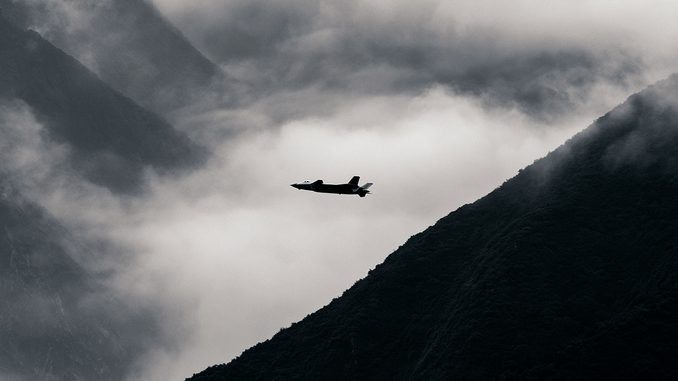
The 2026 Zhuhai airshow will feature the J-20A, J-35, and new drones. What do these announcements reveal about the future of Chinese air power?
Summary
The 16th edition of Airshow China will take place from December 7 to 13, 2026, in Zhuhai, Guangdong province. Thirty years after its founding, the show will gather more than 1,100 exhibitors from around fifty countries and territories. The Chinese air force will display more than 60 pieces of equipment across 33 hardware categories. The J-20A and J-35A stealth fighters, the Y-20B military transport, and several new carrier-based aircraft will form the main attractions. For the first time, the Chinese navy will also display real combat warships. Beijing wants to demonstrate its ability to develop a coherent set of aerial, naval, and autonomous military assets. The most confidential programs, notably the next-generation aircraft designated J-36 and J-50 by Western observers, do not, however, appear on the announced official program. The equipment on display will nevertheless make it possible to identify China’s major technological directions for the coming decade: stealth, industrial autonomy, artificial intelligence, and carrier-based aviation.
The Zhuhai airshow, a showcase of Chinese industrial power
Created in 1996, the China International Aviation and Aerospace Exhibition has become one of the world’s leading aerospace and defense trade shows, alongside Le Bourget, Farnborough, and Dubai. Held every two years, it offers a rare opportunity to directly observe hardware developed by a notably discreet Chinese defense industry.
At the 2024 edition, nearly 590,000 visitors attended the show. According to organizers, commercial agreements signed represented 285.6 billion yuan, or roughly $39.7 billion at the time. Those figures nonetheless include cooperation agreements and commercial letters of intent, which do not necessarily correspond to firm orders.
For the 2026 edition, organizers announce more than 3,000 pieces of equipment on display, roughly 10% of which will be shown for the first time. More than 170 aircraft are expected in the main exhibition area.
Zhuhai’s significance goes well beyond flying displays. The show allows Beijing to promote its defense exports, attract foreign industrial partners, and display its ability to compete with major Western aerospace powers.
New Chinese fighter jets presented at Zhuhai
The J-20A and the evolution of Chinese air superiority
On November 26, 2026, the Chinese air force confirmed the first flying demonstration at Zhuhai of the J-20A, an evolution of the Chengdu J-20.
Having entered service in 2017, the J-20 is China’s first fifth-generation stealth fighter. The upgraded version notably benefits from changes to its airframe, propulsion, and electronic architecture.
Development of the domestic WS-15 turbofan engine represents a particularly important step. That engine is meant to boost the fighter’s propulsive performance and cut fuel consumption across certain flight regimes.
China is notably seeking to master supercruise, which allows sustaining supersonic speed without using afterburner.
However, the exact configuration of the engines powering the aircraft shown at Zhuhai remains to be confirmed. Nor will a flying display allow objective measurement of their operational performance.
The J-35A and the diversification of stealth fighters
The Shenyang J-35A, publicly unveiled at the 2024 airshow, will perform new flying demonstrations. For the first time, an example will also be displayed on the ground, letting visitors inspect its airframe directly.
The Shenyang J-35 forms a family of twin-engine stealth fighters comprising a land-based variant and a carrier-based variant.
The aircraft rests on an architecture incorporating internal weapons bays, a geometry designed to lower its radar signature, and modern electronic sensors.
While the J-20 prioritizes air superiority missions, the J-35 is expected to meet more varied needs with a smaller airframe.
China thus becomes the only power, alongside the United States, to operate two distinct families of fifth-generation stealth fighters.
The Shenyang J-16, a heavy multirole fighter derived from the Sukhoi Su-27 family, will also take part in the flying displays.

The rise of Chinese carrier-based aviation
The show’s main strategic novelty could ultimately come from the Chinese navy.
For the first time, it will exhibit actual warships, including a 10,000-ton-class Type 055 destroyer, a Type 054A frigate, and a Type 075 amphibious assault ship.
Several carrier-based aircraft will take part in the presentations:
- The J-35, a stealth fighter intended for aircraft carriers.
- The J-15T, adapted for catapult launches.
- The KJ-600, an airborne early warning and control aircraft.
- The JL-15, intended for naval aviation pilot training.
- The Z-20J and Z-8C helicopters.
- The WZ-2, an unmanned helicopter.
The KJ-600 represents a particularly significant advance. Comparable in concept to the American Northrop Grumman E-2D Advanced Hawkeye, this twin-turboprop aircraft carries an airborne surveillance radar.
Its operating altitude enables it to detect targets beyond the radar horizon of surface warships.
Together, these aircraft illustrate the progressive buildup of a complete carrier air wing, notably around the aircraft carrier Fujian, equipped with electromagnetic catapults.
Chinese progress in propulsion and civil aviation
The Xi’an Y-20B will also make its first appearance at Airshow China. This evolution of the Y-20 heavy military transport uses four Chinese WS-20 turbofan engines, replacing the Russian D-30KP-2 engines of early versions.
The WS-20 features a higher bypass ratio. A larger proportion of air passes through the fan without going directly through the combustion chamber. That architecture improves propulsive efficiency at subsonic speeds.
This upgrade is meant to bring the Y-20B closer to its originally sought maximum payload capacity of around 66 metric tons.
The YY-20A aerial refueling tanker will also be presented. Such support aircraft are indispensable for an air force capable of operating sustainably far from its bases.
In the civil sector, two AG600 Kunlong amphibious seaplanes will be exhibited. Developed for rescue and firefighting operations, they reflect China’s industrial diversification.
COMAC will also have an area dedicated to commercial aviation and its suppliers. Domestic mastery of engines, electronic equipment, and production chains remains a shared challenge across civil and military sectors.
Secret aircraft China is not expected to show
Next-generation fighters J-36 and J-50
Observers are particularly awaiting information regarding the two experimental aircraft that appeared in Chinese skies starting in December 2024.
The first, unofficially designated J-36, is a large aircraft developed by Chengdu, equipped with three engines and lacking a conventional vertical tail.
The second, commonly called J-50 or J-XDS, is a twin-engine aircraft developed by Shenyang, likewise characterized by a tailless configuration without a traditional vertical fin.
Those airframes point to advanced research into stealth, range, and aerodynamics.
However, the presence of those two aircraft at Zhuhai had not been officially announced as of November 28, 2026. Their classification as sixth-generation aircraft also remains grounded in outside analysis rather than confirmed operational characteristics.
The H-20 stealth bomber
The Xi’an H-20 strategic bomber remains one of the most confidential programs in China’s defense industry.
Its development was publicly acknowledged as early as 2016. It is intended to give China long-range strategic bombing capabilities comparable in principle to those of American stealth bombers.
No official presentation of the aircraft is currently scheduled at Zhuhai. Its development timeline, performance, and final configuration remain uncertain.
Technologies that will shape tomorrow’s Chinese aviation
Autonomous drones and collaborative combat
Upcoming generations of Chinese aircraft are expected to incorporate more autonomous systems and automated data-processing capabilities.
Collaborative air combat relies on cooperation among crewed aircraft, drones, sensors, and command centers. Artificial intelligence could notably assist data analysis and reduce crew workload.
China is also exploring possibilities offered by stealth drones, carrier-based autonomous aircraft, and unmanned systems intended for maritime operations.
The true degree of autonomy of such hardware, its reliability, and its performance in contested electromagnetic environments remain difficult to assess, however.
Stealth and technological autonomy
Future Chinese aerospace architectures are expected to place greater emphasis on lowering electromagnetic and thermal signatures, new composite materials, and engine fuel efficiency.
The tailless configurations seen on experimental Chinese aircraft illustrate that direction.
Domestic mastery of turbofan engines, semiconductors, onboard computers, and advanced materials will also form an industrial priority.
Above all, the 2026 Zhuhai airshow will make it possible to gauge how far China has come since the J-20’s first public appearance in 2016. In ten years, China has moved from demonstrating a single stealth fighter to presenting a full-fledged modern aerospace ecosystem.
The question is no longer whether Beijing can develop technologically advanced aircraft. It is determining how fast its industry can produce, upgrade, and sustainably keep them in service. Future editions of Zhuhai may provide part of the answer.