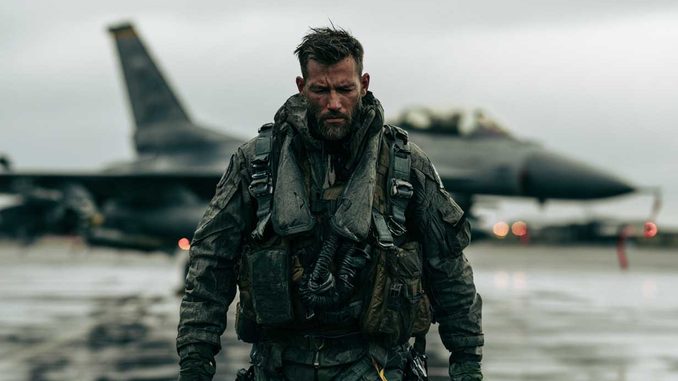
At +9G, vision, the brain, and the heart are pushed to their absolute limits. Here is how fighter pilots withstand these extreme forces and how they are medically selected.
In Summary
When a fighter pilot pulls +9G, their body experiences nine times the normal acceleration of gravity along the head-to-toe axis. Blood is violently forced down into the legs. The blood pressure available to irrigate the eyes and brain rapidly plummets. This triggers reduced peripheral vision, a gray-out, a blackout, and ultimately, G-induced loss of consciousness (G-LOC). A single episode can render a pilot incapacitated for dozens of seconds. Anti-G suits, pressure breathing, and muscle contraction techniques allow pilots to endure the acceleration forces of modern combat aircraft like the Rafale, F-16, or Eurofighter Typhoon. This tolerance is not left to chance: France, the United States, the United Kingdom, China, and Russia subject their aviators to rigorous medical and physiological screening. Yet their methods differ—the centrifuge is primarily a training and qualification tool rather than an automatic admission test.
G-Force Severely Alters Blood Circulation
At +1G, a 75 kg (165 lb) pilot weighs 75 kg. At +9G, their body is subjected to inertial forces equivalent to 675 kg (1,488 lbs). A head weighing roughly 5 kg places an effective load of nearly 45 kg on the neck, even before accounting for the helmet and mounted equipment.
In a tight turn or high-G pull-up, the primary issue stems from the direction of acceleration. +Gz forces, directed from head to foot, push blood down into the lower extremities. Venous return to the heart drops sharply. Simultaneously, the heart must dramatically increase pressure to keep pumping blood up to the brain.
Experimental physiological studies estimate that at 9G, an arterial pressure of 225 to 275 mmHg at heart level may be required to maintain proper cerebral and retinal perfusion. Without protection, a human’s natural tolerance typically ranges from 3 to 5G, depending on the individual and environmental conditions.
Modern fighter jet models like the Dassault Rafale can generate load factors far beyond what an unprotected human body could withstand while remaining operational.
Blackout Precedes Loss of Consciousness
The eye is usually the first organ to signal a problem, as the retina is exceptionally sensitive to reduced blood supply.
Peripheral vision narrows first. The pilot may feel as though they are looking through a narrow tube. As the visual field continues to shrink, a gray-out occurs, causing colors and contrast to fade away.
If acceleration persists, a blackout follows: the pilot loses vision entirely while remaining conscious. At this stage, blood pressure is insufficient for retinal function but temporarily adequate for key regions of the brain.
A few additional seconds can trigger G-LOC (Gravity-Induced Loss of Consciousness). Blood flow to the brain drops below critical levels, and the pilot passes out.
Contrary to popular belief, regaining consciousness does not mean an immediate return to flying capability.
Data from hundreds of centrifuge exposures reveal an average of 12 seconds of total unconsciousness, followed by roughly 16 seconds of confusion and disorientation. Total incapacitation can approach 28 seconds. Some studies indicate that psychomotor performance may remain degraded for nearly a full minute.
In an aircraft moving at hundreds of meters per second, 20 to 30 seconds is an eternity.
Anti-G Suits Keep Blood in the Brain
Pilots counter the physiological effects of G-forces through several synchronized defenses.
An anti-G suit uses inflatable bladders to compress the legs and abdomen. This restricts blood pooling in the lower body and increases venous return. Modern systems are often paired with positive-pressure breathing equipment.
Most importantly, the pilot performs the Anti-G Straining Maneuver (AGSM). By strongly tensing the muscles in the legs, buttocks, and abdomen while utilizing a specific breathing technique, the pilot mechanically raises blood pressure to maintain blood flow to the upper body.
Experimental research showed an average tolerance of just 3.4G in relaxed, unprotected subjects, compared to at least 8.9G when using an anti-G suit and proper AGSM techniques.
This is how a pilot in an F-16 Viper can remain conscious at 9G. They do not naturally “resist” nine times the force of gravity; they actively fight against its physical effects.
High Accelerations Leave Long-Term Impacts
Chronic health issues primarily affect the musculoskeletal system, with the neck being a major point of vulnerability. Under high G-forces, turning one’s head to check for an adversary places immense loads on cervical vertebrae, intervertebral discs, and neck muscles.
A meta-analysis of over 8,000 pilots demonstrated that aviators exposed to higher acceleration levels experienced significantly more cervical pain. A Finnish study following 56 pilots over ten years found that those in the highest G-exposure quartile had a 2.61 times higher risk of flight-related neck pain. However, data remains less conclusive regarding whether G-forces alone cause major intervertebral disc degeneration over time.
Chronic cardiovascular effects are also monitored, though no robust evidence currently shows that tactical flying systematically causes structural heart damage. Instead, research suggests the cardiovascular system undergoes beneficial adaptation over repeated exposure.
How France Medically Screens Future Pilots
In France, candidate pilots must satisfy strict regulatory aviation medical standards. Standard aviation medical admission requires a 1A general aviation rating, compatible with ejection seat operations, alongside high standards for vision, color perception, and hearing.
Exams conducted at military aeromedical centers (CEMPN) include blood and urine analysis, electrocardiograms, audiograms, detailed vision testing, and consultations across general medicine, ENT, and ophthalmology.
Acceleration tolerance is subsequently trained during flight instruction. The French Armed Forces Biomedical Research Institute (IRBA) in Brétigny-sur-Orge operates the nation’s military human centrifuge. Aeromedical training is conducted initially and refreshed every five years. The facility can simulate accelerations reaching +10Gz, matching the envelope encountered on high-performance jets like the Rafale.
How Major Air Forces Compare in Screening
In the United States, candidate selection combines medical, cardiovascular, anthropometric, hearing, and vision criteria. For pilot candidates, the US Air Force requires uncorrected near vision of near 20/30 and distant vision of at least 20/70, correctable to 20/20. Future pilots progressing through the T-38 pipeline undergo specific centrifuge qualification. Failing a second centrifuge attempt triggers a medical re-evaluation and potential reclassification out of the track.
In the United Kingdom, the approach is similar. Selection begins with medical fitness, followed by centrifuge training at RAF Cranwell on a simulator capable of ramping from 1 to 9G in one second. This training is refreshed at least every five years and applies to aircrews flying aircraft like the Eurofighter Typhoon and F-35B.
China applies an extensive pre-selection process. Recruiting guidelines announced over 100 medical examinations, incorporating dynamic portable electrocardiograms, psychological evaluations, and AI-assisted screening. Official sources, however, do not indicate that centrifuge runs serve as an automatic elimination test during initial screening.
In Russia, contemporary medical protocols are less transparent. Public regulations historically outline medical boards comprising physicians, neurologists, surgeons, ENT specialists, and ophthalmologists, alongside vestibular testing utilizing Coriolis acceleration. Russian aeromedical research utilizes human centrifuges to assess +Gz tolerance, with military studies testing profiles up to 9G. However, available data does not confirm that a 9G centrifuge run serves as a universal admission threshold for the Russian Aerospace Forces today.
The Human Pilot Remains the Ultimate Limit
A modern aircraft frame can sustain maneuver accelerations that its pilot cannot endure for long without protection—one of the central paradoxes of contemporary air combat.
G-force endurance is not merely a matter of muscular strength: the true limiting factor is brain perfusion. Anti-G suits, physical conditioning, breathing techniques, and centrifuge training push this boundary further, but they cannot eliminate it.
The rise of autonomous combat aircraft may eventually remove this biological constraint. An unmanned aircraft has no retina to supply with blood, no cervical vertebrae, and no brain subject to G-LOC. For human pilots, however, even the most advanced fighter remains bound by a rule as old as aviation itself: a few seconds without blood in the brain is all it takes to turn an extreme maneuver into a catastrophe.