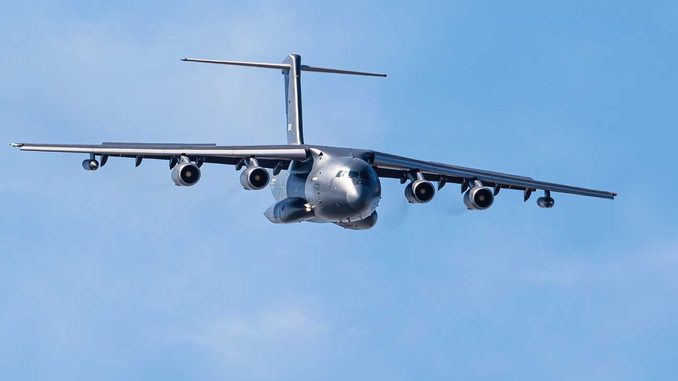
A Chinese YY-20A refueled an Egyptian Rafale in mid-air. A technical feat that highlights Beijing’s growing expeditionary air power.
In brief
An official photograph published by the Egyptian military on August 31, 2026, shows a Chinese YY-20A tanker transferring fuel to an Egyptian Rafale during Exercise Eagles of Civilization 2026. This marks the first documented public case of a Chinese tanker aircraft refuels a modern Western fighter in flight. Technically, the event is less surprising than it appears: both aircraft utilize the same probe-and-drogue refueling principle. However, its military significance is real. Beijing demonstrates that one of its key support platforms can operate alongside non-Chinese aircraft during an intercontinental deployment. The exercise follows the 2025 refueling of Egyptian MiG-29s by a YY-20A and coincides with Chinese J-16s flying over 6,000 km to reach Egypt. China is no longer merely displaying capable fighters; it is progressively building the aerial infrastructure required for long-range power projection.
The Egyptian Rafale genuinely received Chinese fuel
The image does not originate from an anonymous account or an unverified photo. It was released by the official spokesperson for the Egyptian Armed Forces and subsequently relayed by Chinese state military media.
The scene took place during Eagles of Civilization 2026, the second iteration of the joint Sino-Egyptian air exercise. The maneuvers began on August 22, 2026, across several Egyptian air bases, focusing on air combat, air superiority operations, combat search and rescue, and joint operational planning.
The photograph shows a two-seat Egyptian Rafale—corresponding to the Rafale DM variant derived from the French Rafale B—connected to the refueling drogue deployed from the pod mounted under the right wing of the YY-20A.
Two other Rafales appear nearby in formation.
It is impossible to determine from the images alone how many aircraft actually received fuel or the volume transferred. However, the physical contact itself is documented.
This confirms an in-flight refueling conducted between two platforms designed by entirely different aerospace industries.
It is this latter point that gives the event its strategic weight.
The technical compatibility is less mysterious than it seems
The refueling operation worked because the Rafale and the YY-20A employ the same design principle.
The system is known as probe-and-drogue refueling.
The tanker reels out a flexible hose ending in an aerodynamic drogue (or basket). The receiving fighter approaches from behind and inserts its refueling probe into the basket. Once the connection is locked, fuel transfer begins.
The Rafale features a fixed probe mounted to the right of the cockpit.
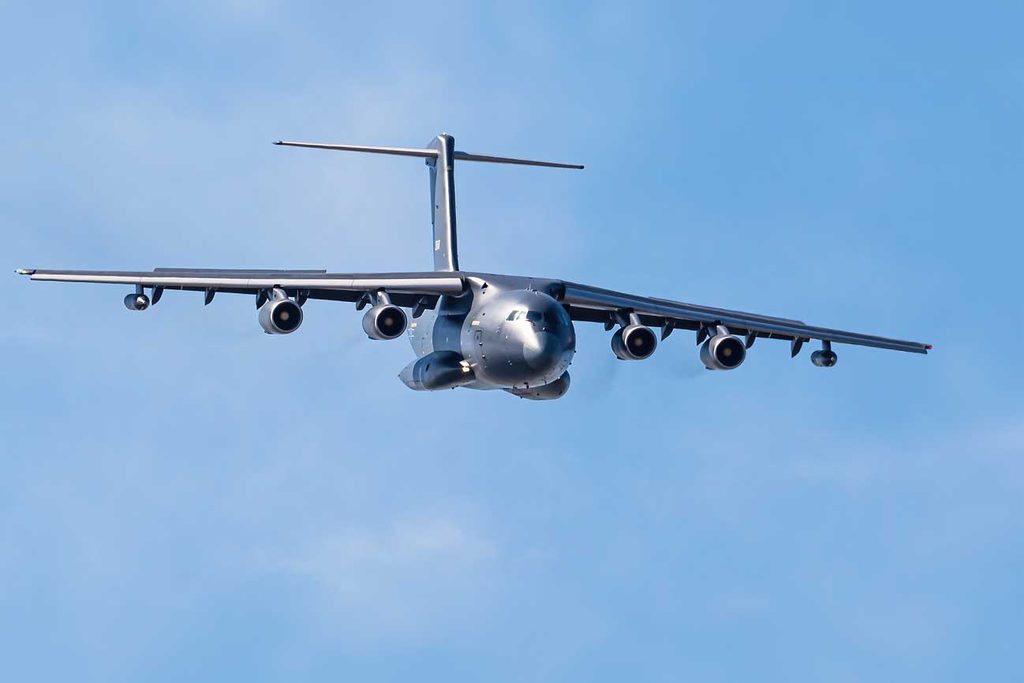
The YY-20A utilizes two refueling pods mounted under the wings, along with a centerline hose unit in the fuselage. This architecture enables it to refuel multiple categories of probe-and-drogue compatible aircraft.
France uses the exact same principle to refuel its Rafales from Airbus A330 MRTT Phénix tankers.
The A330 MRTT is qualified to refuel Rafales, Mirage 2000s, Eurofighter Typhoons, F/A-18s, and several other platforms via hose-and-drogue.
Therefore, the physical mating of a YY-20A and a Rafale required no technological breakthrough.
Yet, achieving physical connectivity is only the first step.
Real-world refueling requires much more than a compatible basket
Air-to-air refueling places two aircraft in extremely close proximity at high speeds.
The fighter must navigate the aerodynamic wake of the tanker. The pilot must stabilize airspeed, approach the drogue, make contact, and maintain a precise position throughout the transfer.
Crews must be intimately familiar with shared speed and altitude flight envelopes.
They must establish standardized join-up and approach procedures.
They need to understand how the drogue reacts to turbulence and how the airflow surrounding the tanker affects the receiver aircraft.
Radio communications, visual signals, breakaway procedures, system limitations, and emergency responses must also be fully synchronized.
The breakaway procedure—which mandates immediate separation if safety is compromised—must be flawlessly understood by both aircrews.
Even major Western aerospace manufacturers conduct extensive flight-test campaigns to qualify new tanker-receiver combinations.
Airbus, for instance, performed hundreds of wet and dry contacts during qualification campaigns for the A330 MRTT with new fighter types.
The Egyptian photograph thus demonstrates more than mere mechanical compatibility.
It proves a real, albeit targeted, operational interoperability between Chinese and Egyptian aircrews.
Interoperability does not mean the Rafale is integrated into Chinese systems
Making this distinction is critical.
In-flight refueling does not require China to access the Rafale’s flight software.
Nor does it require the Rafale to share radar data with Chinese J-16s, make its encrypted communications compatible with the People’s Liberation Army, or link its SPECTRA self-protection suite to a Chinese network.
A YY-20A refueling a Rafale does not indicate that Beijing can integrate French fighters into its battle management system.
It simply shows that both air forces successfully standardized a specific logistical procedure.
That in itself is notable.
However, characterizing this as full system integration between Western and Chinese combat platforms would be inaccurate.
The exercise is further underscored by reports that Chinese J-16s and Egyptian Rafales conducted dissimilar air combat training (DACT).
These engagements allow Chinese aircrews to train against modern Western fighter designs.
Yet, this does not imply that Beijing obtained access to classified parameters of the Rafale, its RBE2 AESA radar, or its SPECTRA electronic warfare suite.
The YY-20A previously refueled Egyptian MiG-29s in 2025
China appears to be taking a methodical approach.
During the initial edition of Eagles of Civilization in 2025, a YY-20A refueled Egyptian Air Force MiG-29M and MiG-29M2 aircraft.
Those platforms are Russian-designed.
By 2026, Beijing added a French-built fighter to the growing list of foreign aircraft publicly serviced by its tanker fleet.
The commercial takeaway is compelling.
The same Chinese tanker platform has demonstrated its capacity to support native Chinese fighters, Russian-designed aircraft, and now a Western platform utilizing probe-and-drogue standards.
Egypt serves as an ideal operational laboratory for such demonstrations.
Its air force operates a mixed inventory representing multiple technological schools.
The country flies American F-16s, French Rafales, and Russian MiG-29M/M2s.
In total, Egypt has ordered 54 Rafales. An initial contract for 24 aircraft was signed in 2015, followed by a supplemental order for 30 fighters in 2021.
This operational diversity allows Beijing to validate its ability to interact with air forces that do not rely exclusively on Chinese military hardware.
The YY-20 cannot refuel all Western fighters
The photo of the Rafale could lead to an overreaching conclusion: that the YY-20 is now capable of refueling all Western fighters.
That is not the case.
The Rafale utilizes a probe.
Conversely, the F-16 uses a receptacle on the fuselage spine and receives fuel via a rigid flying boom.
The F-15 and F-35A also rely on the boom system.
Currently known operational YY-20 variants rely primarily on flexible hose-and-drogue systems.
In their publicly documented configurations, they lack a large flying boom comparable to those fitted on American KC-46As or select variants of the Airbus A330 MRTT.
Thus, while a YY-20A can refuel an Egyptian Rafale, it cannot directly service Egypt’s extensive fleet of standard-configuration F-16s.
This distinction is crucial when evaluating its export potential.
A nation operating Rafales, Mirage 2000s, or probe-equipped Chinese fighters might find the YY-20 compelling.
A country relying heavily on F-15s, F-16s, or F-35As would require a different tanker configuration altogether.
Here, the Airbus A330 MRTT retains a distinct advantage.
Depending on customer specifications, the European tanker can be equipped simultaneously with hose-and-drogue pods and an advanced boom system. Airbus notes that over 25 receiver aircraft types have been qualified on the A330 MRTT platform.
The YY-20 has demonstrated versatility, but not universality.
The broader story: J-16s flying over 6,000 km to participate
While the Rafale photograph naturally drew headlines, one of the most strategically significant aspects of the exercise occurred before the aircraft even arrived in Egypt.
For Eagles of Civilization 2026, China deployed heavy J-16 fighters alongside YY-20A tankers, Y-20 transports, a KJ-500 airborne early warning aircraft, and other specialized assets.
The J-16s flew over 6,000 km to reach Egypt.
The transit reportedly lasted approximately nine hours and required multiple aerial refuelings along the route.
This operational metric is far more telling than a routine tactical exercise.
For decades, Chinese military aviation was oriented primarily around homeland defense and regional power projection.
Today, Beijing is actively demonstrating that it can project a self-contained, heavy air power package across thousands of kilometers.
The tanker is the indispensable enabler of this transformation.
Fighters inherently have finite internal fuel capacity.
While external drop tanks extend range, they add aerodynamic drag and consume hardpoints otherwise used for ordnance.
In-flight refueling fundamentally alters this equation.
It enables tactical fighters to complete intercontinental ferry flights, extends time-on-station, and exponentially expands an air force’s operational reach.
The tanker is not merely a flying gas station.
It dictates an air force’s strategic radius.
The YY-20 is reshaping Chinese military geography
The YY-20 officially entered service with the People’s Liberation Army Air Force in 2022.
Prior to its introduction, China relied on a small fleet of imported Ukrainian Il-78s alongside aging H-6-based tankers.
The Y-20 airframe provides a vastly superior heavy transport foundation.
The Y-20 family features an estimated maximum takeoff weight (MTOW) of roughly 220 metric tons.
Cargo variants can carry an estimated payload of 60 to 66 tons, depending on operational configurations.
However, payload figures should not be directly translated into offloadable fuel capacity.
The exact fuel offload capacity of the YY-20 remains classified and depends heavily on the distance flown to and from the refueling track.
This is a critical metric when measuring a tanker’s true operational performance.
An aircraft capable of carrying immense fuel weights at takeoff—but which consumes a large portion of that fuel simply reaching its operational sector—transfers significantly less to mission fighters.
WS-20 engines could substantially boost performance
Early Y-20 models were powered by Russian-supplied Soloviev D-30KP-2 engines.
China has since developed and deployed its own high-bypass turbofan, the WS-20.
Y-20 transports fitted with WS-20 engines have been operational for some time.
Tanker variants equipped with the WS-20 have also been observed and are frequently designated YY-20B by defense analysts.
This engine upgrade represents a major performance jump.
A more modern, fuel-efficient engine reduces specific fuel consumption.
On a cargo transport, this increases range and payload capacity.
On an aerial tanker, the benefit is even more direct.
Every ton of fuel the tanker saves on its own propulsion becomes an extra ton of fuel available for mission fighters.
A small percentage increase in engine efficiency translates into tons of additional offloadable fuel at long ranges.
The tanker as a node in China’s air combat network
China also appears intent on expanding the tanker’s mission profile beyond simple fuel transfer.
Modern heavy tankers are increasingly capable of acting as aerial communications nodes.
This operational evolution is logical.
A large transport airframe offers ample internal volume, substantial electrical power generation, and extended loiter capability.
Consequently, it can host specialized communications suites and data-processing systems, serving as an airborne gateway between disparate elements of a strike force.
A networked tanker can assist in relaying tactical pictures, coordinating strike packages, and extending command-and-control links over long distances.
Both the United States and Airbus are pursuing similar operational concepts.
The tanker of the future will serve as more than a gas station in the sky.
It is evolving into a central data node within the networked battle force.
This capability is vital for China.
An expeditionary force deployed 6,000 km from home bases cannot rely on the same dense land-based command infrastructure available near its own borders.
It must bring its network architecture with it.
Egypt provides Beijing with an ideal Middle Eastern showcase
The choice of Egypt as a partner is strategic.
The nation controls the Suez Canal and sits at the crossroads of the Middle East, Africa, and the Mediterranean.
Its air force is one of the largest in the region.
Crucially, Cairo maintains active defense relationships with the United States, France, Russia, and increasingly China.
Egypt continues to receive roughly $1.3 billion annually in U.S. foreign military financing.
It flies advanced French Rafales and operates Russian hardware.
Simultaneously, it is deepening strategic cooperation with Beijing.
For China, the imagery of a YY-20A refueling a Rafale carries immense diplomatic resonance.
It sends a clear message to non-aligned nations: adopting Chinese hardware does not require an immediate, total purge of existing Western or Russian systems.
In specific support roles, China can integrate into a mixed fleet.
This value proposition could prove commercially persuasive.
Export potential exists, but market barriers remain
No major export contracts for the YY-20 have been formally announced to date.
However, exercises like Eagles of Civilization enhance the platform’s international credibility.
Historically, Chinese defense exports focused primarily on light fighters, trainers, unmanned aerial vehicles, and ground-based air defense systems.
A heavy strategic tanker belongs to a higher tier of defense procurement.
It requires significant capital expenditure, sophisticated basing infrastructure, and highly trained aircrews.
Its value proposition appeals primarily to nations seeking to execute long-range or sustained regional air operations.
The potential customer base for a YY-20 is therefore much smaller than that for a JF-17 fighter or a MALE drone.
Yet a market exists.
Western tanker production lines face strong backlogs, while several global air forces seek to expand operational range and replace aging support fleets.
China could present a viable alternative for nations unable to procure American or European tankers, or those seeking to diversify their defense suppliers.
Demonstrating real-world compatibility with platforms like the Rafale directly strengthens that sales pitch.
China is demonstrating it can sustain air operations far from home
Ultimately, the significance of the photograph extends well beyond the Rafale itself.
Great-power air power is not measured solely by the quality or quantity of a nation’s fighter jets.
It depends on tankers.
It depends on airborne early warning and control (AEW&C) platforms.
It depends on strategic airlift.
It depends on electronic warfare, robust communications, intelligence collection, and forward logistics.
The United States has spent decades perfecting this operational architecture.
China is closing that gap.
Eagles of Civilization 2026 demonstrated a PLAAF capable of deploying a coherent strike and support package—J-16s, tankers, transports, and command aircraft—all the way to Africa.
The YY-20A refueling a Rafale adds another layer to this narrative.
Beijing is showing that it can operate alongside and service hardware from foreign air forces.
Precision remains essential.
The YY-20A is not a universal tanker.
A single refueling event with a Rafale does not imply deep integration between French and Chinese mission software.
Nor does it guarantee that Egypt will purchase Chinese tankers.
Yet the image reflects a broader structural reality.
China is no longer focused solely on building fighters to match Western designs.
It is systematically building the long-range support architecture required to sustain high-end air combat thousands of kilometers from its shores.
The sight of a Rafale plugged into a YY-20A drogue is striking.
But the core message lies behind the photograph: Beijing is developing the capabilities of an expeditionary air power.
War Wings Daily is an independant magazine.