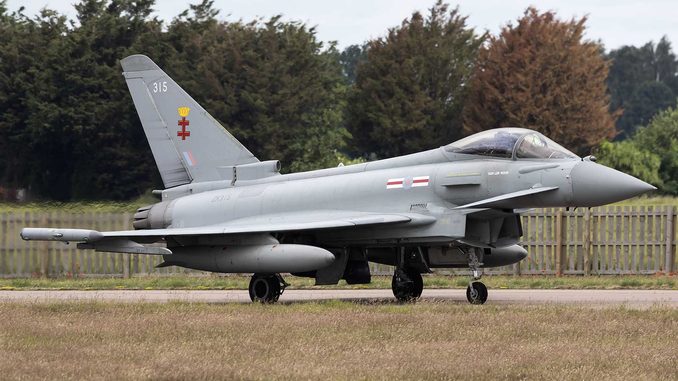
Britain faces a fighter jet shortage before GCAP arrives in 2035. How Typhoon upgrades, F-35 purchases and combat drones could reshape RAF air power.
En résumé
The Royal Air Force faces a difficult transition. Its ageing Eurofighter Typhoons are gradually approaching retirement, while the next-generation GCAP Tempest fighter is not expected to enter service until 2035. Britain must preserve credible air combat capabilities throughout the intervening decade.
As of April 2026, the UK operated a fleet of 124 Typhoons, complemented by 47 F-35B stealth fighters delivered by May. However, not every aircraft is immediately available for combat, and the oldest Typhoons will retire in 2027.
London is pursuing several solutions: £5.4 billion for Typhoon sustainment and modernization, additional F-35 purchases, advanced radar and electronic warfare systems, and autonomous combat aircraft. The government has also allocated £8.6 billion to GCAP over four years.
The strategy prioritizes technological improvements over rapid fleet expansion. Its success will depend on aircraft availability, industrial delivery schedules and whether modernization can compensate for declining fighter numbers.
The RAF faces a shrinking fighter fleet before 2035
The Royal Air Force’s immediate challenge is not technological obsolescence but insufficient combat mass.
According to Ministry of Defence statistics published in August 2026, Britain possessed 124 Eurofighter Typhoons on April 1, 2026, compared with 129 a year earlier.
That figure does not represent 124 combat-ready aircraft. In June, the government reported 95 Typhoons in the Forward Fleet, a category including serviceable aircraft and those undergoing short-term maintenance.
The retirement of Tranche 1 Typhoons in 2027 will further reduce fleet numbers. Four aircraft stationed in the Falkland Islands will be replaced by Tranche 2 fighters transferred from the existing inventory.
Crucially, the government confirmed in July 2026 that it has no plans to purchase additional Typhoons.
Britain must therefore maintain its air policing commitments, NATO deployments and expeditionary strike capabilities with a fleet that will become progressively smaller before new fighters arrive.
The Typhoon modernization programme prioritizes combat effectiveness
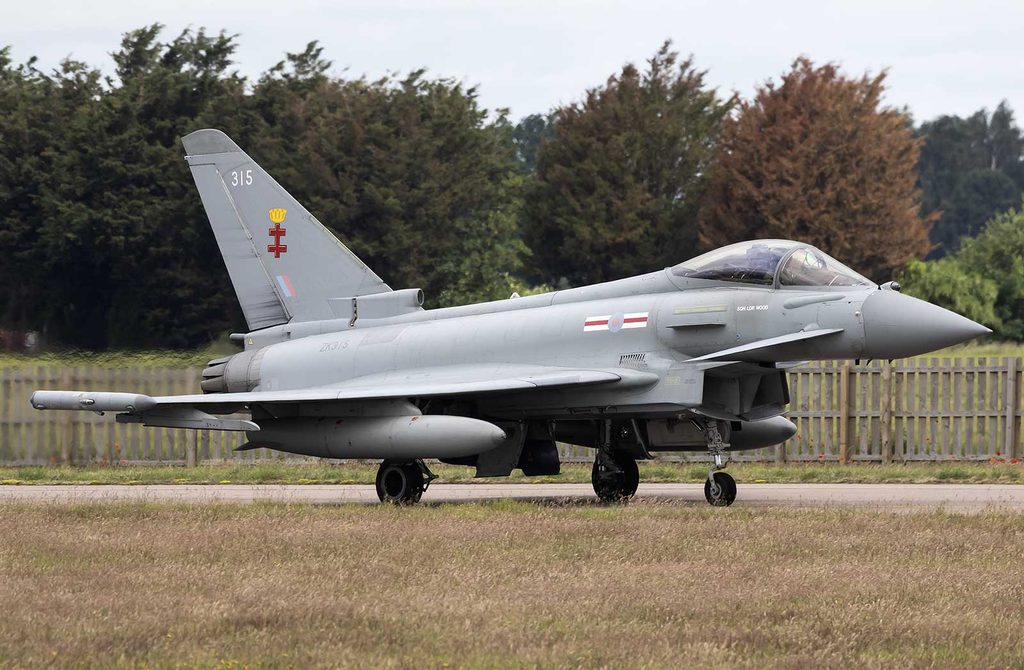
The Eurofighter Typhoon will remain the backbone of British air defence into the 2040s.
Under the Defence Investment Plan published in June 2026, Britain allocated £5.4 billion over four years to maintaining and upgrading the aircraft.
The ECRS Mk2 radar transforms electronic warfare capabilities
The centrepiece is the European Common Radar System Mark 2, an active electronically scanned array radar designed for simultaneous detection, tracking and electronic attack.
Unlike mechanically scanned radars, an AESA electronically redirects its beam using multiple transmitting and receiving elements.
The ECRS Mk2 combines air-to-air and air-to-ground detection with electronic surveillance and high-powered jamming. It could allow Typhoons to identify hostile emitters, disrupt enemy radar operations and engage targets from safer distances.
In January 2026, the Ministry of Defence awarded a £453 million contract for 40 radar systems, including modifications to two test units. Forty aircraft are expected to receive the upgrade, with initial operational introduction planned before 2030.
Other improvements include defensive aids, software updates and the Striker II helmet-mounted display, which incorporates digital night vision and projects targeting information onto the pilot’s visor.
The RAF is also expanding its weapons options. In May 2026, Typhoons received the laser-guided Advanced Precision Kill Weapon System, providing a less expensive solution for intercepting drones than conventional air-to-air missiles.
These improvements strengthen individual aircraft but cannot fully replace lost squadron capacity.
The F-35 expansion will provide stealth but not immediate numbers
Britain completed its initial F-35B procurement phase in May 2026, bringing its operational fleet inventory to 47 aircraft.
The Lockheed Martin F-35 Lightning II offers capabilities unavailable on conventional Typhoons.
Its low-observable airframe, sensor fusion and internal weapons carriage make it better suited to penetrating sophisticated integrated air defence systems.
The F-35B can operate from the Royal Navy’s Queen Elizabeth-class aircraft carriers, while the F-35A offers greater internal fuel capacity and conventional runway operations.
In June 2025, Britain announced plans for another 27 aircraft, comprising 12 F-35As and 15 F-35Bs. However, parliamentary answers in July 2026 indicated that the exact procurement mix and delivery schedule were still being finalized.
Deliveries are expected to begin in the early 2030s and continue toward the middle of the decade.
The F-35A acquisition also restores an RAF role in NATO’s nuclear-sharing arrangements, although these aircraft do not constitute an independent British air-launched nuclear deterrent.
Meanwhile, integration of the Meteor beyond-visual-range missile and SPEAR precision-strike weapon onto F-35 remains in development.
The operational limitation is clear: new stealth fighters will not arrive quickly enough to eliminate every capability gap created by earlier Typhoon retirements.
The RAF must also rebuild its airborne surveillance capabilities
Fighter numbers alone do not determine air superiority.
The RAF depends on airborne early warning aircraft to detect threats beyond individual fighter radar coverage, coordinate interceptions and maintain a wider tactical picture.
Britain is acquiring three Boeing E-7 Wedgetail aircraft, replacing the retired E-3D Sentry capability.
The first Wedgetail arrived at RAF Lossiemouth in May 2026 for testing and evaluation. The other aircraft remain at different stages of preparation.
The E-7’s electronically scanned radar can monitor large areas of airspace and distribute targeting information to friendly aircraft.
For the RAF, this capability is particularly important because a smaller fighter fleet must operate efficiently across increasingly demanding NATO missions.
However, three surveillance aircraft provide limited redundancy once maintenance, training and overseas deployments are considered.
The autonomous combat aircraft programme offers another solution
Britain is also exploring whether uncrewed aircraft can supplement expensive manned fighters.
The Defence Investment Plan allocates £300 million to Collaborative Combat Aircraft, with a concept demonstrator targeted to fly by 2030.
These systems could eventually conduct reconnaissance, electronic attack, decoy operations and potentially weapons employment alongside crewed fighters.
The RAF already operates StormShroud, an autonomous electronic warfare platform introduced in 2025. Designed to disrupt hostile radar systems, it can help protect Typhoons and F-35s operating in contested airspace.
Such aircraft demonstrate how artificial intelligence and autonomous combat drones could change the economics of air warfare.
However, the national CCA programme remains developmental. Its 2030 demonstrator milestone should not be confused with the availability of operational drone squadrons.
The GCAP Tempest programme remains the central strategic commitment
The Global Combat Air Programme brings together Britain, Italy and Japan to develop a sixth-generation combat aircraft.
The planned GCAP Tempest will combine low-observable design, advanced sensors, electronic warfare, networked weapons and cooperation with autonomous platforms.
In July 2026, the three governments announced a £4.6 billion development contract with Edgewing, the industrial joint venture involving BAE Systems, Leonardo and Mitsubishi Heavy Industries.
Britain has committed £8.6 billion to the programme for the four financial years beginning in 2026-27.
The target remains entry into service in 2035, although that date does not mean an entire operational fleet will be available immediately.
GCAP must therefore eventually replace capabilities currently provided by Typhoon while coexisting with the F-35 fleet.
The schedule is ambitious. Aircraft development, software integration, certification and production all present risks that could push substantial operational availability beyond 2035.
The real challenge is sustaining air power rather than buying technology
Britain is investing heavily in future combat aviation. The Defence Investment Plan allocates £27.8 billion to the air domain over four years, including approximately £16.5 billion for combat air programmes.
Yet modernization spending does not automatically produce additional deployable squadrons.
Aircraft availability, pilot numbers, maintenance capacity and weapons stocks will determine how much combat power the RAF can actually generate.
The current strategy is defensible: improve existing Typhoons, expand the F-35 fleet, introduce electronic warfare drones and protect the GCAP programme.
Its weakness is timing. Most significant additions will arrive toward the end of the decade or later, while fleet reductions are already underway.
For British defence planners, the decisive question is whether a smaller but more technologically capable air force can sustain simultaneous commitments at home, across NATO and overseas.
If GCAP encounters delays, the RAF may face difficult choices between extending ageing Typhoons, accelerating F-35 purchases or accepting reduced operational capacity. That decision, rather than the technological promise of sixth-generation aviation, will determine Britain’s air combat strength in the 2030s.