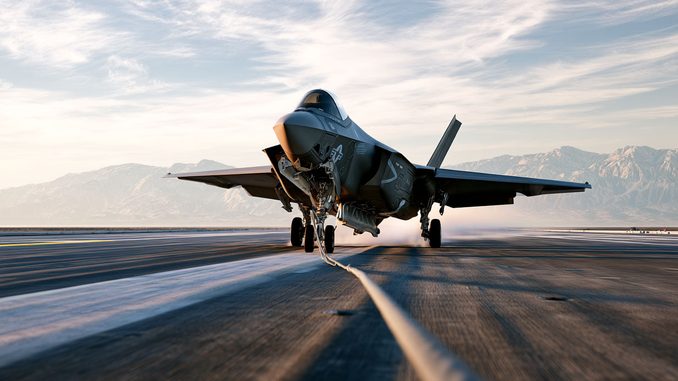
After 122 catapult launches and 122 arrested landings aboard the John F. Kennedy, the U.S. Navy has certified the F-35C for its aircraft carriers. A look at the technical and military stakes.
In Brief
On November 19, 2026, Lockheed Martin announced that the U.S. Navy had certified the compatibility of the F-35C Lightning II across its entire fleet of aircraft carriers, including the Gerald R. Ford class. This decision follows a testing campaign aboard the future USS John F. Kennedy (CVN-79), which began on October 13. Two aircraft from the VX-23 squadron conducted 34 flights, 122 catapult launches, and 122 arrested landings over eleven days of trials. The objective was to evaluate the interactions between the stealth fighter, the EMALS electromagnetic catapult, and the AAG arresting system, as well as the structural stress on the airframe and onboard software. This is a significant milestone: America’s newest aircraft carriers will eventually be able to deploy fifth-generation fighters for deep-penetration and intelligence missions. However, the validation of launch and recovery maneuvers does not constitute immediate deployment clearance for all vessels; specialized shipboard modifications and operational procedures remain decisive factors.
Compatibility between a fighter jet and an aircraft carrier goes far beyond verifying that it can take off and land. It requires measuring the stresses placed on the airframe, checking the ship’s automated systems, and ensuring adequate safety margins. That was precisely the purpose of the trials conducted aboard the John F. Kennedy.
The 122 Catapult Launches Opening the Ford Class to the F-35C
The first arrested landing of an F-35C aboard a Gerald R. Ford-class aircraft carrier took place on October 13, 2026, in the western Atlantic. The first catapult-assisted takeoff followed on October 14. Both aircraft belonged to VX-23, the test and evaluation squadron based at Naval Air Station Patuxent River in Maryland.
According to the report published on November 19 by Lockheed Martin, eleven days of testing yielded 34 flights, 122 catapult launches, and 122 arrested landings. This campaign, designated Aircraft Compatibility Testing (ACT), followed land-based trials conducted between January 2024 and May 2025.
Engineers measured structural loads, verified launch and recovery software, and assessed the stability of mission systems—including the initial shipboard use of Block 4 software in this environment. This data will be used to establish official catapult launch and arrested landing bulletins.
The redesigned flight deck and the relocated island also alter the airflow patterns and turbulence pilots encounter during final approach.
The Technological Shift Between Nimitz and Ford Carriers
Nimitz-class aircraft carriers rely on steam catapults and Mk-7 hydraulic arresting gear. The Gerald R. Ford class replaces this equipment with EMALS and AAG, two systems developed by General Atomics.
This technological transition explains part of the delays experienced by the U.S. Navy. Commissioned in 2017, the USS Gerald R. Ford (CVN-78) had still not embarked an F-35C squadron for an operational deployment as of November 2026, even though the fighter was already operating from several modernized Nimitz-class carriers.
Consequently, the U.S. Congress mandated that the John F. Kennedy be equipped with the necessary capabilities to operate the F-35C.
Integration goes well beyond catapult hardware. It also requires reinforced jet blast deflectors, specialized maintenance facilities, IT infrastructure, and secure spaces to support a stealth fighter.
How the EMALS Electromagnetic Catapult Works
The Electromagnetic Aircraft Launch System replaces steam pressure with electromagnetic propulsion. It uses a linear induction electric motor installed beneath the flight deck.
Electrical power generated by the ship is first stored as kinetic energy in rotating disc alternators. Power conversion electronics then deliver the required surge of electricity. Sequentially energized coils create a moving magnetic field that propels the launch shuttle attached to the aircraft’s nose gear.
Acceleration occurs over approximately 300 feet (91 meters). The system adjusts its thrust based on the aircraft’s weight, relative wind, and required takeoff speed.
Unlike steam catapults, EMALS allows precise control over the acceleration profile. This enables it to launch heavy fighters, surveillance aircraft, or lightweight drones by tailoring the mechanical stress to each airframe.
General Atomics reports a recharge time of less than one minute. This architecture is designed to reduce airframe wear and lower maintenance requirements.
However, these theoretical advantages do not automatically guarantee higher operational availability, which also depends on the reliability of electrical components and the overall tempo of flight deck operations.
The AAG System Enhances Aircraft Recovery
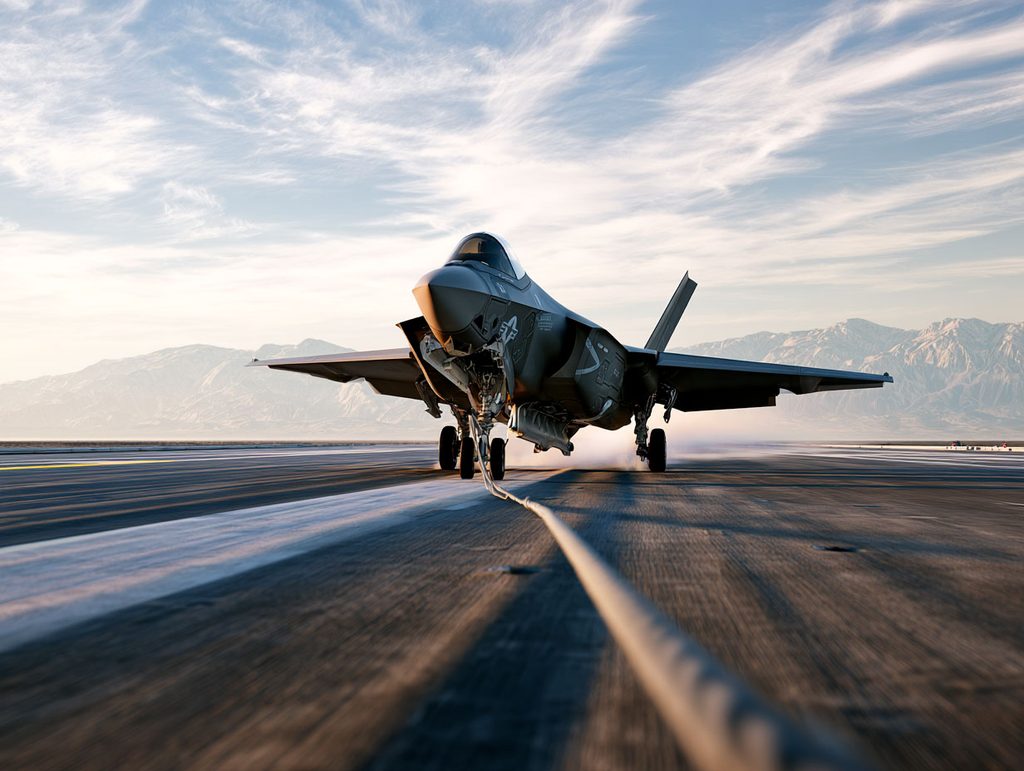
Landing on a carrier requires the exact opposite process. An aircraft approaches at high speed onto an extremely short runway. Its tailhook catches a cable stretched across the deck, transferring kinetic energy to the braking system.
The Advanced Arresting Gear (AAG) combines energy absorbers, water turbines, an induction motor, and digital controls. The system modulates deceleration based on the specific characteristics of the incoming aircraft.
Contrary to popular belief, AAG is not an electromagnetic catapult operating in reverse. Braking still relies on an arresting wire and a mechanical energy-absorption chain.
Its primary advantage lies in more precisely controlling the forces transmitted to the airframe and tailhook. It is also designed to accommodate a broader weight range, from future carrier-based unmanned aerial vehicles to heavy combat aircraft.
This flexibility is becoming essential as carrier air wings integrate new categories of aircraft.
The F-35C Strengthens American Power Projection
The F-35 Lightning II is produced in three variants. The F-35C is specifically engineered for operations aboard aircraft carriers equipped with catapults and arresting gear.
It features reinforced landing gear, a heavy-duty tailhook, and larger wings with folding wingtips, giving it a wingspan of 43 feet (13.1 meters). Its combat radius exceeds 600 nautical miles (1,100 kilometers) on internal fuel, depending on the standard mission profile.
This range allows the Navy to project air power hundreds of miles from the carrier strike group.
A nuclear-powered aircraft carrier can position itself off the coast of a crisis zone without relying directly on foreign airbases. Its fighters can then execute air defense, reconnaissance, suppression of enemy air defenses, and strike missions.
Above all, the F-35C brings the ability to penetrate heavily defended airspace. Its stealth profile reduces the range at which enemy radars can detect it, while its sensors and data fusion capabilities enhance tactical situational awareness.
It can share this real-time intelligence with F/A-18E/F Super Hornets, airborne early warning aircraft, and surface escorts.
This interoperability is a key driver in the transformation of U.S. Navy carrier air wings.
Nevertheless, an aircraft carrier’s mobility does not guarantee its invulnerability. Long-range anti-ship missiles, submarines, and adversary surveillance networks can constrain where it operates. Moreover, the standoff distance required to keep the carrier safe can reduce the time its fighters spend on station over their targets.
Technical Certification Does Not Yet Guarantee Operational Deployment
Lockheed Martin’s announcement requires an important distinction. The U.S. Navy has validated the F-35C’s compatibility across its different carrier classes, but this certification does not mean every ship is immediately ready to embark a full squadron.
Official aircraft launch and recovery bulletins must still be issued, and the designated carriers must have the necessary support facilities and logistics infrastructure in place.
The John F. Kennedy itself remains in its fitting-out and testing phase. The U.S. Navy completed preliminary acceptance of the vessel on September 29, 2026, with final delivery scheduled for spring 2027.
These sea trials have cleared a major technical hurdle. The next challenge will be proving that the catapults, arresting gear, flight deck crews, and maintenance teams can sustain a high sortie-generation rate over extended periods.
The true military value of this new generation of aircraft carriers will depend less on the success of an isolated catapult launch than on its ability to launch, recover, rearm, and relaunch fighters continuously. It is by this real-world operational readiness that the F-35C’s contribution to American naval aviation will ultimately be measured.