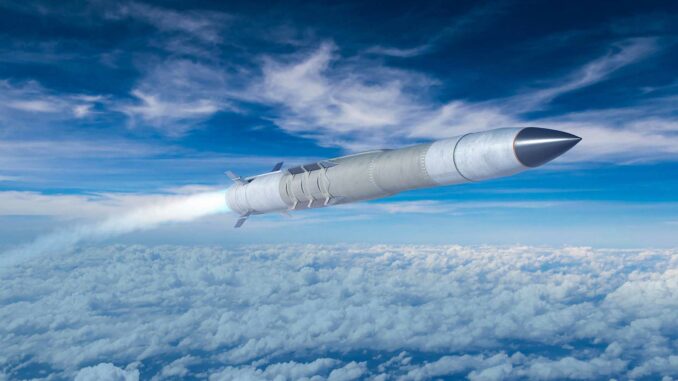
In Ankara, Lockheed Martin is stepping up PAC-3 maintenance and preparing for ATACMS production in Germany in partnership with Rheinmetall.
In summary
At the NATO summit in Ankara on 7 July 2026, Lockheed Martin made progress on two issues that address the same problem. Europe has more missile systems, but it still lacks stocks, maintenance capabilities and production lines close to the forces. The United States, Germany, the Netherlands, Poland and Sweden are to explore the creation of a European maintenance centre for the Patriot system’s PAC-3 MSE and PAC-3 CRI interceptors. At the same time, Lockheed Martin and Rheinmetall have signed a memorandum of understanding to produce, integrate and distribute ATACMS missiles from Unterlüß, Germany. The project would become the first ATACMS production line outside the United States. For NATO, the key issue is operational sustainability. For Berlin, the aim is broader: to transform Germany into an industrial hub for missile defence and precision ground strikes, whilst not eliminating its technological dependence on Washington.
The Ankara summit transforms industrial agreements into military capability
Lockheed Martin’s announcements are not merely commercial transactions. They reflect a shift in industrial doctrine. NATO is no longer seeking simply to purchase weapons. It wants to be able to maintain, replace and produce them during a protracted crisis.
The Ankara summit placed this issue at the centre of discussions. The Alliance announced over $50 billion in new procurement and industrial commitments there. The logic is clear. Regional defence plans are only of value if missile stocks, spare parts, technicians and supply chains are in place.
Lockheed Martin operates across two critical chains. The first concerns air and missile defence with the PAC-3. The second concerns long-range ground-to-ground strikes with the ATACMS. One protects forces, cities and infrastructure. The other enables strikes against enemy command posts, airfields, depots or logistics hubs.
This combination is in line with NATO’s integrated air and missile defence doctrine. A credible defence does not rely solely on interception; it must also be able to neutralise the enemy’s launch capabilities before they fire.
The PAC-3 centre prioritises missile availability
The agreement signed by the United States, Germany, the Netherlands, Poland and Sweden concerns the feasibility study for a European centre dedicated to the maintenance of PAC-3 missiles.
The location has not yet been chosen. Funding, the timetable, annual capacity and industrial distribution also remain to be negotiated.
It is important to be clear. This project is not yet a production facility. It is a regional support facility for the PAC-3 Missile Segment Enhancement and PAC-3 Cost Reduction Initiative interceptors. The possibility of future manufacturing in Europe is not ruled out, but it is not part of the agreement concluded in Ankara.
The PAC-3 is the most specialised interceptor in the Patriot system
Patriot is not the name of a single missile. It is an architecture comprising radars, command posts, communications equipment, launchers and several families of interceptors.
The PAC-3 MSE is designed to destroy tactical ballistic missiles, cruise missiles, aircraft and other complex aerial threats. In particular, it complements the Patriot GEM-T missiles, which do not operate in the same way or have the same missions.
Its distinctive feature lies in direct-impact interception. The missile does not merely detonate a warhead near the target; instead, it strikes the target at very high speed in order to transfer a massive amount of kinetic energy to it. This method, known as ‘hit-to-kill’, is particularly well-suited to ballistic missiles, the destruction of which requires a high degree of precision.
The MSE version features a dual-pulse rocket motor, optimised aerodynamics and a wider interception envelope than the PAC-3 CRI. It therefore plays a central role in the protection of air bases, logistics centres, command headquarters and strategic infrastructure.
Demand far exceeds historical production capacity. In January 2026, Lockheed Martin and the US government agreed a seven-year framework aimed at increasing annual production capacity from around 600 to 2,000 PAC-3 MSE interceptors. This target will not be achieved immediately, but it demonstrates the scale of the rearmament programme currently underway.
European maintenance must reduce downtime
A modern missile cannot remain in storage indefinitely without inspection. Its electronic components, propellant, batteries, safety devices and guidance sub-assemblies must be checked according to defined cycles.
The most complex operations require certified facilities, protected technical data and strict traceability. Missiles sometimes need to be dismantled, tested, repaired and then re-certified before being returned to units.
When these capabilities are concentrated in the United States, European users must bear the costs of transatlantic transport, customs procedures, security clearances and waiting times in workshops. In normal times, this arrangement is costly. In times of tension, it becomes an operational risk.
The future centre will need to reduce downtime, increase the number of missiles ready for immediate use and establish a regional stock of spare parts. It will also facilitate the training of European technicians.
For NATO, the value of the project will be measured less by the number of units built than by the actual availability rate of the interceptors.
ATACMS co-production provides immediate strike depth
The second agreement is more ambitious from an industrial perspective. Lockheed Martin and Rheinmetall have signed a memorandum of understanding backed by the US and German governments.
The aim is to set up a joint venture responsible for manufacturing, integrating and distributing the ATACMS in Europe. Production would be based at Rheinmetall’s site in Unterlüß, Lower Saxony.
This would constitute the first ATACMS production line outside the United States. Lockheed Martin will maintain its production line in Camden, Arkansas, until the transition to European capacity is complete.
However, the announcement remains a memorandum of understanding. It does not yet specify the amount of the investment, the volume of orders, the planned annual capacity or the delivery date for the first German missiles.
The ATACMS delivers precision strikes up to 300 kilometres
The ATACMS is a tactical ballistic missile launched from the M142 HIMARS and M270 MLRS systems. In its modern single-unit version, it combines an inertial navigation system with GPS guidance.
Its maximum range is 300 kilometres. Its warhead weighs 227 kilograms, or 500 pounds. A single HIMARS launcher can carry one ATACMS missile. An M270, equipped with two launchers, can carry two.
This range makes it possible to target objectives well beyond the reach of conventional artillery: command centres, ammunition depots, air defence systems, airstrips, bridges, ports or concentrations of forces.
The missile gives land forces a strike capability that was previously the preserve of the air force. It also makes it possible to engage targets without exposing an aircraft and its crew to enemy air defences.
The strategic effect stems not only from the potential destruction of a target. It stems from the constraints imposed on the adversary. The adversary must move its key assets further away, disperse its depots, strengthen their protection and increase the number of alternative sites.
The threat of a precision strike therefore disrupts the logistical depth. It slows down movements, increases protection costs and complicates operational planning.
The choice of an older missile responds to a modern emergency
The ATACMS is, however, an older-generation system. The US Army is gradually replacing it with the Precision Strike Missile.
The PrSM has a range exceeding 400 kilometres in its initial configuration and can carry two missiles per launch container, compared with just one ATACMS. It is also set to be equipped with new capabilities against moving targets and maritime targets.
Producing the ATACMS in Germany may therefore seem paradoxical. In reality, the choice is a pragmatic one. The missile is qualified, battle-tested and compatible with the HIMARS and M270 systems already in service with several European armed forces.
It can meet demand more quickly than an entirely new programme. Operational procedures, launch equipment and part of the logistical infrastructure already exist.
This production could thus serve as a transitional capability. It would replenish available stocks whilst preparing Rheinmetall for the integration of more recent US systems.
But the announcement raises a straightforward question. Building a new production line for a missile that is being phased out in the United States will only be rational if European orders are sufficiently numerous and guaranteed over several years. Without a firm contract, the project will remain a political statement.
NATO gains resilience rather than a mere increase in stocks
For the Alliance, the two projects reinforce three key elements.
The first is availability. A regional maintenance centre prevents essential missiles from leaving Europe for long periods.
The second is the capacity to scale up production. A German ATACMS production line adds a second industrial hub to US production.
The third is interoperability. The same munitions can be used by several countries equipped with Patriot, HIMARS or M270 systems. Stocks can therefore be distributed, pooled or transferred more easily between allies.
NATO also reduces the risk associated with a single supply chain. A crisis in the Pacific, a surge in US demand or a logistical bottleneck could limit deliveries to Europe. Producing and maintaining more on the continent does not eliminate this risk, but it does spread it out.
However, we must avoid an overly triumphalist interpretation. A factory does not instantly produce thousands of missiles. Rocket engines, propellants, explosives, guidance components, ruggedised microchips and testing equipment remain subject to limited industrial capacity.
The real question will be that of annual output. A production line capable of producing a few dozen missiles would not significantly alter the strategic balance. Production of several hundred units, sustained over ten years, would have a very different effect.
Germany becomes the industrial hub of European missile rearmament
For Berlin, the agreement with Lockheed Martin goes beyond the acquisition of new munitions. It places Germany at the heart of the transatlantic industrial architecture.
The Unterlüß site employs around 4,000 people. Rheinmetall already produces weapons systems, munitions and vehicles there. The company also operates Europe’s largest private firing range at the site.
A rocket engine factory is nearing completion. Production of rocket engines and missile components is set to begin as early as 2027. This infrastructure will facilitate the industrial integration of the ATACMS.
The concentration of these activities gives Germany a base that would be difficult to replicate elsewhere in the short term. It complements the European Sky Shield Initiative, launched by Berlin and bringing together 23 countries to strengthen European air defence within the framework of NATO.
Germany is thus consolidating its role as a leading nation. It is deploying forces on the eastern flank, commanding a brigade in Lithuania, organising joint procurement and now attracting US production capabilities.
It is no longer content merely to fund European security. It is seeking to control part of its industrial, logistical and technical infrastructure.
German autonomy will remain tied to US decisions
The discourse on autonomy must, however, remain honest. Producing a US missile under licence in Germany does not mean having complete sovereignty.
Intellectual property rights, sensitive components, software, export licences and system upgrades will remain largely under US control. Washington will also be able to impose restrictions on customers, volumes or transfers to third countries.
This is therefore autonomy under a US licence. This approach can nevertheless be effective. It brings production chains closer to users, builds local expertise and gives Berlin greater leverage in transatlantic negotiations.
The industrial benefit is also political. Germany is becoming a partner that Washington needs to increase volumes, rather than merely a customer.
This development strengthens its position within NATO. It may also heighten tensions with advocates of exclusively European solutions, particularly in countries that wish to prioritise technologies developed by MBDA, Diehl Defence, Saab or other European manufacturers.
The industrial battle will begin once the agreements have been signed
The Ankara agreements set out a credible direction. They do not yet guarantee the outcome.
The PAC-3 centre must find a host country, secure funding and establish a governance model. The ATACMS joint venture must obtain US and German authorisations, firm orders and the necessary technology transfers.
Success will be judged on concrete criteria: maintenance lead times, missile availability, the number of units produced each year, the proportion of components manufactured in Europe, and the ability to maintain production in the event of a transatlantic crisis.
Lockheed Martin and Rheinmetall have laid the foundations for a new industrial landscape. Europe no longer wishes merely to receive US missiles; it wants to participate in their maintenance and manufacture.
For NATO, this is a prerequisite for military credibility. For Germany, it is an opportunity to become one of the key centres of European rearmament. The challenge begins now: to transform memoranda of understanding into actual industrial production capacity.
War Wings Daily is an independant magazine.