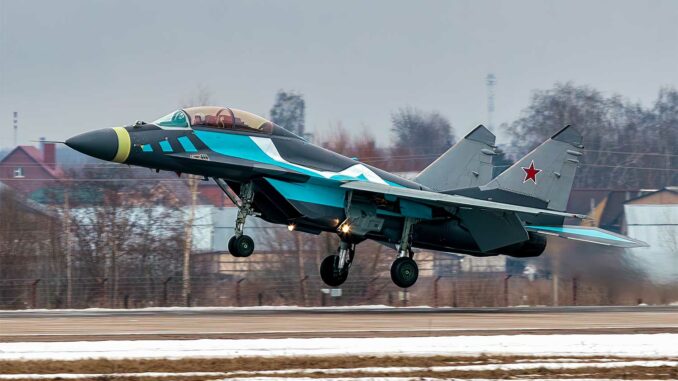
Russia is making up for some of its aerial losses, but its bombers, early-warning aircraft and maintenance capabilities are weakening after four years of war.
In summary
The Russian Air Force is neither destroyed nor on the verge of collapse. It retains several hundred modern combat aircraft, an industry capable of producing Su-34s, Su-35Ss and Su-57s, as well as considerable strike capability. Since 2022, it has even improved its tactics, the use of glide bombs and coordination between fighter aircraft, radar units and air defence systems. But this resilience masks a profound erosion. The losses involve aircraft that are impossible or very difficult to replace, notably the Tu-95MS, Tu-22M3 and A-50U. The Soviet-era fleets are ageing. Flight hours are mounting up. Maintenance is becoming more burdensome. Russia is also increasingly reliant on drones, missiles and remote strikes. The picture is therefore mixed: Moscow can continue an intensive air war against Ukraine, but still lacks the capacity to gain lasting control of its airspace. For Vladimir Putin, this air force remains a means of exerting pressure, not a guarantee of victory.
The true picture of an air force that is difficult to assess
The state of the Russian Air Force cannot be summarised by a single figure. Official figures often mix aircraft that are genuinely operational with those held in reserve, airframes used for training and aircraft awaiting repair.
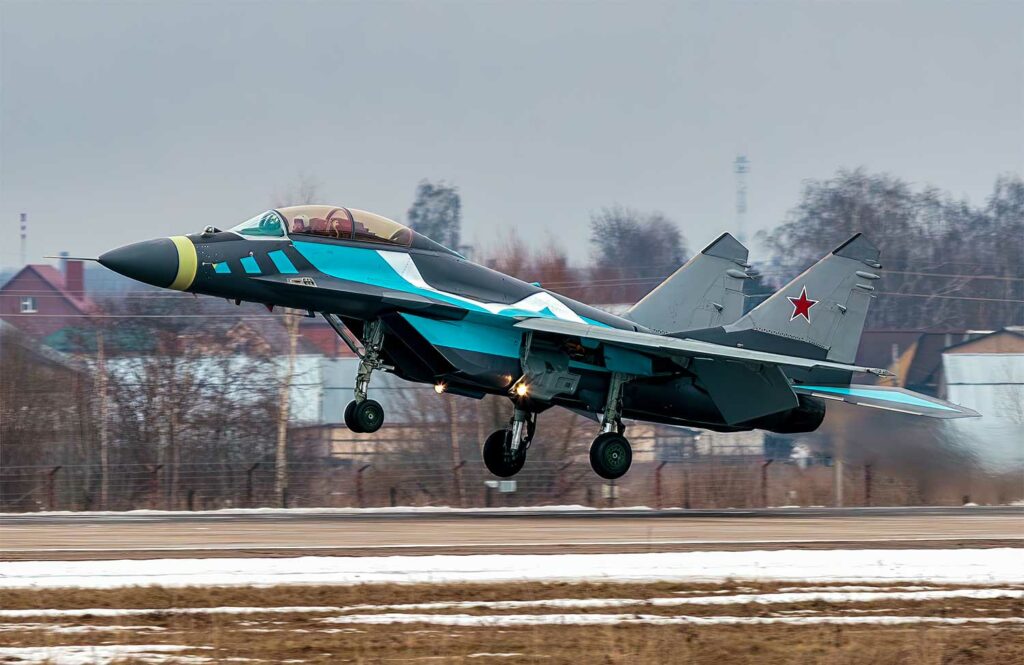
FlightGlobal’s ‘World Air Forces 2026’ directory attributes approximately 1,462 combat aircraft to the Russian Air Force. In particular, it lists 235 MiG-29s and MiG-35s, 128 MiG-31s, 260 Su-24s, 131 Su-25s, 407 aircraft from the Su-27, Su-30 and Su-35 families, 156 Su-34s and 30 Su-57s. In addition to this tactical air force, there are reportedly 56 Tu-22Ms, 44 Tu-95s and 15 Tu-160s. Russia is also said to have eight A-50 or A-100 early warning aircraft and 18 Il-78 tankers.
These figures represent an administrative inventory. They do not correspond to a force that can be mobilised immediately. A significant proportion of the MiG-29s, Su-24s, Su-25s and Su-27s were built during the Soviet era. Some airframes fly very little. Others serve as a source of spare parts. Several hundred aircraft are approaching their structural limits.
The most realistic conclusion is therefore simple: numbers do not tell the whole story. Russia probably possesses between 600 and 800 tactical aircraft that still have genuine military utility. Not all of them are available at the same time. A fraction must cover the Arctic, the Far East, the Caucasus, Kaliningrad and the NATO borders. Another fraction is grounded for maintenance or training.
The Russian Air Force before the 2022 invasion
The impressive fleet concealed uneven operational readiness
Before February 2022, the Воздушно-космические силы, or VKS, were often portrayed as the world’s second-strongest air force. This image was based on the size of the fleet, the range of Russian missiles and the theoretical performance of the Sukhoi aircraft.
At that time, Russia possessed around 130 front-line Su-34s. It also fielded over a hundred Su-35Ss and a comparable number of Su-30SMs. These aircraft were supplemented by MiG-31BMs, capable of carrying the R-37M air-to-air missile, and by a large number of modernised Soviet-era aircraft.
This force was, however, unbalanced. It lacked refuelling aircraft, modern radar systems and platforms specialised in electronic warfare. It also had few designation pods comparable to Western systems. Its pilots trained less than those of the major NATO air forces. Flight hours were concentrated on the most experienced crews.
The centralised doctrine failed against Ukraine
At the start of the invasion, Moscow appeared to have the necessary means to quickly neutralise the Ukrainian air force. This proved not to be the case.
The initial Russian strikes did not destroy all of Ukraine’s radars, anti-aircraft batteries and runways. The VKS then deployed aircraft at low altitude to avoid long-range systems. This tactic left them vulnerable to man-portable missiles and short-range defences.
Russia did not conduct a coherent campaign to neutralise air defences. Air, ground and electronic operations were insufficiently coordinated. Ukrainian units dispersed their aircraft and relocated their radars. After a few weeks, Russian aircraft reduced their deep incursions into territory controlled by Kyiv.
This initial failure remains central. Russia has still not achieved air superiority after more than four years of war.
The toll after four years of fighting
Certain fleets have suffered heavy losses
Estimates vary depending on the methods used. The Royal United Services Institute estimates that around 130 Russian aircraft had been shot down or seriously damaged by early 2026. Oryx’s broader tally, which includes accidents, damaged aircraft and ground-based destruction, stood at nearly 181 fixed-wing aircraft at that time.
Among the visually documented losses were around 42 Su-34s, 20 Su-30SMs, eight Su-35Ss, 41 Su-25s and 15 Su-24s. Russia is also reported to have lost or suffered heavy damage to five MiG-31s, one Su-57 and several transport aircraft.
Helicopters paid an even heavier price. Oryx recorded around 168 helicopters destroyed or damaged, including 66 Ka-52s and 48 Mi-8s. The Ka-52 had played a major role against Ukrainian columns in 2022, and subsequently against the 2023 counter-offensive. However, its deployment close to the front line left it vulnerable to surface-to-air missiles and short-range fire.
These losses are significant. Yet they do not signify the demise of the Russian air force.
Industrial renewal has protected the modern core
Between 2022 and 2025, the United Aircraft Corporation is reported to have delivered eight Su-34s in 2022, 11 in 2023, between 12 and 14 in 2024 and around 11 in 2025. Total production thus reached around forty aircraft. This has offset, at least in numerical terms, the losses of the Su-34.
The same pattern is evident for the Su-30SM2 and Su-35S. Russia has lost several aircraft, but has continued with deliveries. Production of the Su-57 remains slow, with around 30 aircraft recorded at the start of 2026, but it has not been halted. RUSI therefore estimates that the total number of modern Russian fighter aircraft has increased slightly since 2022.
This result is counter-intuitive. It shows that the modern core has held firm. Sanctions have slowed down certain supply chains, without preventing Russia from building fighter aircraft.
However, this compensation remains incomplete. A new Su-34 does not automatically replace an experienced crew, an A-50U or a strategic bomber built several decades ago.
The silent haemorrhage of strategic aviation
Lost bombers cannot be easily replaced
The situation is more worrying for the Tu-95MS and Tu-22M3. These aircraft were produced on production lines that are now closed. Russia can modernise them, but it cannot rapidly produce new airframes of equivalent capability.
Oryx’s tallies list up to 11 Tu-22M3s and ten Tu-95MSs destroyed or damaged since the start of the invasion. Some of these losses result from Ukrainian strikes against air bases. Operation Spiderweb on 1 June 2025 specifically targeted several Russian airfields using small drones launched in the vicinity of the facilities.
Even when a damaged aircraft can be repaired, it remains out of service for several months. The surviving aircraft must be dispersed to more remote bases. Missions become longer. They consume more fuel and flight hours.
The crash of a Tu-22M3 in the Irkutsk Oblast on 15 June 2026 illustrates this pressure. The Russian Ministry of Defence cited an engine failure. The crew ejected, but another irreplaceable airframe was lost.
In this regard, the strategic fleet is irreplaceable. The limited production of the Tu-160M is not sufficient to quickly offset the attrition of the Tu-95MS and Tu-22M3 aircraft.
Radar aircraft are the weakest link
The A-50Us provide aerial surveillance, missile detection and fighter coordination. FlightGlobal lists eight of them, but two have been destroyed according to visually confirmed data. Others may be grounded for maintenance.
Russia therefore probably has only a few A-50Us available at any given time. This weakness reduces the continuity of air surveillance. It forces the surviving aircraft to fly more frequently and to stay clear of areas where they might be threatened by Ukrainian missiles.
The A-100 programme, intended to provide a modern successor, is progressing slowly. Sanctions are complicating access to electronic components, processors and certain radar equipment. However, an advanced early-warning aircraft cannot be replaced by a simple fighter equipped with a powerful radar.
The revolution in gliding bombs and long-range strikes
Russia has found a solution to its inability to penetrate
Following the losses of 2022, the VKS changed its tactics. Su-34s no longer penetrate deep into Ukrainian airspace. They drop their munitions from Russian territory or from occupied areas.
UMPK kits convert FAB-500, FAB-1500 and FAB-3000 bombs into glide munitions. Wings, a navigation system and control surfaces are added to the existing bomb casing. Depending on the speed and altitude at which they are dropped, the range can exceed 60 kilometres and reach around 130 kilometres for certain versions.
In June 2026, British intelligence estimated that Russia was carrying out more than 200 fighter sorties per day and dropping between 180 and 250 glide bombs, depending on weather conditions.
This method reduces the risk to aircraft. It also makes use of the considerable stockpiles of unguided bombs inherited from the Soviet Union. The cost of the kit remains far lower than that of a cruise missile.
On the front line, the glide bomb has become the decisive weapon. It destroys shelters, fortified buildings, command posts and Ukrainian positions prior to a ground assault. Its accuracy is not perfect, but its explosive charge often compensates for this shortcoming.
Increasing effectiveness still masks errors
The intensity of operations is leading to accidents. Russian bombs have regularly fallen on Russian territory or in occupied areas. British intelligence attributes this to technical failures, preparation errors and crew fatigue.
This fatigue is a factor. More than 200 sorties a day place a heavy strain on mechanics, armourers and pilots. Errors do not mean the system is ineffective. They indicate that Russia is operating its units close to their maximum capacity.
The massive ramp-up of Russian drones
The Geran drones have replaced part of the conventional air power
The most significant transformation does not concern manned aircraft. It concerns drones.
Russia launched more than 50,000 long-range attack drones in 2025, around five times more than in 2024. Weekly launches rose from around 75 to nearly 900 in the space of a few months.
For 2026, several assessments suggest an industrial target of around 60,000 attack drones and 50,000 decoys. In May, the estimated average stood at around 167 launches per day. The infrastructure at the Alabuga complex continues to be expanded.
The Geran-2s, derived from the Iranian Shahed-136, are now being produced in Russia. They are accompanied by the less expensive Gerbera drones, which are used as decoys. Geran-3 and Geran-5 drones, equipped with jet engines, increase their approach speed and reduce the reaction time of Ukrainian defences.
The exact number of drones available is of little significance. They are expendable munitions. What matters is production capacity. In this respect, drones have changed the economics of war.
Tactical drones complement artillery
The Orlan-10 and Orlan-30 provide reconnaissance and fire correction. The Zala drones monitor Ukrainian movements. The Lancet drones strike artillery pieces, radars and vehicles. FPV drones are used a few kilometres from the front line against infantry groups and logistical positions.
This architecture makes it possible to detect a target, transmit its coordinates and engage it with a munition within a matter of minutes. It is not solely the responsibility of the air force. It involves ground forces, intelligence units and civilian manufacturers.
The Russian air force is thus becoming less reliant on manned aircraft. The mission can be divided between a reconnaissance drone, a satellite, a glide bomb, a missile and a Geran.
Maintenance is becoming the most difficult factor to assess
Ageing takes its toll more slowly than Ukrainian missiles
An aircraft may remain on the inventory list whilst being unavailable. It may be awaiting an engine, a radar, a structural overhaul or an electronic component.
Since 2022, Russian aircraft have been accumulating flight hours far in excess of peacetime projections. The Su-34s and Su-35Ss are in heavy use. The MiG-31s are tasked with interception, territorial defence and the launch of Kh-47M2 Kinzhal missiles. Strategic bombers are carrying out long missions from increasingly distant bases.
Every redeployment necessitated by a Ukrainian threat extends flight times. Every extra hour brings the airframe closer to its next overhaul. The key issue is therefore no longer simply the number of aircraft built. It is the actual operational readiness of each regiment.
Sanctions are slowing things down without paralysing operations
Western sanctions are complicating access to machine tools, bearings, electronic components, navigation equipment and certain materials. They are increasing lead times and costs.
Russia is, however, circumventing some of these restrictions through parallel imports. It is using Chinese suppliers and intermediaries based in third countries. It is also replacing certain components with less high-performance models.
The result is not an immediate collapse, but a gradual deterioration in quality, lead times and reliability. Airframes are cannibalised to keep other aircraft airworthy. The ageing fleets of Antonov, Tupolev and Ilyushin are particularly vulnerable.
Tactical transformation makes the VKS more dangerous
Combat experience has advanced
Surviving Russian pilots now possess experience that the majority of European air forces lack. They have learnt to operate against an integrated defence system. They use long-range R-37M missiles. They coordinate their missions more closely with the S-300, S-350 and S-400 systems.
The Su-35S and some Su-30SM2s can share information with ground-based batteries. The A-50Us, where available, also contribute to this detection chain. Russian air defence systems have received software updates and new procedures.
RUSI estimates that the VKS of 2025 posed, in several respects, a more serious threat to a Western force than those of 2022. Operational experience has improved, even as the size of the fleet is declining.
Structural weaknesses remain
Russia remains constrained by a centralised chain of command. It lacks refuelling aircraft. It has few radar-equipped aircraft and platforms specialising in offensive jamming. It has not demonstrated its ability to conduct a complex air campaign comparable to those carried out by the United States.
Its Su-57 stealth aircraft are still too few in number to shift the balance of power. Their stealth capabilities remain inferior to those of the F-22 or F-35. They are mainly used from a distance to launch missiles, without being exposed to Ukrainian defences.
Russia has therefore become more proficient at waging a war of attrition from within its own airspace. It has not become a force capable of rapidly dominating airspace defended by NATO.
Future Russian operations will rely more on distance
The war in Ukraine will remain a war of attrition
In the coming months, Russia is expected to pursue three lines of action. It will continue to drop glide bombs on the front line. It will carry out combined strikes using ballistic missiles, cruise missiles, Kinzhal missiles, Geran missiles and decoys. Finally, it will seek to destroy Ukrainian defences using drones and anti-radar missiles.
Manned aircraft will remain in the background. The Russian command is unlikely to take the risk of sending large numbers of Su-34s or Su-35Ss over Ukrainian-controlled territories whilst Patriot, SAMP/T and other defence systems remain active.
This approach may support a slow ground advance. It does not guarantee a strategic breakthrough. Experience since 2022 shows that Russian air power can destroy positions, but is not sufficient to completely disrupt the Ukrainian state.
A confrontation with NATO would present a different level of risk
Faced with NATO, Russian forces would have numerous air defences, long-range missiles and experienced crews at their disposal. They could threaten bases, logistics centres and infrastructure located in Europe.
However, they would have to contend with F-35s, a greater number of radar-equipped aircraft, refuelling aircraft, electronic warfare capabilities and advanced anti-radar weapons. Russian bases would also be exposed to cruise missiles and precision strikes.
Russia’s ground-based air defence system would likely pose a more serious threat than its fighter aircraft. RUSI nevertheless believes that NATO has a better understanding of this defence system than it did prior to 2022, as Ukraine has revealed its tactics, frequencies and vulnerabilities.
The political cost for Vladimir Putin remains limited but real
For Vladimir Putin, the air force’s performance has been mixed. It has not delivered the swift victory promised by the Kremlin. It has not eliminated the Ukrainian air force. It has not prevented Ukrainian drones from striking bases, refineries and facilities located several hundred kilometres from the front line.
It continues, however, to produce visible military effects. Glide bombs support ground forces. Drones strike every night. Missiles maintain constant pressure on Ukrainian cities and infrastructure.
The budgetary cost is becoming harder to ignore. SIPRI estimates that Russia’s military expenditure in the broadest sense reached around 16,000 billion roubles in 2025, representing nearly 7.5 per cent of gross domestic product. For 2026, planned defence and security expenditure stands at around 16,800 billion roubles and accounts for nearly 38 per cent of the federal budget.
This mobilisation enables Putin to continue the war. It reduces the resources available for civilian infrastructure, healthcare, education and economic modernisation. It also forces the Kremlin to prioritise between aircraft, missiles, drones, air defence systems and the needs of ground forces.
The attacks on strategic bombers also have a symbolic dimension. They demonstrate that the depth of Russian territory no longer guarantees the protection of the air-based components of nuclear deterrence. Whilst they do not immediately threaten Putin’s political survival, they undermine the narrative of an invulnerable state.
Russian power now rests on endurance under strain
The state of the Russian Air Force in 2026 corresponds neither to Moscow’s propaganda nor to the image of a force in ruins. The VKS retain considerable numbers, experienced pilots and an industry capable of replacing several dozen aircraft a year.
They have also learnt. Their use of glide bombs, long-range missiles and mixed salvos is far more effective than it was in 2022. For Ukraine, this air force remains a daily threat and, at times, a decisive one at the local level.
But Russia is gradually losing what it cannot rebuild: strategic bombers, early-warning aircraft, Soviet-era airframes and technical expertise. Its modern aircraft are under greater strain. Its bases are more vulnerable. Maintenance is becoming more costly.
The verdict is therefore clear. The Russian Air Force remains a powerful tool, but a more fragile one. It can sustain the war, but not win it quickly. For Putin, this capability is still sufficient to avert defeat. It still does not deliver the strategic victory the Kremlin had expected in February 2022.
Sources
FlightGlobal, World Air Forces 2026.
Royal United Services Institute, The Evolution of Russian and Chinese Air Power Threats, January 2026.
International Institute for Strategic Studies, Operation Spiderweb: An Assessment of Russian Aerospace Forces Losses, June 2025.
Oryx, Attack on Europe: Documenting Russian Equipment Losses During the Russian Invasion of Ukraine.
Aerospace Global News, Four Years of War: Counting Russian and Ukrainian Aircraft Losses, February 2026.
Royal Aeronautical Society, Ghosts, Vipers and Gripens: The Future of the Ukrainian Air Force, May 2026.
UK Defence Intelligence, June 2026 assessments of Russian sorties and the use of glide bombs.
Centre for Strategic and International Studies, Russia-Ukraine War in 10 Charts, February 2026.
Institute for Science and International Security, Monthly Analysis of Russian Shahed-136 Deployment Against Ukraine, June 2026.
Stockholm International Peace Research Institute, A Budget for a Fifth Year of War: Military Spending in Russia’s Budget for 2026.
Reuters, Russian Strategic Bomber Plane Crashes in Siberia during Training Exercise, June 2026.
The Jamestown Foundation, Russian Aviation Industry Facing Problems, July 2026.
War Wings Daily is an independant magazine.