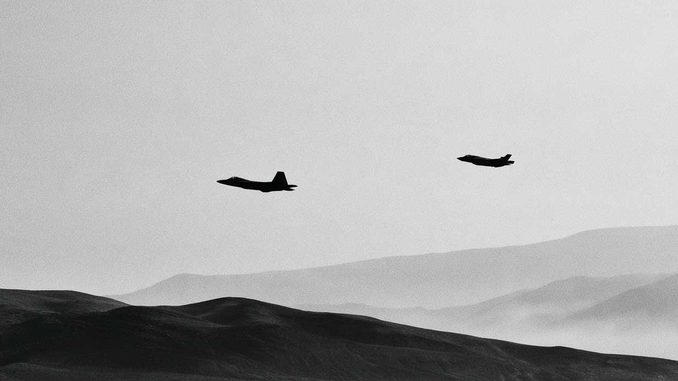
Since 1998, Congress has banned any sale of the F-22 Raptor, even to Japan. Meanwhile, the F-35 boasts around twenty global customers. Why such a stark divide?
Executive Summary
The F-22 Raptor remains the only premier American fighter that Washington refuses to sell, even to its closest allies. This ban rests on the Obey Amendment, renewed annually since 1998 within the Pentagon’s defense appropriations bill. Congress sought to safeguard the stealth, engines, and electronics of an aircraft designed without an export version. Japan, Australia, and Israel knocked on the door to no avail. A 2010 US Air Force study estimated an exportable Raptor would cost $232.5 million per unit. Conversely, the F-35 was designed from inception as an international product. Nine partner nations co-funded its development. Nearly 1,300 units are currently in service, and about twenty countries have placed orders. This openness comes with a trade-off: deep technological dependence on the United States. The upcoming F-47 reopens the debate, carrying the promise of an export version with downgraded capabilities.
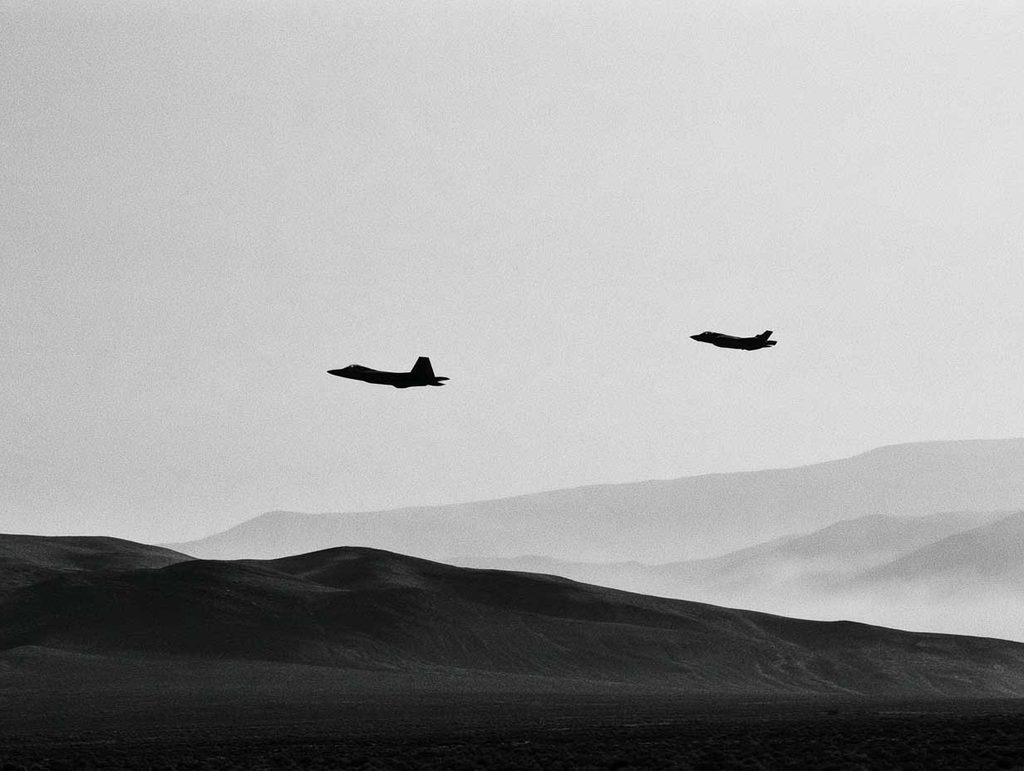
The F-22 Raptor is likely the finest air superiority fighter ever built. It is also one of the rarest. Lockheed Martin manufactured 195 units, 187 of which were assigned to combat units. None were ever sold abroad. The F-35 Lightning II takes the opposite approach, exporting widely to Europe, Asia, and the Middle East. This contrast is no accident. It is the result of legislation, an industrial choice, and a strategic doctrine.
The Obey Amendment: A Legislative Lock Set in 1997
The Same Provision Voted Every Year for Nearly Thirty Years
The ban on exporting the F-22 comes down to a single sentence. It prohibits the Pentagon from using its funds to approve or authorize the sale of the fighter to any foreign government. Its author, Democratic Representative David Obey of Wisconsin, introduced it into the Fiscal Year 1998 Defense Appropriations Act. Ever since, the Obey Amendment has appeared in every military spending bill.
The text has faced challenges. In 2006, the House of Representatives voted to lift it, only for the Senate to reinstate it weeks later. Proponents cite the preservation of sensitive technological secrets. Critics view it primarily as a mechanism to accelerate the end of a program deemed overly expensive.
Japan: An Obstinate, Unsuccessful Suitor
Tokyo was the most persistent prospective buyer. Japan sought two squadrons—between 40 and 60 aircraft—to replace its aging F-4EJ fleet. In 2009, Senator Daniel Inouye cited a figure of $250 million per aircraft for a stripped-down version. Development would have taken up to five years, with deliveries occurring seven to nine years after signing.
Defense Secretary Robert Gates shut the door. He capped the fleet at 187 units and explicitly steered Tokyo toward the F-35. On July 21, 2009, the Senate endorsed the production line shutdown by a vote of 58 to 40. Japan ultimately selected the F-35A in December 2011.
The Secrets Washington Refuses to Share
Stealth: Expertise Before Material
The F-22 Raptor incorporates technologies that the United States considers unmatched. Its stealth relies on airframe geometry, edge alignment, and radar-absorbing coatings. Titanium alloys represent approximately 39% of its structural mass. Its twin Pratt & Whitney F119 engines each generate roughly 156 kN (35,000 lbf) of thrust. They enable supercruise—supersonic flight without afterburners—around Mach 1.5, or nearly 1,600 km/h (990 mph) at altitude. Thrust-vectoring nozzles enhance maneuverability, while the AN/APG-77 active electronically scanned array radar emits in a low-probability-of-intercept manner.
The real secret is not any single component; it is the integration of the whole system. A sale would expose this expertise to the risk of leaks, theft, or shifting alliances. Iran, which still flies F-14s delivered before the 1979 revolution, serves as a textbook example in every debate.
Exportability Forgotten at the Drawing Board
In February 2009, US Air Force Chief of Staff General Norton Schwartz summarized the problem. In his view, exportability must be integrated from the beginning of a program. It was not on the F-22, whereas it was on the F-35. Removing sensitive equipment is not enough; entire subsystems must be redesigned, reintegrated, and recertified.
The Exorbitant Price of an Export Raptor
Congress eventually requested a cost assessment. Initiated in December 2009 and declassified in 2021, the study outlined an export Raptor derived from the Increment 3.1 standard. Two scenarios were evaluated: with an open production line, the program would have cost $8.3 billion, or roughly $165 million per aircraft. With a restarted line, the bill jumped to $11.6 billion for 40 aircraft—or $232.5 million per unit. These figures excluded training, sustainment, and industrial offsets.
By comparison, the US Air Force paid approximately $143 million per production-line F-22. The final delivery took place in 2012. The window closed along with the assembly line.
The F-35: Designed from Day One as a Global Product
Shared Financing Among Allies
The Joint Strike Fighter program began in 1995 on the opposite premise. It was designed as a cooperative program. Nine partner nations participated: the United States, the United Kingdom, Italy, Turkey, the Netherlands, Norway, Australia, Canada, and Denmark. They co-funded development and received industrial contracts in return. (Turkey was excluded in 2019 following its purchase of Russian S-400 systems).
Foreign Military Sales followed. Israel, Japan, South Korea, Singapore, Belgium, and Poland were among the first. Finland, Switzerland, Germany, the Czech Republic, Greece, and Romania later joined the list. Lockheed Martin delivered 191 aircraft in 2025, setting a record. The manufacturer now claims nearly 1,300 aircraft in service. Lots 18 and 19, signed in September 2025, cover 296 aircraft valued at $24 billion. An F-35A costs around $82.5 million. Volume drives down unit costs, and exports fuel that volume.
Technological Dependence: The Price of Success
Exporting the F-35 Lightning II does not mean sharing its secrets. Software, maintenance, and mission data files remain firmly under American control. Only Israel secured the right to integrate its own electronic warfare suite into the F-35I Adir. Although the Pentagon denies the existence of a “kill switch,” the operational dependence is real. Washington sells the aircraft, not total autonomy.
The Limits of an Export Powerhouse
Cracks are appearing in the model. Spain opted out of the F-35 in 2025 in favor of European alternatives. Switzerland reduced its order from roughly 36 to 30 aircraft following a dispute over a fixed price tag of 6 billion Swiss francs. Canada has re-examined its procurement strategy, reflecting a broader strategic choice in fifth-generation fighters.
Conversely, Denmark added 16 aircraft to its order, and Belgium added 11. On September 17, 2026, the State Department approved the potential sale of 48 F-35As to Saudi Arabia for $24.3 billion. US law mandates preserving Israel’s Qualitative Military Edge, requiring a formal evaluation before contract completion. Congress can still block or delay the transaction.
The F-47 Reopens the Debate
The Raptor’s successor reactivates the dilemma. In March 2025, Boeing was awarded the contract for the F-47, a sixth-generation fighter. Donald Trump announced that select allies would be permitted to purchase it in a version downgraded by roughly 10%. His rationale was explicit: today’s ally can become tomorrow’s adversary. According to the Asahi Shimbun, he discussed both the F-47 and F-22 during a call with the Japanese Prime Minister in May 2025.
This promise follows the F-35 playbook: sell the hardware, but retain control. Yet it faces the same hurdle as the F-22. A downgraded variant of an airframe designed without exportability in mind is costly to develop. Washington must decide before locking in the design, not after. Meanwhile, allies observe a simple reality: the F-22 was never for sale, and the Obey Amendment has never been repealed. Its persistence—more than a decade after the assembly line closed—says much about the symbolic value America places on its air secrets. It leaves an open question: does a fighter shared by twenty nations deter adversaries more than one reserved exclusively for one?