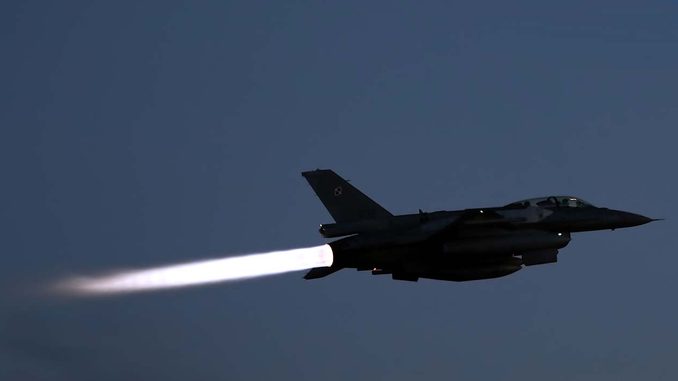
Lockheed Martin restarts F-16 deliveries following a redesign and new flight testing, while global demand continues to keep the production line under pressure.
Executive Summary
The F-16 assembly line is moving again. Lockheed Martin confirmed in the summer of 2026 that it had resumed deliveries after a new flight-tested configuration failed to achieve expected performance levels. The defense contractor halted the affected deliveries, modified the design, repeated flight testing, and subsequently resumed handing over aircraft to customers. Two F-16s were delivered in the second quarter of 2026. The incident comes at a difficult time: the production line in Greenville, South Carolina, must meet substantial international demand while several customers are already experiencing delays. The Block 70/72 is no longer the F-16 of the 1980s: AN/APG-83 AESA radar, digital avionics, new electronic warfare suites, and an airframe upgraded to a 12,000-hour structural service life essentially make it a new-generation Viper. However, this modernization presents a challenge: maintaining a proven aircraft while integrating rapidly evolving systems.
Resumed Deliveries Close a Scarcely Documented Technical Episode
Confirmation came directly from Lockheed Martin during its second-quarter earnings presentation on July 23, 2026, and was widely reported in August.
The group announced it had resumed F-16 deliveries, with two aircraft handed over to customers during the quarter.
The explanation provided by Lockheed Martin Chief Financial Officer Evan Scott was unusually candid. A new variant flight-tested in 2026 had not achieved the performance expected by the manufacturer and its customers. Lockheed Martin subsequently executed a design modification, completed the redesign, conducted fresh flight tests, and cleared the resumption of deliveries.
However, precision is required. Lockheed Martin has not publicly identified the specific subsystem responsible or detailed the exact nature of the “new variant” involved. There is currently no evidence indicating that a specific radar, engine, or piece of equipment was at fault.
Nevertheless, the issue had a financial impact, with management acknowledging charges related to the F-16 program in early 2026.
Above all, the incident demonstrates that even an aircraft that took its first flight over fifty years ago can still encounter development hurdles.
The Block 70/72 Is No Longer the Cold War F-16
The first YF-16 prototype flew in February 1974. Yet, directly comparing that aircraft to today’s F-16 Block 70/72 would be misleading.
While the general airframe remains recognizable, its combat architecture has undergone a profound transformation.
At its core is the Northrop Grumman AN/APG-83 SABR radar. It utilizes an AESA active electronically scanned array made up of numerous electronically steered transmit/receive modules. Unlike a mechanically steered radar antenna, the beam can be repositioned almost instantaneously without physical movement.
This enables multi-zone searching, simultaneous target tracking, and high-resolution radar mapping at unprecedented speeds.
The cockpit also features a high-resolution Center Pedestal Display, allowing the pilot to merge radar data, tactical situational awareness, sensor feeds, and digital maps.
The Block 70/72 incorporates Link 16, modern Identification Friend or Foe (IFF) systems, the Automatic Ground Collision Avoidance System (Auto GCAS), and an architecture designed to integrate new electronic warfare systems.
The distinction between Block 70 and Block 72 lies primarily in the engine selection: customers can choose configurations powered by either the General Electric F110 or Pratt & Whitney F100 engine families, depending on their operational requirements and supply chains.
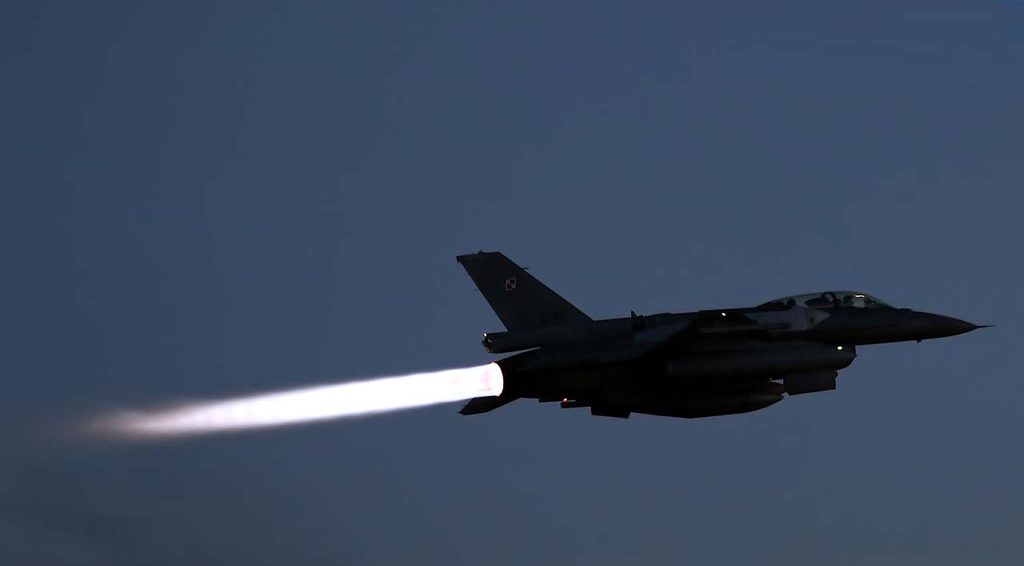
A New Airframe Built to Remain Operational for Decades
Lockheed Martin did not merely upgrade the aircraft’s electronics.
The stated structural service life of the Block 70/72 reaches 12,000 flight hours—more than 50% greater than that of previous F-16 variants. For some air forces, this translates to roughly forty years of operational service.
This characteristic accounts for much of the program’s commercial success.
A nation purchasing a new F-16 today is not acquiring a stopgap solution ahead of a fifth-generation fighter; it is buying an aircraft capable of staying in service into the 2060s.
However, this extended longevity demands upgradable avionics. A modern radar or computer will become technologically obsolete long before the airframe reaches its fatigue limit.
The true product sold by Lockheed Martin is therefore less a static configuration than an architecture designed for multi-decade upgrades.
The Greenville Line Must Now Absorb Delays
This is where the resumption of deliveries becomes strategically crucial.
Global production of new-build F-16s is now concentrated at Greenville. Lockheed Martin transferred manufacturing from Fort Worth to free up industrial space for the F-35. The new line was launched in 2019, and the first Block 70 built in Greenville made its first flight on January 24, 2023.
Backlog figures fluctuate rapidly as deliveries proceed and new orders are placed. In October 2025, Lockheed Martin reported 107 F-16 Block 70/72 aircraft remaining to be produced following 33 deliveries. Peru subsequently announced in April 2026 its selection of twelve new-build F-16 Block 70s. Depending on the reporting scope and formal contract execution, industrial demand stands at around 119 aircraft.
This nuance matters: backlog figures are accurate only at a specific point in time.
Primary current procurement programs include Taiwan, Bulgaria, Slovakia, Bahrain, Jordan, and Morocco, with Peru now set to join the customer base.
Pressure on the facility is acute. In August 2026, the Bulgarian Ministry of Defense noted that production bottlenecks were affecting the timeline for its second batch of eight aircraft, now expected in the second quarter of 2030, though efforts continue to optimize that schedule.
Advanced Radar and Electronic Warfare Keep the F-16 in High-End Combat
The commercial persistence of the F-16 relies on a unique operational equation.
The Block 70/72 is not a stealth aircraft. Its airframe was not shaped to minimize radar cross-section, and its ordnance is predominantly carried externally. Against an intact, modern air defense network, this distinction from an F-35 remains fundamental.
However, not every nation requires a stealth fighter for all mission sets.
For air policing, homeland defense, interception, stand-off strikes, and operations using long-range precision weaponry, a modernized F-16 retains immense operational value.
Its APG-83 radar leverages technology derived from AESA developments for the F-22 and F-35. Furthermore, L3Harris’s Viper Shield electronic warfare suite is designed to enhance the detection and countermeasure processing of radiofrequency threats. In August 2026, L3Harris announced the completion of the first dual-ship flight test of Viper Shield involving two F-16s simultaneously, marking a key milestone toward full-rate production.
The Block 70/72 effectively merges a legacy, cost-effective platform with sensors from a far newer technological generation.
The Restart Highlights Both Strength and Limits in the Program
Lockheed Martin frames the 2026 technical pause as a demonstration of industrial resilience. The argument is logical: a deficiency was identified during testing, the design was rectified, the platform was re-evaluated, and deliveries resumed.
Yet the event also underscores the vulnerability of a single production line faced with sustained international demand.
In 2025, Lockheed Martin delivered just 16 F-16s, matching its 2024 total. By comparison, the company produced 62 units in 2003, when the previous manufacturing infrastructure operated at a much higher throughput.
The core challenge for the F-16 is no longer proving that the platform can maintain technological relevance—that is established. The challenge lies in rapidly industrializing a far more complex iteration of the aircraft without allowing delivery timelines to slip further.
The paradox is striking. The F-16 was designed in the 1970s as a relatively simple, lightweight fighter. Fifty years later, its success hinges on technologies that did not exist during its maiden flight. The resumption of deliveries confirms that this ongoing evolution remains viable; the delays serve as a reminder that it is no longer simple.
War Wings Daily is an independant magazine.
Sources
Lockheed Martin — Q2 2026 Earnings Call, July 23, 2026.
Lockheed Martin — F-16 Fighting Falcon, Block 70/72 technical information, 2026.
Lockheed Martin — F-16 Fighting Falcon Fast Facts, October 2025.
Lockheed Martin — 2025 Annual Report and annual financial results published January 2026.
Lockheed Martin — Peru Selects Lockheed Martin F-16 Block 70, April 23, 2026.
Lockheed Martin — Lockheed Martin Completes Production of Initial F-16 Block 70 Fleets for Bulgaria and Slovakia, December 15, 2025.
U.S. Air Force Life Cycle Management Center — F-16 Block 70/72 production at Greenville.
U.S. Department of State — Foreign Military Sales documentation regarding the F-16 Block 70/72.
Bulgarian News Agency — Bulgarian Defence Minister, Lockheed Martin Representatives Discuss Delivery of F-16 Block 70s, August 14, 2026.
L3Harris Technologies — Viper Shield flight-test programme, August 2026.