Ramstein Flag 2026 tests NATO’s air power against a high-intensity conflict, from Finland to Spain.
Summary
Ramstein Flag 2026 is not just another air exercise. It is a dress rehearsal for modern warfare for NATO. From June 8 to 19, 2026, more than 200 aircraft from 18 nations are scheduled to operate from over 20 sites across Europe, from northern Norway to Spain. The objective is clear: to test the Allies’ ability to conduct massive, dispersed, connected, and rapid air operations in a contested environment. The exercise brings together American F-35As, French Rafales, Eurofighters, Gripens, F-16s, F/A-18s, refueling aircraft, ISR assets, and surveillance drones. It comes at a time when French Rafales deployed in the Baltic Air Policing mission have intercepted several Russian aircraft over the Baltic Sea. The message is direct: NATO is preparing its forces to fight an equipped adversary capable of jamming, striking far, and saturating defenses.
The Ramstein Flag 2026 Exercise Changes in Scale and Logic
Ramstein Flag 2026, or RAFL26, marks a significant evolution in NATO’s air training. The exercise takes place from June 8 to 19, 2026. It brings together more than 200 aircraft, 18 nations, and over 20 operational sites in Europe. Flights are expected to generate more than 150 sorties per day. This volume places the exercise in a different category than a national training event or a traditional regional maneuver.
The exercise covers two major geographic areas. In the north, it involves Finland, Sweden, Norway, and Denmark. In the south, it extends to Spain. This geographic choice is deliberate. It forces NATO to coordinate long-distance operations with dispersed bases, varying logistics chains, complex airspaces, and national doctrines that are not always identical.
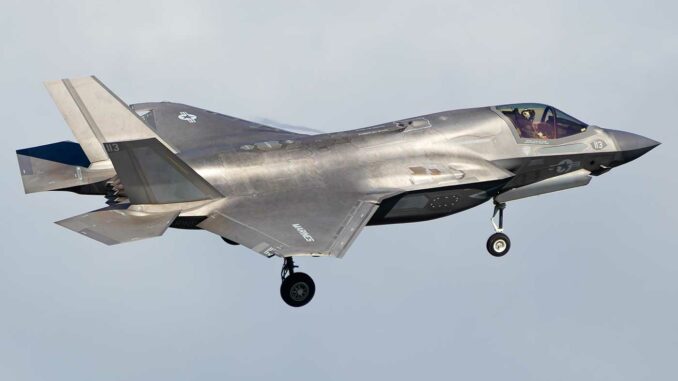
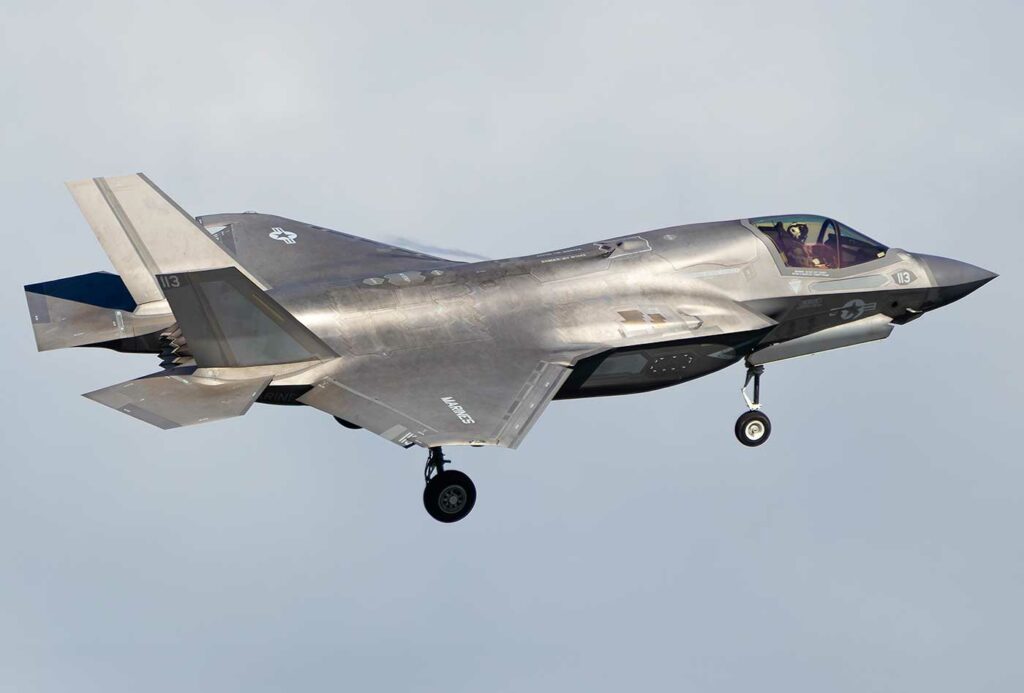
Finland occupies a central role. The country is participating with 12 F/A-18 Hornets and approximately 500 personnel. It is also hosting more than 50 allied aircraft and around 1,300 foreign military personnel. In Pirkkala, American F-35As from the 48th Fighter Wing, based at RAF Lakenheath, arrived ahead of the start of the exercise. In Rovaniemi, Tornados, Eurofighters, F-35Bs, A330 MRTT tankers, and KC-130Js are scheduled to operate. In Tikkakoski, Spanish EF-18s, Polish F-16s, and M-346s are expected.
This high density reflects the true core of Ramstein Flag 2026: air interoperability. It is not just about flying aircraft side by side. It is about making them fight within the same system. The exercise seeks to verify whether the Allies can plan, share information, designate targets, refuel, protect bases, manage priorities, and make decisions at a tempo close to that of real warfare.
The Baltic Serves as a Reminder That the Exercise Responds to a Tangible Threat
Ramstein Flag 2026 begins in a tense environment. A few days before the exercise, French Rafales deployed to Šiauliai, Lithuania, as part of the Baltic Air Policing mission, were called upon at a high operational tempo. On June 2, 2026, two Rafales scrambled on alert to identify and escort six Russian aircraft in the Baltic area of responsibility. The formation included a Su-35, a Su-34, a Su-24, an Il-76, an An-12, and an An-30. Over the course of the week, French Rafales were scrambled 11 times, according to information provided by French authorities and reported by several European media outlets.
These interceptions are not merely symbolic. They demonstrate the permanent pressure exerted on the Alliance’s eastern flank. The Baltic states do not possess their own fighter jets. Their air defense therefore relies on the rotation of allied aircraft. Russian aircraft frequently operate near NATO airspace, often without flight plans, active transponders, or clear communication with civil air traffic control. For NATO, each interception serves to identify, track, and monitor these flights to prevent violations or incidents.
The Baltic is a highly constrained airspace. Aerial access to Kaliningrad passes through a narrow corridor between several NATO member states. A navigation error, an intentional maneuver, or a lack of communication can create a crisis in a matter of minutes. This is exactly the type of situation that Ramstein Flag 2026 must integrate. Modern air warfare is not just a matter of aircraft performance. It depends on the speed of identification, the clarity of rules of engagement, and the capacity to avoid uncontrolled escalation.
The role of the French Rafales also illustrates an important point. A multirole combat aircraft can transition from an air policing mission to a high-intensity posture. The Rafale carries air-to-air missiles, surveillance sensors, identification pods, and data links. It can identify an aircraft, escort it, transmit information to a command center, and integrate into an allied network. This versatility is invaluable in a zone where military and political risks overlap.
Technologies Must Communicate Despite Belonging to Different Generations
One of the major challenges of Ramstein Flag 2026 concerns communication between platforms. Allied forces are deploying aircraft from different generations: fifth-generation F-35As and F-35Bs, Rafales, Eurofighters, Gripens, F-16s, F/A-18 Hornets, Tornados, refueling aircraft, transport aircraft, RQ-4D Phoenix drones, and command assets. These systems do not all speak the same technical language.
The common standard often remains Link 16. This tactical data link allows for the exchange of positions, radar tracks, orders, alerts, and air situation information. It is widely used within NATO. It enables a Polish F-16, a French Rafale, or a German Eurofighter to share a common tactical picture. However, Link 16 has limitations. It is not fully discrete. It does not always carry the most sensitive data. It can be jammed, detected, or saturated.
The F-35 adds another layer. Its value lies not only in its stealth. It acts as an advanced sensor node. Its AESA radar, electronic warfare systems, infrared sensors, and core processors fuse information from multiple sources. F-35s can communicate with one another via MADL, a more discrete data link designed to preserve survivability in a contested environment. The problem is that not all allied aircraft can directly receive MADL data. Consequently, gateways, procedures, and dissemination rules are required.
This is where interoperability becomes as much political as it is technical. Sharing tactical data does not mean simply opening a radio channel. It requires deciding who has the right to see what, at what level of precision, with what delay, and for what purpose. An F-35 can detect a threat without transmitting the full extent of its detection capabilities. A command center can receive a consolidated track without knowing the exact technical source. A fourth-generation aircraft can act on a target transmitted by a fifth-generation platform without becoming a stealth sensor itself.
Ramstein Flag 2026 therefore serves to test this dialogue. Aircraft must understand one another, but headquarters must also agree to share information quickly enough. In a high-intensity war, useful information transmitted too late is worth next to nothing.
Decisions Are Made in a Faster and More Distributed Chain
Modern air warfare relies on a short decision loop. Detecting, identifying, deciding, striking, or intercepting: this sequence must sometimes take place in a few minutes. In a contested environment, it becomes more difficult. Radars can be jammed. Satellites can be disrupted. Bases can be threatened by ballistic missiles, cruise missiles, or drones. Communications can be degraded. The enemy can inject false tracks into the system.
Ramstein Flag 2026 tests this reality. The execution of the exercise involves Combined Air Operations Centres, notably the CAOC in Bodø, Norway, designated as the primary execution center for the exercise. These structures coordinate planning, mission orders, airspace management, missile defense, targeting priorities, and incident responses. Their role is to transform a mass of information into actionable decisions.
However, NATO cannot centralize everything. If a base is isolated, a link drops, or a command node is overwhelmed, local units must be able to continue operating. This is one of the core challenges of Agile Combat Employment, or ACE. This doctrine aims to disperse aircraft, maintenance teams, munitions, and support assets across multiple sites. The objective is simple: avoid offering the adversary a single, easy-to-neutralize target.
In Finland, the use of the Tervo road strip illustrates this logic. A section of highway can be closed to civilian traffic, prepared, and used as an auxiliary runway. This practice is not new to the Finns, but it is becoming more central for NATO. In a conflict against Russia or China, large airbases would be among the first targets. Dispersing assets does not make forces invulnerable. However, it complicates the adversary’s calculations. It requires more missiles, more intelligence, more time, and more certainty to neutralize a fragmented force.
Multi-Domain Warfare Demands Linking Air, Land, Sea, Space, and Cyber
The phrase multi-domain operations is often used vaguely. In Ramstein Flag 2026, it takes on a concrete meaning. An air mission no longer depends solely on aircraft. It also depends on ground-based radars, air defense batteries, surface vessels, satellites, cyber networks, surveillance aircraft, tankers, and command centers.
Integrated Air and Missile Defense, or IAMD, is one of the pillars of the exercise. It consists of linking multiple layers of detection and interception. A ground radar can spot a threat. A maritime patrol aircraft can complement the picture. An F-35 can detect an adversary’s radar emission. A surface-to-air battery can protect a base. A fighter jet can intercept an aircraft or a cruise missile. The challenge consists of preventing these actors from working in isolation.
Counter-A2/AD is the other major pillar. A2/AD stands for anti-access/area denial. It is an adversary’s ability to prevent NATO from entering a region or maneuvering freely within it. Russia possesses long-range surface-to-air systems, radars, anti-ship missiles, electronic warfare assets, and precision missiles. China has developed an even denser architecture around the Western Pacific. For NATO, learning to pierce, bypass, or neutralize these defensive bubbles has become vital.
Within this framework, the F-35 can open a breach. The Rafale, Eurofighter, Gripen, or F-16 can provide mass, payload, persistence, or complementary effects. Tankers extend the range of action. Transport aircraft move teams. Surveillance drones maintain the situational picture. Command centers arbitrate. Superiority no longer comes from a single aircraft. It comes from a system that absorbs information faster and acts before the adversary.
Manned-Unmanned Teaming Is Becoming an Operational Necessity
Ramstein Flag 2026 also heralds a deeper evolution: manned-unmanned teaming. The subject goes beyond the simple deployment of drones. It touches upon how decisions will be prepared, filtered, and accelerated by automated systems.
In a high-intensity environment, a headquarters receives too much information to process manually. Radar tracks, electromagnetic emissions, satellite imagery, cyber data, missile alerts, weather updates, ammunition stockpiles, runway availability, tanker status: everything arrives simultaneously. Artificial intelligence systems can help classify, prioritize, and propose options. They can spot an inconsistency, anticipate saturation, or recommend an allocation of assets.
However, the final decision remains human. This is indispensable. A machine can propose a route, a target, or a priority. It cannot independently understand the political consequences of a strike, the risk of escalation, or the legal uncertainty of an identification. The true challenge, therefore, is not to replace human command. It is to provide it with a faster, clearer, and less fragmented vision.
Eventually, manned-unmanned teaming will also integrate collaborative combat aircraft (drones). These assets will be able to jam, detect, decoy, strike, or protect a manned fighter. They will be less costly than a manned combat aircraft and capable of taking greater risks. For NATO, the challenge will be to connect these platforms to existing aircraft without creating a digital bureaucratic nightmare. A Rafale, an F-35, or a Eurofighter will not only have to pilot their own mission but will also occasionally need to supervise remote effectors in a saturated airspace.
This evolution raises a cold truth: the forces that decide the fastest will hold a massive advantage. Not because they will be more aggressive, but because they will be able to impose their tempo. The air warfare of tomorrow will be a competition of sensors, networks, processing power, and trust.
NATO’s Projections Show Preparation for a Long War
Ramstein Flag 2026 does not just prepare for a short air battle. It prepares for a long war characterized by attrition, dispersion, and logistical pressure. This is a major shift. For years, Western forces conducted air operations in relatively permissive environments. Iraq, Afghanistan, Libya, or Syria demonstrated the power of Western aviation, but rarely against an adversary capable of striking bases, jamming networks, and contesting airspace over the long term.
Russia and China change this calculation. They possess long-range missiles, integrated air defenses, cyber assets, space capabilities, and a doctrine of saturation. In a major conflict, NATO could not assume its primary bases would remain intact. It could not assume its satellites would function without disruption. It could not assume its communications would always be available.
The exercise therefore forces the Allies to anticipate several problems. How can 150 sorties per day be maintained if certain runways are unavailable? How do you refuel dispersed aircraft? How do you protect missile stockpiles? How do you repair damage quickly? How do you move spare parts? How do you share information if networks are degraded? How do you avoid fratricide in a sky filled with allied aircraft, drones, missiles, and decoys?
These questions are less spectacular than an F-35 takeoff. Yet, they are decisive. Combat aviation is only valuable if it can sustain operations. Technical availability, maintenance, munitions, fuel, and communications matter just as much as pure performance.
The Strategic Message Sent to Moscow and Beijing Is Intentionally Clear
Ramstein Flag 2026 sends a clear message. NATO wants to show it can conduct large-scale, integrated air operations across the entire European theater. This message is primarily aimed at Russia. The geography of the exercise, stretching from the High North to the Baltic, speaks for itself. It demonstrates that Finland and Sweden, now fully integrated into allied planning, alter NATO’s strategic depth.
However, the message also concerns China. A2/AD scenarios, multi-domain operations, data links, drones, distributed command, and base dispersion are at the heart of American concerns in the Indo-Pacific. Europe is watching Russia, but it is also learning from conflict hypotheses involving a major technological power. The theater changes, but the problems are similar: distance, saturation, missiles, jamming, vulnerable bases, and the need for rapid decision-making.
One should not overstate the scope of Ramstein Flag 2026. An exercise remains a controlled environment. Casualties are simulated. Live munitions are not used during the primary phase. Safety rules govern flights. Scenarios never fully replicate the violence, confusion, and errors of an actual war. Yet, it should not be minimized either. It is precisely in these training events that weaknesses appear: a link that fails to connect, a procedure that is too slow, poorly coordinated refueling, improperly shared data, or a base overly dependent on a single logistical point.
The true value of Ramstein Flag 2026 lies there. It forces the Allies to confront their doctrines with technical reality. It tests the promise of a connected, rapid, and dispersed NATO. If this promise holds true, the Alliance gains credibility. If it cracks, headquarters will know where repairs are needed before the next crisis forces them to find out.
Air Superiority Becomes a Matter of Networks Before a Matter of Aircraft
The central lesson of Ramstein Flag 2026 is quite sharp. Air superiority is no longer summarized by lining up the best aircraft. The F-35, Rafale, Eurofighter, Gripen, or F-16 remain essential. However, their value depends on their ability to integrate into a common architecture.
An isolated aircraft sees less, decides slower, and carries less weight. A connected aircraft becomes a node in a larger system. It receives data, transmits it, confirms a threat, launches a weapon, protects a tanker, or opens a corridor. In this logic, interoperability is no longer a diplomatic luxury. It is a condition for survival.
Ramstein Flag 2026 also shows that Europe is entering a harsher period. Interceptions in the Baltic, the rise of dispersed exercises, the integration of American F-35s in Finland, and the emphasis placed on ACE indicate that military headquarters are not preparing for demonstration operations. They are preparing for scenarios where bases are struck, networks are attacked, decisions are compressed, and mistakes are potentially heavy.
The question is therefore not whether NATO can organize a large exercise. It knows how to do that. The question is more demanding: can it transform a coalition of 32 nations, with different equipment and varied operational cultures, into a force capable of deciding quickly under pressure? Ramstein Flag 2026 provides part of the answer. The rest will play out in the capacity to correct flaws, fund stockpiles, harden bases, and accept that modern air warfare is won just as much within networks as it is in the sky.
War Wings Daily is an independant magazine.