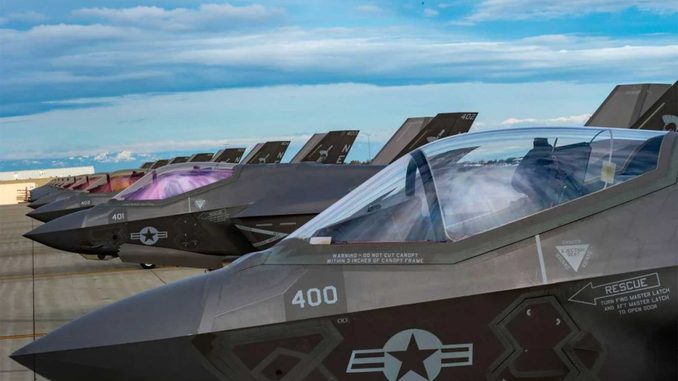
A canopy and weapons bay door from an F-35 were misrouted to Hong Kong. Washington is investigating potential risks to American stealth technology.
In Summary
The Pentagon is investigating an embarrassing incident involving the F-35 supply chain. A cockpit canopy and a weapons bay door belonging to a Royal Australian Air Force F-35A were scheduled to be shipped to the United States for inspection, possible repair, or disposal. Departing Australia in late May 2026 via UPS, the parts transited through South Korea before being inexplicably redirected to Hong Kong. According to Bloomberg, Chinese authorities subsequently took possession of the components and have not yet returned them. Both items reportedly feature stealth-related treatments, notably radar-absorbent materials. However, Lockheed Martin maintains that the components were unserviceable and present a low risk of exploitation. While the incident does not yield the F-35’s complete secrets to Beijing, it could provide useful intelligence on materials, manufacturing processes, and American radar cross-section engineering.
Misrouted Australian Shipment Triggers Multiple Investigations
The incident involves an F-35 Lightning II belonging to the Royal Australian Air Force.
In late May 2026, two unserviceable components were scheduled to depart Australia for the United States. Their final destination was intended to allow for inspection, potential repair, or disposal.
The shipment was entrusted to UPS and subsequently made a transit stop in South Korea. It was at this stage that the transport route encountered a problem: rather than continuing on to the United States, the cargo was routed to Hong Kong.
The reason for this change in destination remains unknown.
Published reports do not clarify whether the misrouting resulted from a logistical error, documentation issues, a failure in the transit chain, or intentional action.
Bloomberg reports that the Chinese government subsequently took custody of the components. Beijing indicated it was unaware of the matter, while Hong Kong authorities have not provided a detailed explanation.
The F-35 Joint Program Office officially acknowledged a “shipping issue.” It is coordinating with U.S. authorities and involved industry partners to recover the parts and determine how the shipment deviated from its planned route.
The F-35 Canopy Contains Far More Than Transparent Material
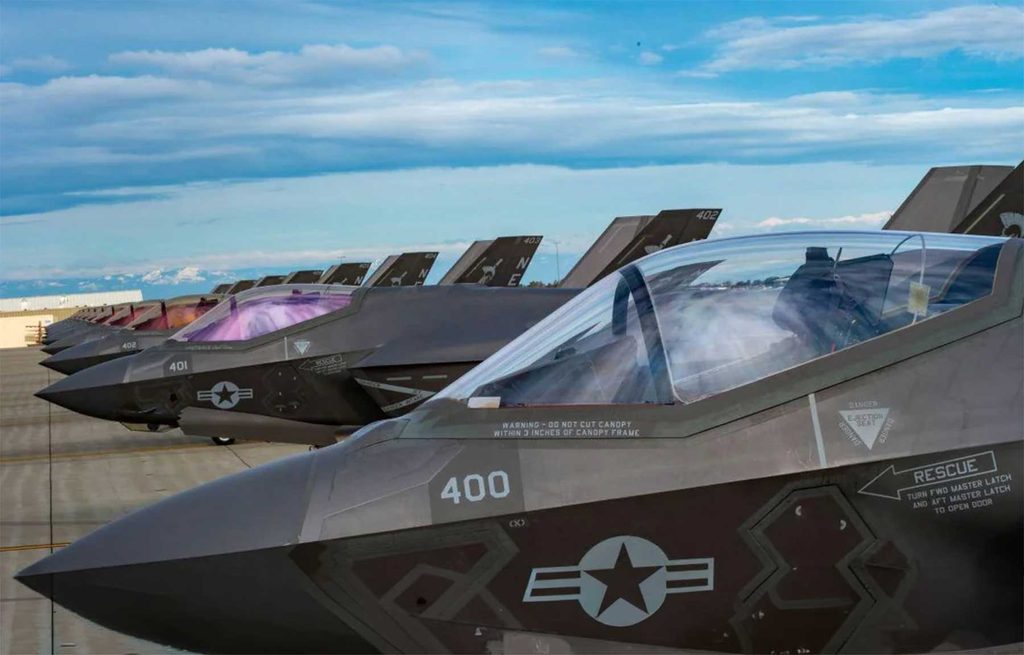
The first component is a cockpit canopy.
On a conventional aircraft, a canopy primarily serves to provide clear visibility, withstand aerodynamic loads, and protect the pilot. On a stealth platform, the requirements are far more complex.
The cockpit naturally represents a significant source of radar reflection. Electromagnetic waves can pass through a transparent surface, bounce off the pilot, helmet, or internal structures, and reflect directly back to an adversary radar.
Consequently, the F-35 canopy incorporates specialized treatments designed to contribute to overall radar cross-section reduction.
The potential value for a foreign laboratory extends beyond the chemical composition of a surface coating. The thickness of individual layers, their electromagnetic properties, application methods, structural integrity, and the canopy’s interface with the airframe can all yield valuable data.
Stealth performance on a combat aircraft results from the interplay among geometry, materials, seals, apertures, and surface treatments. Reviewing stealth fighters highlights why none of these elements can be analyzed in isolation.
The risk is particularly notable given that F-35 canopy coatings have undergone revisions over the life of the program to address issues such as delamination and environmental durability.
The Weapons Bay Door Exposes Stealth Surface Geometry
The second component is an armament bay door.
While it may appear less sensitive than an AESA radar or mission computer, it forms a substantial portion of the aircraft’s exterior skin.
When the F-35’s weapons bays are closed, the doors must precisely maintain the low-observable geometry of the airframe. Seams, edge treatments, panel gaps, and specialized coatings are engineered to minimize unwanted radar reflections.
A physical bay door thus allows researchers to study manufacturing tolerances, edge treatments, composite layups, and the methods used to sustain a low radar cross-section around a large, movable fuselage aperture.
According to Bloomberg reports, both the canopy and the bay door contained radar-absorbent materials.
This represents perhaps the most sensitive aspect of the incident.
Radar Absorbent Materials (RAM) attenuate or dissipate incoming electromagnetic energy rather than reflecting it directly back to the transmitter. Their chemical formulation and application processes are historically among the most tightly safeguarded elements of American stealth technology.
Primary Risk Centers on Materials Analysis
However, broad conclusions should be drawn with caution: two individual parts do not allow a competitor to replicate an F-35.
The stealth performance of the American fighter depends on the complete geometry of its airframe, engine inlets, antenna integration, materials, seals, propulsion system, and numerous other features.
Furthermore, based on available information, the lost components do not include the AN/APG-81 or AN/APG-85 radar, mission computers, software code, electronic warfare libraries, or sensor fusion processing hardware.
Lockheed Martin maintains that both items were unserviceable and carried a low risk of exploitation. Australian Defence Minister Richard Marles also stated that, based on available information, the parts were not classified as sensitive items.
This does not mean they are without intelligence value.
A physical hardware sample can be measured, sectioned, and analyzed in a laboratory setting. Technical evaluation can determine material composition, multi-layer structures, electromagnetic properties, and manufacturing techniques.
Such data can serve dual purposes: helping refine domestic stealth technologies or enhancing methods to detect low-observable Western aircraft.
The key distinction is clear: possessing an isolated F-35 part does not reveal the platform’s complete radar signature, but it reduces specific intelligence uncertainties.
China Already Possesses Portions of F-35 Technical Data
The incident occurs against a long-standing backdrop of technological competition.
Cyber intrusions targeting U.S. defense programs have previously been attributed by Washington to Chinese threat actors. As early as 2013, the Defense Science Board indicated that data related to several U.S. defense programs, including the Joint Strike Fighter, had been compromised.
Subsequent U.S. court cases have also addressed military aviation technical data linked to the F-35 and F-22.
This background does not prove that the Chinese J-20 was copied from the F-35. Visual similarities between stealth aircraft often stem from shared aerodynamic and electromagnetic design constraints.
However, a recent physical component provides insights that an older digital file cannot. It allows engineers to directly observe how American manufacturers translated design specifications into an operational, manufactured, and maintained hardware component.
Investigation Expands Across the F-35 Logistics Chain
UPS reported the incident to the U.S. State Department’s Directorate of Defense Trade Controls, the body responsible for enforcing International Traffic in Arms Regulations (ITAR).
The House Armed Services Committee and House Foreign Affairs Committee are examining the matter, alongside the Senate Armed Services Committee.
A closed-door hearing held on June 23 previously addressed the status of the components, several months before the incident became public.
Investigators must now answer a fundamental question: how were defense components for an American military aircraft permitted to be routed to Hong Kong?
The implications extend beyond these two specific parts. More than 1,200 F-35s have been produced, with nearly two dozen nations ordering the platform. The program relies on a complex international supply chain encompassing manufacturing, maintenance, warehousing, and transportation.
Australia serves specifically as a regional support hub for F-35 sustainment in the Indo-Pacific. As the global fleet expands, the volume of components moving among armed forces, contractors, and depot facilities continues to grow.
Consequently, program security relies on elements far less high-tech than radars or software: shipping manifests, commercial freight carriers, customs screening, transit routes, and disposal protocols for unserviceable hardware.
This incident underscores a specific vulnerability in globalized defense supply chains. While the United States spends billions of dollars to safeguard F-35 technologies from cyber espionage, a single logistical misroute can provide an adversary with precisely what a cyberattack seeks: a physical sample of the technology for laboratory analysis.