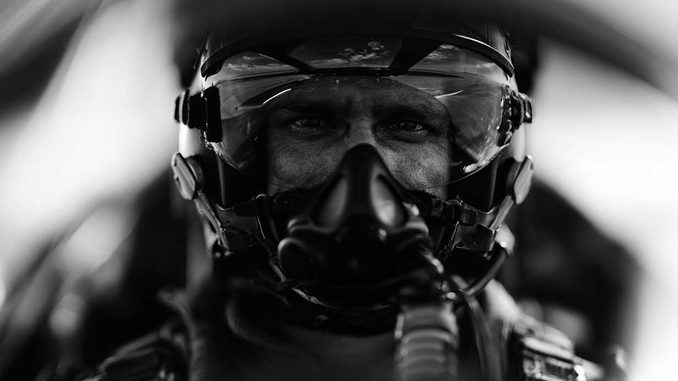
An ejection can save a pilot in a matter of seconds, but it subjects the body to accelerations powerful enough to cause spinal fractures and severe trauma.
Executive Summary
Pulling an ejection seat handle is not a last-minute dramatic escape. It is an extremely violent biomechanical event designed to replace probable death with a chance of survival. On an American ACES II seat, initial acceleration typically reaches 12 to 14 +Gz. This force acts brutally along the vertical axis of the spine. Poor posture can transform the spine into a compressed, flexed structure, creating a high risk of thoracic or lumbar vertebral fractures. A German study examining 103 aircrew members ejected between 1975 and 2021 identified spinal injuries in 56.3% of cases and vertebral fractures in 33%. Ejection also exposes the body to dynamic windblast, limb flailing, cervical injuries, parachute opening shock, and ground landing impact. Nevertheless, it remains remarkably effective when initiated within its operational envelope. The danger lies as much in the ejection process itself as in waiting a few seconds too long.
The Ejection Seat Converts the Pilot into a Projectile
When a pilot pulls the ejection handle, they do not simply jump out of the aircraft. Their seat is literally propelled out of the cockpit.
On modern systems, the canopy is jettisoned or fragmented first. A catapult then launches the seat along its rails. A rocket motor under the seat bucket continues the acceleration to rapidly clear the pilot from the airframe.
The system subsequently deploys a drogue chute for stabilization. A sequencer determines the appropriate moment to separate the pilot from the seat and deploy the main parachute.
On certain recent Martin-Baker seats, this entire sequence unfolds in just a few seconds.
The engineering feat is considerable. Some systems offer “zero-zero” capability, theoretically allowing a pilot to be saved at zero altitude and zero airspeed, with the aircraft stationary on the runway.
However, achieving this performance requires massive acceleration.
An ACES II seat, used on several American aircraft, can impose approximately 12 to 14 +Gz during its ejection stroke. U.S. Air Force specifications indicate peak capabilities reaching up to 14 G.
This value should not be compared directly to the +9 G sustained during a sharp turn. In air combat, the primary concern of sustained G-force involves blood displacement and loss of consciousness (G-LOC). During an ejection, the acceleration is far briefer.
The primary issue becomes purely mechanical.
To understand the distinction between these phenomena, studying the effects of G-forces on a fighter pilot helps clarify the difference between sustained acceleration and a violent axial shock.
The Spine Directly Absorbs the Acceleration
The pilot sits directly on the mechanism driving the acceleration. Consequently, the force is transmitted from the pelvis upward through the spinal column.
During an ejection, the vertebrae undergo extremely rapid axial compression.
A U.S. biomechanical study simulating an ejection replicated a peak load of 14.8 G lasting approximately 100 milliseconds. Despite this brief duration, the stress is sufficient to cause ligamentous damage and vertebral fractures.
The thoracolumbar junction is particularly vulnerable. This region corresponds roughly to the transition between the lower thoracic and upper lumbar vertebrae.
This area accounts for a large concentration of fractures observed post-ejection.
The mechanism is straightforward: the pelvis accelerates upward with the seat while the mass and inertia of the torso, head, helmet, and flight gear simultaneously compress the spine downward.
The spine is caught between two opposing forces.
Under these conditions, compression fractures become a major risk.
Poor Posture Can Turn Impact into Fracture
The pilot’s body posture at the exact moment of initiation is critical.
Ideally, the body should be properly aligned with the seat backrest and secured by the harness, keeping the spine as close as possible to the design geometry.
A spine that is already flexed or slouched handles axial loading much worse.
A biomechanical study on ejection posture demonstrated that a relaxed, slouched position increased stress on the cortical wall of the vertebrae by 43%, stress on the endplates by 10%, and intradiscal pressure by 13% compared to a nominal position.
The difference is significant.
The U.S. Air Force estimates that vertebral fractures become frequent above approximately 20 +Gz, but notes that poor posture can induce a fracture at as low as 10 +Gz.
This is why body positioning instructions and restraint systems are far more than ergonomic details.
Arms, legs, head, and pelvis must remain firmly controlled.
Modern ejection seats utilize active leg and arm restraint systems. Recent generations also feature devices engineered to better stabilize the head and neck.
During a fighter jet flight, the operation of the ejection seat is a primary focus of the pre-flight safety briefing whenever the aircraft is equipped with one. It is never treated as a minor piece of equipment.
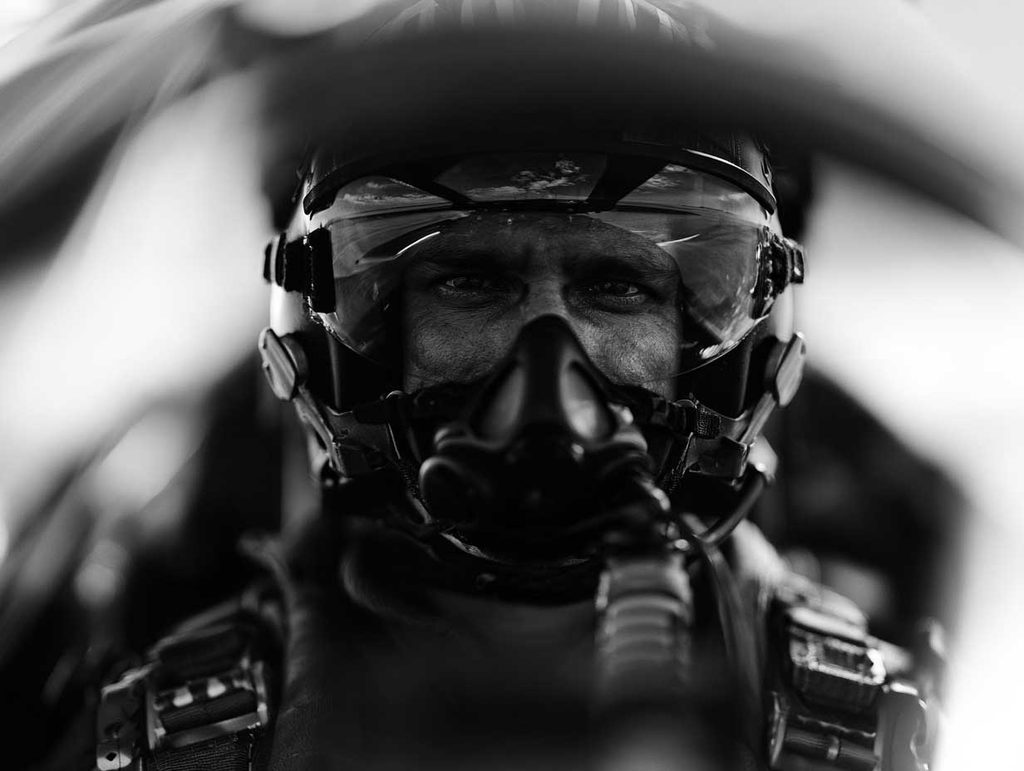
Vertebral Fractures Are Far From Exceptional
Medical data demonstrates that the danger is far from theoretical.
A study published in 2022 analyzed 103 German armed forces aircrew members who ejected between 1975 and 2021.
56.3% suffered spinal injuries. Vertebral fractures were diagnosed in 33% of the cases.
A French study reviewing 36 ejections between 2000 and 2008 identified 24 vertebral fractures across 42% of the individuals involved, with compression fractures accounting for the vast majority.
Another analysis evaluating 232 rocket-assisted seat ejections reported a vertebral fracture rate of 29.4%.
The belief that a pilot inevitably breaks their back during an ejection is inaccurate.
However, describing ejection as an indolent procedure would be equally false.
A vertebral fracture rate of roughly one in three pilots across multiple medical series represents a very high incidence of severe trauma.
Windblast Presents the Second Major Shock
Clearing the cockpit does not end the physical trauma.
At speeds of several hundred kilometers per hour, the pilot immediately encounters an intense aerodynamic airblast.
This is known as windblast.
Unrestrained limbs can be violently swept back and rotated. This phenomenon, known as limb flailing, can cause dislocations, fractures, ligament tears, or nerve damage.
A study examining F-4 Phantom ejections identified limb injuries in 43 out of 399 reviewed cases, with frequency increasing relative to airspeed.
Biomechanical modeling indicates that limb flailing becomes particularly hazardous at high airspeeds, notably around Mach 0.7 and above.
Modern seat designs aim to mitigate these forces through mechanical restraint systems.
The neck is similarly vulnerable. The helmet adds inertia to the head; if aerodynamic airflow strikes a pilot in a poor position, the cervical spine can experience violent flexion, extension, or twisting forces.
Parachute Opening Adds Another Deceleration Shock
Next, the pilot must survive the parachute opening.
According to U.S. Air Force documentation, opening shock can reach 10 to 20 +Gz under certain conditions, particularly when ejection occurs outside the seat’s design envelope.
Finally comes ground contact.
A German study identified lower limb injuries during ground impact as the second largest category of severe trauma after spinal fractures.
Another study reviewing 232 ejections noted parachute landing injuries in 18% of personnel.
Ejection is not a single impact event. It is a sequence of violent forces: catapult launch, rocket acceleration, windblast exposure, stabilization, parachute deployment, and landing impact on ground or water.
The ejection seat briefing highlights why understanding this biomechanical chain is vital for pilot safety.
The Last Resort Does Not Mean Waiting Until the Last Second
This reveals the fundamental paradox of the ejection seat.
Pilots naturally try to save their aircraft. A modern fighter represents millions—sometimes over 100 million—dollars. Abandoning the jet also means accepting the immediate risk of physical injury.
Ejection remains the ultimate means of survival.
However, delaying the decision too long can turn a survivable ejection into a fatal accident.
An analysis of 232 rocket-assisted ejections recorded a 95.7% survival rate when initiation occurred within the system’s envelope. That rate dropped to just 23.8% when the ejection occurred outside the envelope.
The difference is stark.
This is why military flight manuals are unambiguous. When conditions demand abandoning the aircraft, no time should be lost. A U.S. Air Force manual for the T-38 explicitly states that ejection must not be delayed in a critical situation.
In other words, last resort does not mean last second.
The pilot attempts to recover the aircraft as long as procedures, altitude, and tactical conditions allow. But once a threshold is crossed, priorities shift instantly. The aircraft is irrecoverable; every meter of altitude and every remaining second becomes a margin of survival.
Martin-Baker reports over 7,800 lives saved by its ejection seats since the first generations were developed after World War II.
That figure encapsulates the paradox. The system can fracture vertebrae, dislocate shoulders, or end a flying career. Yet, when an aircraft is lost, enduring this violent shock remains far preferable to the alternative.
The ejection seat was never engineered to provide a comfortable escape. It was designed to render a non-survivable situation survivable.