Following the collapse of the Franco-German NGF, Paris is exploring a FCAS partnership with India. Technology, budgets, sovereignty, and the role of drones: what is at stake.
Summary
The demise of the Franco-German-Spanish NGF does not mean the demise of the FCAS. In June 2026, Paris and Berlin acknowledged the impossibility of jointly pursuing the development of a shared 6th-generation fighter. However, France maintains the ambition to develop a national aircraft and to preserve a European collaborative combat architecture. In this new landscape, India emerges as a possible partner. Its Ministry of Defence confirmed to the Indian Parliament that it had initiated steps to join the France-led FCAS. No industrial agreement has yet been signed. The issue extends far beyond aircraft funding. New Delhi wants access to propulsion, stealth, sensor, electronic warfare, and networked combat technologies. Paris must therefore strike a balance between cost-sharing and protecting its sovereign technologies. The parallel development of drones makes this choice more complex, but does not render the crewed fighter obsolete.
The Breakdown of the NGF Forces Paris to Rebuild Its Air Combat Strategy
The turning point came in June 2026. Emmanuel Macron and Friedrich Merz observed that Dassault Aviation and Airbus could no longer agree on the design of a common aircraft. The French government subsequently publicly acknowledged the German decision to end the project.
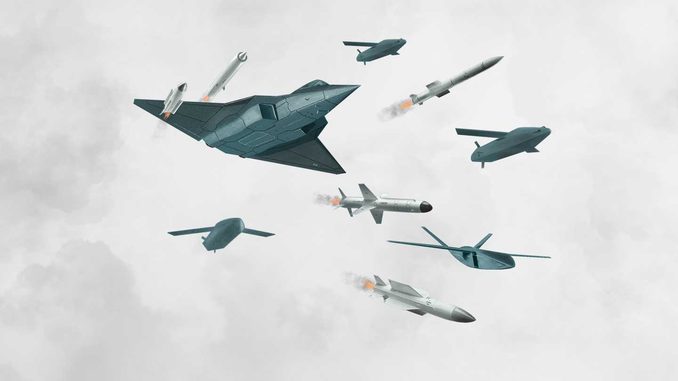
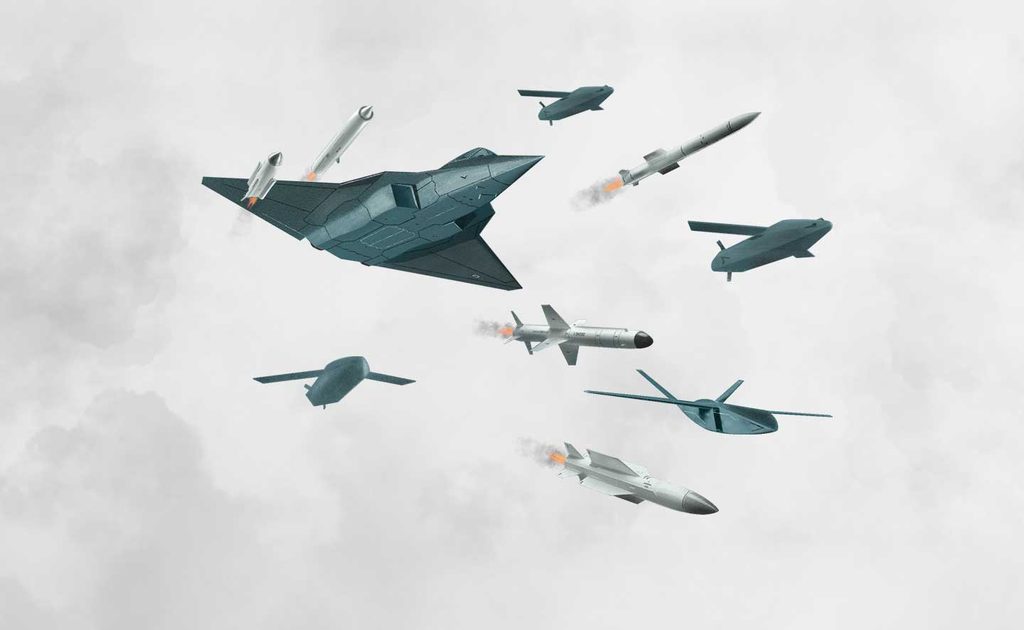
It was indeed the breakdown of the shared NGF that was formalized. However, the FCAS, or Future Combat Air System, was broader than just the aircraft. Its architecture combined a Next Generation Fighter, escort drones, sensors, a new-generation engine, and a combat cloud enabling the interconnection of aircraft, satellites, surface vessels, land units, and effectors.
Paris and Berlin moreover decided in July 2026 to continue working on a European collaborative combat standard. It is notably intended to allow fighters, Collaborative Combat Aircraft, and other Remote Carriers to communicate within an open and modular architecture.
The distinction is important. The former Franco-German-Spanish FCAS aircraft is abandoned. The system of systems concept, however, survives.
For France, a second imperative emerges. It must have a successor to the Rafale capable of satisfying requirements that few European partners share. The future aircraft will need to participate in nuclear deterrence, penetrate advanced air defenses, work alongside drones, and be adaptable for French carrier-based operations.
French military planning now provides for a 6th-generation fighter demonstrator tailored to national needs by 2035.
India Now Wants to Join the Future French Program
The major shift came from New Delhi. In a report presented to the Indian Parliament in early August 2026, the Ministry of Defence indicated it had initiated steps to join the Future Combat Air System program “spearheaded by the French Government.”
This marks the first official confirmation of such an explicit nature.
However, one must avoid jumping ahead of the facts. India has not yet formally joined a Franco-Indian fighter program. No work-sharing, no common budget, no distribution of intellectual property, and no joint timeline have been announced.
Nevertheless, the discussions fit into an aeronautical cooperation that has become substantial. The Indian Air Force already operates 36 Rafales. The Indian Navy has ordered 26 Rafale Marines. Furthermore, New Delhi has initiated the procurement process for 114 additional Rafales, a large portion of which could be produced locally if negotiations succeed.
In February 2026, Emmanuel Macron and Narendra Modi had already announced their intention to step up the co-design, co-development, and co-production of advanced defense systems, particularly combat aircraft and engines.
India is therefore no longer seeking merely to buy French. It wants to learn how to design, industrialize, and export.
Technology Transfers Could Become the Core of the Negotiation
A France-India FCAS partnership would not simply cover the manufacturing of airframes. New Delhi has been seeking for several years to bridge its main technological gaps in combat aeronautics.
Its national program, the Advanced Medium Combat Aircraft (AMCA), is intended to give India a 5th-generation stealth fighter. Its development represents approximately 15,000 crore rupees, to which is notably added around 2,000 crore for its new flight integration and testing center.
However, the AMCA does not solve all problems. India remains particularly dependent on foreign sources for very high-performance engines.
The Engine Could Become the Most Disputed Technology
Safran and the Indian Gas Turbine Research Establishment are already negotiating the joint development of an engine of approximately 110 kN intended for future versions of the AMCA.
The discussions center precisely on the issues that would lie at the heart of a Franco-Indian FCAS: development costs, technology transfer, intellectual property, and export rights.
A genuine transfer in this domain is far more strategic than local engine assembly.
It involves compressor design, the combustion chamber, the high-pressure turbine, materials operating at very high temperatures, single crystals, ceramic matrix composites, digital control systems, and the industrial processes required to manufacture these parts repeatedly.
These are sovereignty technologies.
France must negotiate with all the more caution as New Delhi retains several options. On August 14, 2026, Reliance Industries announced its intention to work with Rolls-Royce on the development and manufacturing of combat engines. Safran is therefore not alone in the running.
This competition gives India a powerful bargaining chip.
Stealth Represents an Even More Sensitive Transfer
A 6th-generation fighter does not become stealthy simply because its airframe features angular shapes.
Stealth relies on a comprehensive architecture. It depends on air inlet geometry, compressor masking, radar-absorbent materials, panel joints, surface treatments, antennas, infrared signature cooling, and highly strict industrial tolerances.
The methods used to predict and then measure Radar Cross Section are particularly sensitive.
France already possesses significant experience in this field thanks to Dassault Aviation and the nEUROn combat drone demonstrator.
Providing access to the final result is one thing. Transferring the design rules that allow that result to be replicated across several generations of aircraft is another.
Software and Collaborative Combat Could Be Worth More Than the Aircraft
The second critical arena involves software.
Future air combat will rely on data fusion from AESA radars, infrared sensors, electronic warfare systems, satellites, and drones. Artificial intelligence will need to assist the pilot in identifying threats, assigning targets, and coordinating multiple autonomous aircraft.
The Combat Cloud must then distribute this information while remaining resilient to jamming, cyberattacks, and interception.
In this domain, data fusion algorithms, electronic warfare libraries, mission software, cryptographic keys, and certain interfaces are just as strategic as the engine.
Paris can therefore share an architecture without necessarily sharing all its secrets.
The Chinese Risk Exists, But Not for the Most Obvious Reasons
Portraying India as a military partner of China would be inaccurate.
New Delhi and Beijing sit together in BRICS and the Shanghai Cooperation Organisation. Their trade is immense. It reached approximately 151 billion dollars over the Indian 2025-2026 fiscal year, with an Indian deficit exceeding 112 billion dollars.
However, the two countries remain strategic rivals.
Tens of thousands of troops remain deployed on either side of their Himalayan border. The 2020 Galwan clash deeply eroded trust between the two capitals. Above all, Beijing is Pakistan’s primary military supplier. Over the 2021-2025 period, China accounted for 80% of Pakistani imports of major weapons systems.
The question for Paris is therefore not whether New Delhi would deliberately pass the FCAS to Beijing.
The real issue is the security of an Indian industrial ecosystem that deliberately practices multi-alignment.
Between 2021 and 2025, Russia still accounted for 40% of Indian major arms imports, compared to 29% for France and 15% for Israel. American, British, and French technologies must now coexist alongside major systems of Russian origin.
This model is entirely consistent with the Indian doctrine of strategic autonomy. However, it complicates the protection of certain extremely sensitive data.
A commercial risk must also be added. An India that becomes capable of designing its own engines, stealth architectures, and mission systems could, twenty years later, become a competitor to France in certain export markets.
The main danger is therefore not that India “hands the FCAS to China.” It is that Paris transfers today the skill sets that will allow New Delhi tomorrow to no longer need it.
Budgets Explain Why France Needs a Partner
The former FCAS was often estimated at 100 billion euros for the entire program. This figure was not a contractual cap, but it gives the order of magnitude for a combat system designed to remain in service for several decades.
Phase 1B alone, awarded in December 2022, represented 3.2 billion euros over roughly three and a half years. The industrial structure provided for balanced participation among France, Germany, and Spain. Madrid notably held about 33% of the technological developments.
The loss of two partners for the fighter aircraft radically alters the French equation.
France is rapidly ramping up its defense spending. The scope of the military planning law represented approximately 57.15 billion euros in 2026. However, Paris is simultaneously funding nuclear deterrence, SNLE 3G ballistic missile submarines, the new-generation aircraft carrier, the Rafale F5, satellites, air defense, and the renewal of a large portion of land force equipment.
A fully national 6th-generation fighter is technically feasible. Financially, it would be heavy.
India, for its part, possesses a considerable budget volume. Its 2026-2027 defense budget reaches 7.85 lakh crore rupees. Approximately 1.85 lakh crore is set aside for capital acquisitions, and the DRDO receives over 29,100 crore.
New Delhi can therefore finance a major share of the development.
However, no one today knows who would pay more in a potential Franco-Indian program.
This point will have to be negotiated.
Above all, one error must be avoided: confusing financial contribution with technological ownership. If India provides 50% of future funding, that does not mean it must receive 50% of the technologies that Dassault Aviation, Safran, Thales, or MBDA have accumulated over several decades.
Financial contributions, background intellectual property, newly developed technologies, production volumes, and export rights must be evaluated separately.
Drones Do Not Render a 6th-Generation Fighter Useless
The question is worth asking. Recent conflicts have demonstrated the power of mass-produced and sometimes extremely cheap drones. Why invest tens of billions of euros in a new crewed aircraft?
Because the future does not pit the fighter against the drone.
It combines them.
The FCAS was designed precisely with this logic. The NGF was meant to operate alongside Remote Carriers tasked with reconnaissance, jamming, detection, striking, or saturating opposing defenses.
France is already following this path with the Rafale F5. Dassault Aviation is developing a stealth combat drone derived from the nEUROn experience that is intended to accompany the Rafale starting in 2033. French military planning also provides for new escort drone experiments before that deadline.
The value is operational. A drone can enter a contested zone first, force an enemy radar to emit, jam a surface-to-air defense, or fire a weapon without exposing a pilot.
However, expendable drones have their limits. They generally possess less power, less fuel, smaller sensors, and reduced computing or communications capabilities. In an environment saturated with jamming, the link between the drone and its controller can also become a vulnerability.
A large crewed aircraft therefore retains its function as a sensor, command node, and heavy strike platform.
For France, another constraint definitively settles the debate: the airborne component of nuclear deterrence and naval aviation still demand an extremely reliable, controlled system capable of missions that Paris has no reason to delegate entirely to an autonomous machine.
The Partnership with India Must Not Replicate the German Failure
France stands to gain from working with India. Its market is immense. Its industry is advancing rapidly. New Delhi can fund costly developments and provide production volumes that no single European customer can guarantee alone today.
However, replicating with India the structure that just failed with Germany would be difficult to justify.
French and Indian operational requirements are not identical. Nuclear doctrines differ. Geographic environments differ. Industrial architectures differ. Export policies can also diverge.
A smart cooperation could therefore go further on the engine, certain sensors, drones, testing facilities, and combat cloud interfaces than on full control of the aircraft itself.
France can accept local manufacturing of many parts, genuine Indian participation in development, and shared intellectual property on jointly created technologies.
On the other hand, it must retain sovereign control over the architecture of its aircraft, certain flight controls, the nuclear mission, electronic warfare data, cryptographic functions, and the most sensitive stealth parameters.
It would be less spectacular than a “Franco-Indian FCAS” announced as a fully shared program. It would likely be more robust.
The True Challenge Will Be Cost-Sharing Without Sovereignty-Sharing
The potential arrival of India offers Paris a rare opportunity. It can transform the industrial failure of the European NGF into a new, far more pragmatic cooperative framework.
However, the French need for a financial partner must not become a weakness in negotiations.
New Delhi knows exactly what it is looking for. India wants to leverage its military orders to accelerate the build-up of an aeronautics industry capable of designing the next generation on its own. That is rational.
Paris must pursue an equally clear objective.
It must leverage Indian financial and industrial power to increase volumes, reduce costs, and accelerate development, while refusing to yield the keystones of French technological autonomy.
The rise of drones further reinforces this necessity. The winner of the next generation will likely not be the one possessing the best isolated aircraft. It will be the one capable of making fighters, drones, sensors, satellites, missiles, and artificial intelligence work together in a network capable of continuing to fight even when communications are jammed.
In this model, the future FCAS is less an aircraft than an architecture of air power. That is precisely what makes an alignment with India compelling. And precisely what makes transferring its most sensitive technologies so difficult to accept.
War Wings Daily is an independant magazine.
Sources
- French Senate, session and parliamentary question to the Government on the abandonment of the FCAS program, June 10 and 11, 2026; confirmation by the Minister of the Armed Forces of the end of the joint project and ongoing work on a national demonstrator.
- Bundesregierung, press conference of June 10, 2026; Franco-German acknowledgment of the impossibility of building a common fighter and retention of the “system of systems.”
- Élysée and Bundesregierung, Franco-German Defense and Security Council of July 17, 2026; European collaborative combat standard, open architecture, and interoperability of fighters and drones.
- Parliamentary Standing Committee on Defence, information from the Indian Ministry of Defence reported on August 8, 2026, regarding steps to join the France-led FCAS.
- Élysée, France-India joint statement of February 17, 2026, on co-design, co-development, manufacturing of combat aircraft, engines, and Make in India.
- Reuters, February 19, 2026, on the Indian project to acquire 114 additional Rafales and their planned local production.
- Reuters, August 14, 2026, on the Reliance Industries–Rolls-Royce partnership and competition with Safran for Indian combat engines.
- Janes, Safran–GTRE negotiations regarding a 110 kN engine, technology transfers, intellectual property, and export rights.
- Press Information Bureau, Government of India, 2026-2027 defense budget: 7.85 lakh crore rupees, capital acquisitions, and DRDO funding.
- Press Information Bureau, Government of India, May 2026, funding for the AMCA program and the flight integration and testing center.
- Dassault Aviation and DGA, FCAS Phase 1B contract of 3.2 billion euros and program industrial architecture.
- Ministerio de Defensa de España and Indra, Spanish participation and financial framework for the FCAS demonstration phases.
- Reuters, December 2025 and July 2026, FCAS program estimation of up to 100 billion euros and collapse of fighter cooperation.
- French Ministry of the Armed Forces and Dassault Aviation, Rafale F5 and development of the stealth combat drone derived from the nEUROn starting in 2033.
- SIPRI, 2021-2025 data on arms imports by India and Pakistan as well as French exports.
- Embassy of India in Beijing, official India-China trade statistics for the 2025-2026 fiscal year.
- Carnegie India, July 2026, analysis of the Sino-Indian relationship, persistent border militarization, and Indian strategic autonomy policy.