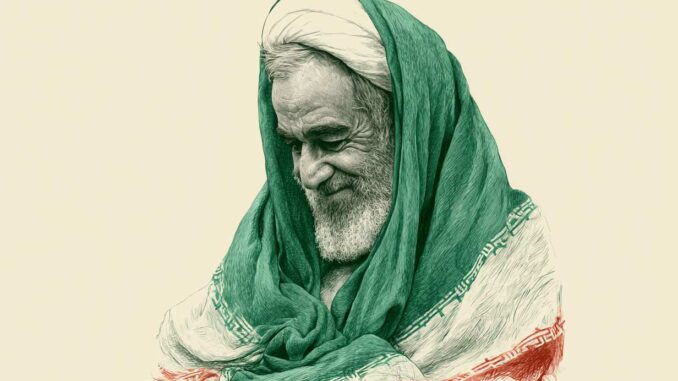
Despite intense strikes and a naval blockade, Iran has forced Washington into an interim agreement. Tehran retains its enrichment capability, reopens the Strait of Hormuz under specific conditions, and secures reconstruction pledges. A strategic victory with global implications.
In Summary
Iran has survived more than one hundred days of open conflict with the United States and Israel without witnessing the collapse of its regime or the dismantling of its nuclear program. The interim agreement signed in June 2026 brings an end to immediate hostilities, lifts the U.S. naval blockade, and outlines a reconstruction assistance package valued at around $300 billion. Tehran maintains a decisive leverage point over the Strait of Hormuz, where it plans to introduce maritime service fees. Far from a defeat, Iran emerges strategically strengthened, demonstrating that geography and asymmetric resilience can counter a superior power. This precedent could inspire other actors, notably China, regarding the control of vital shipping lanes.
The Outbreak of Conflict and Initial Iranian Strategy
On February 28, 2026, joint U.S.-Israeli strikes targeted Iranian nuclear and military sites, notably killing the Supreme Leader at the time. Washington’s stated objective was to eliminate the nuclear threat and degrade Iran’s ballistic capabilities. Tehran responded by effectively shutting down the Strait of Hormuz, a crucial artery through which roughly 20% of the world’s oil transits.
This decision immediately drove up Brent and WTI crude prices, causing historic surges at the pump in the United States, where prices temporarily surpassed $4.50 per gallon. Iran also launched waves of missiles and drones against U.S. bases in the Gulf, as well as targets within Israel and neighboring Gulf states. Despite significant material losses, Iranian forces maintained a sustained disruptive capability through their asymmetric arsenal: naval mines, low-cost drones, and ballistic missiles.
Iranian Resistance and American Exhaustion
Analysts now agree that Iran did not merely survive; it imposed a heavy strategic cost on its adversaries. The United States struck more than 13,500 targets but failed to destroy the bulk of Iran’s enriched uranium stockpile or permanently paralyze the Iranian economy. The U.S. naval blockade was partially bypassed via overland routes through Iraq and exports to China.
The global economy suffered. Iranian oil exports plummeted, but the closure of the strait primarily penalized Gulf producers and Asian importers. After several weeks, domestic pressure in the United States and appeals from Gulf allies pushed Washington to seek an exit strategy. The temporary ceasefire in April 2026, followed by the memorandum of understanding in June, reflects this exhaustion.
The Interim Peace Agreement: What Was Achieved
The memorandum signed around June 17, 2026, following Pakistani and Swiss mediation, provides for an extendable 60-day ceasefire. Key provisions include:
- An immediate end to military operations on all fronts, including Lebanon;
- The lifting of the U.S. naval blockade;
- The reopening of the Strait of Hormuz;
- A freeze on sanctions and the gradual release of frozen Iranian assets;
- Negotiations regarding the nuclear program within a 60-day timeframe.
The United States abandoned its initial demand for a complete dismantling of Iranian enrichment capabilities. Tehran retains its infrastructure and its stockpile of highly enriched uranium, subject to subsequent discussion. In exchange, Iran commits not to cross the nuclear weapon threshold during the negotiation period.
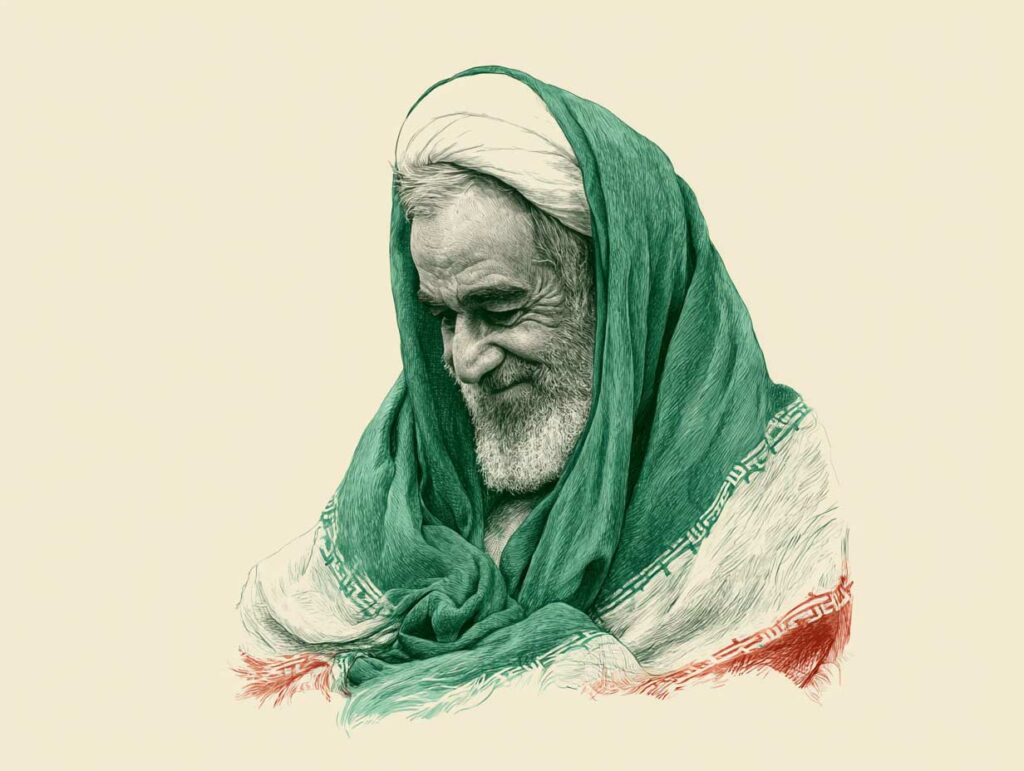
Reparations and Reconstruction Assistance
Iran demanded massive compensation, estimating its direct and indirect damages at more than $270 billion. The memorandum outlines a $300 billion reconstruction plan funded by the United States, regional partners, and potentially international mechanisms. While the implementation details remain to be finalized, this amount represents an implicit acknowledgment of the destruction caused.
For Tehran, this is not just about money; it is a political validation. The regime emerges from the conflict without having compromised on its primary red lines and with concrete promises of economic support. Frozen assets, estimated at roughly $24 billion in certain discussions, are also expected to be unlocked gradually.
Control of the Strait of Hormuz: The True Strategic Victory
The most sensitive point concerns the Strait of Hormuz, which is 21 nautical miles (about 39 km) wide at its narrowest point. Iran asserts that it is not imposing an illegal “toll,” but rather maritime service fees for security, environmental protection, and navigation. Reports indicate amounts between $1.5 million and $2 million per vessel during experimental phases.
These fees, even if contested by Washington—which insists on “toll-free” passage—provide Iran with lasting economic leverage. Prior to the conflict, no duties were collected. Today, Tehran has demonstrated its capacity to physically regulate traffic via the Islamic Revolutionary Guard Corps and a newly established maritime authority. This posture could become permanent under a joint protocol with Oman.
Global Implications and the Precedent for Other Powers
Iran’s relative success sends a powerful signal: a middle power, armed with asymmetric weapons and occupying a dominant geographical position, can stand up to a superpower. China is observing closely. Beijing, the primary buyer of Iranian oil, could draw inspiration from this model for the South China Sea, where it claims increased control over vital global trade routes.
Other countries bordering strategic straits—such as Indonesia with the Strait of Malacca or Egypt with the Suez Canal—might also reconsider their prerogatives. The risk is a fragmentation of international maritime law, accompanied by a proliferation of local fees that increase the cost of global shipping.
The Limits of the Iranian Victory
It would be inaccurate to present this outcome as an absolute victory. Iran has suffered heavy human and infrastructural losses. Its economy, already heavily sanctioned, has been further weakened. The regime remains diplomatically isolated on many fronts and must now rebuild while negotiating under international surveillance. Israel, though constrained, maintains a hostile posture and rejects several aspects of the agreement.
However, on a strategic level, Iran has preserved its regime, its regional influence via the Axis of Resistance, and its nuclear program. It has forced the United States to negotiate on a position of relative equality, establishing a precedent rarely seen since 1979.
Outlook and Persistent Risks
The 60 days of negotiations following the agreement will determine whether this ceasefire translates into a lasting peace. Outstanding issues—such as enrichment levels, ballistic missiles, and Iran’s regional role—remain highly explosive. A return to escalation remains possible if negotiations break down.
Nevertheless, the current outcome demonstrates the limitations of pure military might when faced with determination and geography. Iran won by demonstrating that it could not be easily defeated. This realization will force Washington, and its allies, to rethink their approach to the Middle East for years to come. The world is entering an era where maritime chokepoints are becoming overt instruments of economic power for those who dare to control them.
War Wings Daily is an independant magazine.