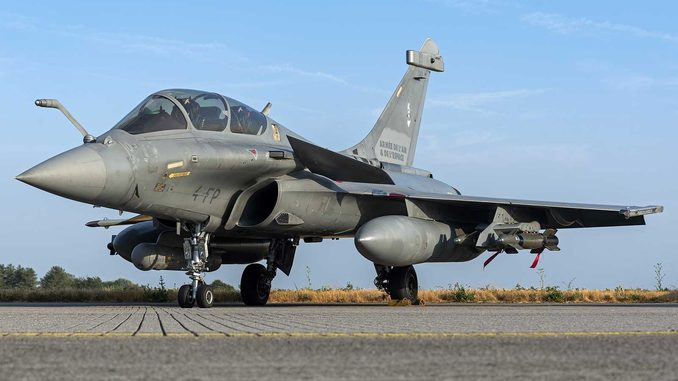
Dassault proposes the Rafale to replace Portugal’s F-16s and, alongside Thales and Safran, prepares industrial cooperation in Portugal.
Summary
Dassault Aviation has taken a new step in Portugal. On September 23, 2026, the French manufacturer signed a memorandum of understanding with AED Cluster Portugal to prepare industrial cooperation centered around the Rafale, also acting on behalf of its partners Thales and Safran. The agreement follows an official Rafale proposal submitted in July to the government and the Força Aérea Portuguesa. However, Lisbon has not yet launched a tender process and has not selected any aircraft. The replacement of the Portuguese F-16s is now taking shape around four publicly mentioned aircraft: the Rafale, the Lockheed Martin F-35A, the Saab Gripen E/F, and the Eurofighter Typhoon. Beyond military performance, manufacturers are already seeking to demonstrate their capacity to involve Portugal in the production, maintenance, and technologies of the future combat system. The competition is therefore being played out as much in factories as in the skies.
The Protocol With AED Officially Establishes the Rafale in Portugal
The signing took place on September 23 at the French Embassy in Lisbon. Dassault Aviation also represented Thales and Safran, its two primary industrial partners on the Rafale program.
The Memorandum of Understanding concluded with AED Cluster Portugal aims to identify areas of cooperation between the Portuguese industrial ecosystem and the companies of the French program.
The timeline is significant.
Dassault had already submitted an official proposal for the Rafale in July 2026 to the Portuguese government and the Força Aérea Portuguesa. The September agreement thus represents the industrial component of an already active commercial initiative.
However, clarity is required: Portugal has not selected the Rafale. The government has not even initiated the formal acquisition process to replace the F-16s.
Portuguese Defense Minister Nuno Melo indicated in late July that their replacement should occur soon, given their age. He also specified that any future decision would rely on a technical evaluation, a comparison of available solutions, and the geopolitical context.
The MoU signed by Dassault thus constitutes preparation for the competition, not its outcome.
The F-16 Fleet Approaches a Generational Shift
The matter is strategic for Lisbon because the F-16 has formed the core of Portuguese air defense for over thirty years.
The first F-16A/B Block 15 aircraft arrived in Portugal in July 1994 under the Peace Atlantis I program, when twenty aircraft were acquired. A second batch subsequently reinforced the fleet.
In the early 2000s, Portugal undertook their conversion to the Mid-Life Update standard. The work, carried out notably with OGMA, modernized 40 aircraft prior to the sale of part of the fleet to Romania.
Reuters currently estimates the Portuguese fleet at 28 modernized F-16Ms.
These aircraft remain fully operational. Four Portuguese F-16Ms were deployed to Estonia between April and July 2026 as part of NATO’s Enhanced Air Policing mission.
The issue is therefore not sudden obsolescence. It is the preparation for a transition that will span several decades.
Selecting the successor to the F-16 will determine Portuguese combat capabilities likely into the 2050s and beyond.
The Rafale Provides a Deeply Integrated Combat Architecture
Dassault is offering an aircraft vastly different from the F-16 currently operated by Portugal.
The Rafale is a twin-engine fighter measuring 15.3 meters in length with a wingspan of 10.9 meters. Its maximum takeoff weight reaches 24.5 metric tons, or approximately 54,000 pounds, with a maximum external payload capacity of 9.5 metric tons, or nearly 21,000 pounds.
Its two Safran M88 engines each deliver approximately 50 kN of dry thrust and 75 kN with post-combustion.
However, the primary stakes now lie in sensor integration.
Thales supplies the RBE2 active electronically scanned array (AESA) radar. The aircraft combines radar data with information from the Front Sector Optronics system, identification suite, missiles, and the SPECTRA electronic warfare suite.
The core principle is to merge data before presenting it to the pilot.
This architecture enables the Rafale to perform air defense, interception, ground attack, reconnaissance, and anti-ship missions from a common platform.
It is also on this architecture that Dassault, Thales, and Safran can offer cooperation extending beyond simple aircraft delivery.
Portuguese Industry Becomes a Central Element of All Proposals
The agreement signed with AED Cluster Portugal is not unique to the French offer.
Lockheed Martin had previously concluded a protocol in June 2025 with the same cluster to identify Portuguese companies capable of participating in a potential F-35 program.
Airbus and Saab have also expanded their relationships with AED Cluster Portugal around their respective proposals.
This multiplication of agreements reveals one of the true core issues of the Portuguese market.
Lisbon is no longer seeking merely to procure aircraft. The government also intends to evaluate the industrial, technological, and economic impacts of defense programs.
Portugal possesses a credible foundation for this.
AED Cluster Portugal now represents over 170 members across the aeronautics, space, and defense sectors. The ecosystem it represents accounts for approximately 18,500 jobs, a turnover of 2.1 billion euros, and an export share of 87%.
The country already hosts major industry players such as OGMA, Embraer, Airbus, Critical Software, Thales Edisoft, Tekever, GMV, and Aernnova.
The challenge for contenders will therefore be to define precisely what “industrial cooperation” entails: component manufacturing, software development, maintenance, engineering, weapon system support, training, or integration into global supply chains.
An MoU opens the door. It guarantees no specific industrial volume.
The Competition Brings Together Four Distinct Architectures
The future replacement of Portuguese F-16s pits four distinct concepts of modern air combat against one another.
Lockheed Martin is proposing the F-35A, a fifth-generation single-engine aircraft relying primarily on low radar observability, data fusion, and integration into a vast global ecosystem.
Saab is pushing the Gripen E/F, also single-engine, emphasizing scalable architecture and an industrial cooperation model already developed alongside Embraer in Brazil.
The Eurofighter consortium—bringing together Airbus, BAE Systems, and Leonardo—is offering the twin-engine Typhoon. Airbus announced on September 24 its intention to submit an unsolicited proposal to Lisbon in late October or early November 2026, combining aircraft delivery, industrial cooperation, financing, and military cooperation.
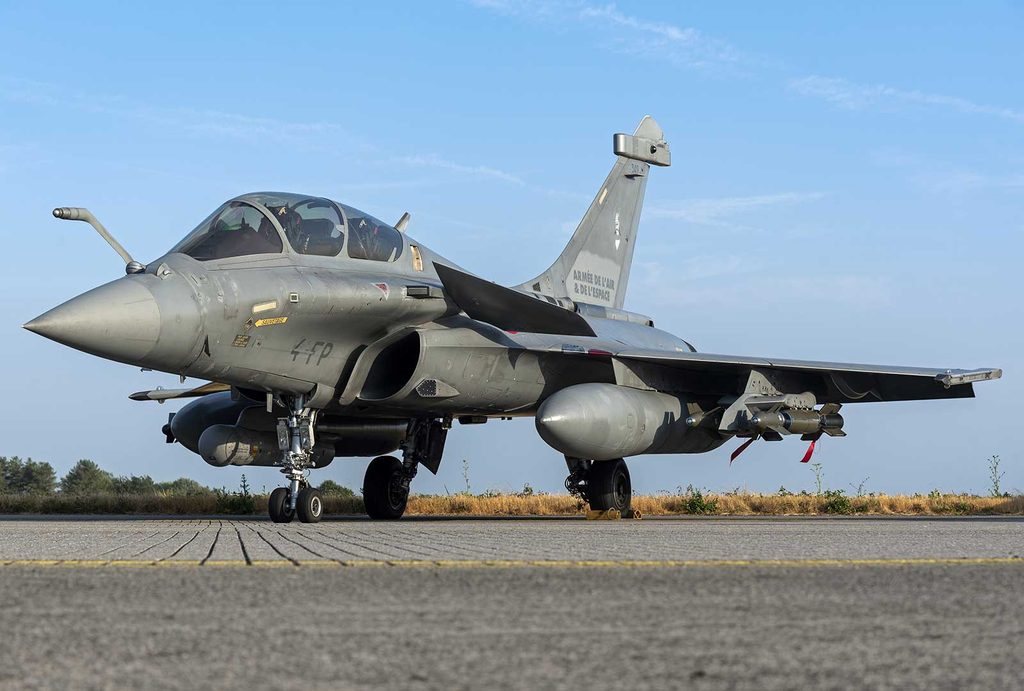
Dassault enters with the twin-engine Rafale and an industrial model structured around the French manufacturer, Thales, Safran, and their suppliers.
The four solutions are not interchangeable.
They involve distinct supply chains, different maintenance architectures, diverse weapon systems, and, above all, fundamentally different industrial and state-to-state relationships spanning multiple decades.
Portugal’s Choice Will Far Exceed a Fighter’s Spec Sheet
A comparison restricted to top speed, radar capability, or missile capacity would miss the main point.
The Força Aérea Portuguesa must maintain daily surveillance of national airspace. It also participates in air policing missions and NATO collective operations.
The future aircraft must therefore integrate into this overarching architecture while remaining financially and logistically sustainable for a relatively modest fleet size.
Evaluations will need to account for total cost of ownership, operational availability, training requirements, necessary infrastructure, spare parts inventories, armaments, modernization capacity, and the degree of operational autonomy granted to the user.
Portugal will also need to decide the relative weight it assigns to European industrial cooperation, interoperability with allies, and the participation of its own domestic companies in the selected program.
That is why no winner can be credibly predicted today. There is currently neither a formal tender nor a final government selection.
Nevertheless, Dassault’s signature in Lisbon changes the dynamic of the process. The Rafale is no longer merely a potential option for Portugal; an offer has been officially submitted, and its supporting industrial framework is taking shape.
The competition for the post-F-16 era is now fully underway. Even before Lisbon publishes its final evaluation criteria, Lockheed Martin, Saab, Airbus, and Dassault have recognized that the battle in Portugal will not be fought over the aircraft alone. It will center on the decades of technology, maintenance, and industrial capability that accompany it.