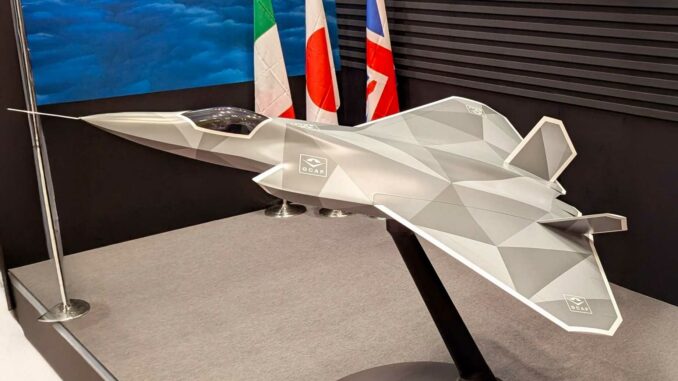
Ottawa tracks GCAP as a potential observer, as the collapse of FCAS triggers a fresh battle for the future Western fighter.
In Summary
Canada is now turning a watchful eye toward GCAP. While Ottawa is not officially backing out of the F-35—already selected to replace its aging CF-18 fleet—it is seeking to understand what the British, Italian, and Japanese program might offer beyond 2040. For now, Canadian interest focuses on obtaining observer status. This status would grant access to select project information without requiring immediate development funding or a commitment to purchase. Nonetheless, the signal is explicitly political. Canada wants to maintain an industrial and strategic fallback outside of an exclusively American orbit. This development unfolds as the Franco-German-Spanish FCAS program crumbles under the weight of bitter rivalries between Dassault and Airbus. The contrast is sharp. GCAP is forging ahead with a clearer governance framework, a targeted 2035 delivery date, and an established industrial structure. It holds real appeal for new partners, provided it avoids repeating European missteps.
Canada enters the GCAP radar
Canada is not joining the Global Combat Air Programme just yet, nor is it becoming a full-fledged industrial partner. Available reports indicate that Ottawa is instead seeking observer status. This is a cautious, measured approach. It allows Canada to track the program closely, gain access to baseline briefings, comprehend the technological roadmap, and subsequently evaluate whether a deeper level of commitment makes sense.
This distinction matters. Canada has already committed to the F-35A to replace its CF-18 Hornet fleet. The official Canadian procurement plan outlines the purchase of 88 advanced combat aircraft. Initial jets are slated for delivery to Luke Air Force Base in Arizona in 2026 to begin training Royal Canadian Air Force pilots. The first F-35s are scheduled to arrive on Canadian soil in 2028, with the entire fleet projected to remain operational well past 2060. The acquisition cost announced by Ottawa stands at 19 billion Canadian dollars. Meanwhile, Canada’s Parliamentary Budget Officer has estimated the total lifecycle cost at 73.9 billion Canadian dollars over a 45-year span.
Therefore, exploring GCAP does not imply Canada is abandoning the F-35. It indicates something else entirely: Ottawa is planning for the post-F-35 era. A fleet of F-35s delivered from 2026 onward will remain highly relevant for decades, but it does not represent a true sixth-generation air combat system. Canada must proactively envision the system that will ultimately succeed or complement its incoming fleet. This is an absolute necessity for a nation tasked with defending a massive landmass, a demanding Arctic airspace, sprawling maritime approaches, and meeting its core NORAD and NATO commitments.
Observer status also grants Ottawa diplomatic wiggle room. It shows a desire to diversify strategic options without triggering a rift with Washington—a useful posture at a time when US-Canada relations face periodic friction. While Canadian air defense remains profoundly intertwined with the United States, particularly through NORAD, total reliance has become politically sensitive. GCAP offers an alternative avenue. It does not replace the American alliance; rather, it ensures Canada avoids being tethered to a single supplier for the 2040–2060 horizon.
GCAP, a program designed for the post-F-35 era
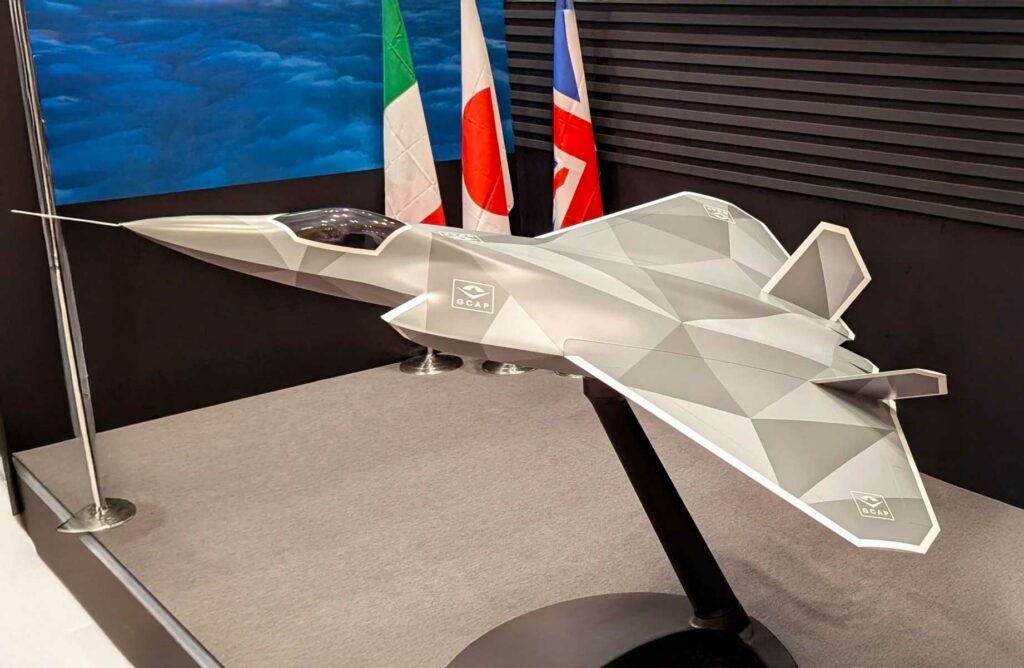
The Global Combat Air Programme unites the United Kingdom, Italy, and Japan. It was forged in December 2022 through the merger of the British-led Tempest project (which already included Italy) and Japan’s F-X program. The objective is to field a next-generation combat aircraft by approximately 2035. The platform is intended to eventually replace the Eurofighter Typhoon in the UK and Italy, alongside the Mitsubishi F-2 in Japan.
GCAP is not merely an airframe; it is an integrated system of systems. The future aircraft will be stealthy, supersonic, hyper-connected, and capable of operating alongside uncrewed drones, remote sensors, allied aircraft, satellites, and command networks. It is being built to process data volumes vastly superior to contemporary platforms. The Royal Air Force has indicated that the jet’s future radar could process up to 10,000 times more data than current systems. This figure highlights the generational leap being pursued. Modern air combat is no longer won purely through raw speed or agility; victory belongs to superior detection, data fusion, electronic warfare, connectivity, and the ability to strike before being detected.
GCAP also relies on a straightforward industrial architecture. Edgewing—a joint venture established by BAE Systems, Leonardo, and Japan Aircraft Industrial Enhancement Co. Ltd.—is designated to spearhead design and development. Headquartered in the United Kingdom, the entity retains design authority throughout the product’s operational lifespan. This setup gives the program a firm center of gravity, successfully avoiding the fragmentation that doomed the European FCAS project.
In April 2026, Edgewing secured an initial international contract worth 686 million pounds sterling to fund advanced design and engineering work. While this does not cover full-scale manufacturing, it represents a concrete development milestone. For its part, Italy approved 8.77 billion euros for the program’s opening phases, with projections scaling up to 18.6 billion euros for initial costs tied to technology maturation, testing, and design. These figures demonstrate that GCAP is entering its critical execution phase, leaving mock-ups and press releases behind.
Canada eyes an option without breaking from the F-35
Canada’s interest in GCAP must be viewed through the lens of the Royal Canadian Air Force’s urgent operational timeline. The existing CF-18s are aging rapidly and cannot fly indefinitely. The F-35 fulfills an immediate operational imperative: robust air defense, active NORAD participation, NATO interoperability, expeditionary deployments, and seamless integration with US and allied assets. It is the necessary bridge to mitigate capability risks in the 2030s.
Yet Canada is already peering further down the line. While the F-35 will receive continuous upgrades, it remains a platform rooted in fifth-generation philosophy. It relies strictly on an American industrial supply chain, American software patches, American export controls, and a maintenance ecosystem tightly overseen by Lockheed Martin and Pratt & Whitney. For a neighbor of the United States, this setup may seem natural. For a nation seeking greater strategic latitude, it is increasingly viewed as a vulnerability.
Consequently, GCAP appeals to Ottawa for three distinct reasons:
The first is operational. Canada is responsible for monitoring a colossal airspace, with its Arctic territory alone spanning roughly 4.4 million square kilometers. The ongoing modernization of NORAD requires an investment of 38.6 billion Canadian dollars over twenty years. These requirements extend far beyond fighter jets, encompassing advanced radars, command-and-control nodes, missile systems, aerial refuelers, upgraded runways, space assets, and hardened communications. A future sixth-generation fighter built from the ground up around data networks fits seamlessly into this modern architecture.
The second reason is industrial. Canada possesses a robust aerospace manufacturing base, concentrated heavily in Quebec, Ontario, and Western Canada. Attaining early entry into a major program could yield valuable domestic spin-offs in sensors, software engineering, specialized maintenance, cybersecurity, advanced materials, or component manufacturing. While observer status guarantees no immediate work-share, it positions Canadian industry at the threshold.
The third reason is diplomatic. Canada is a member of NATO, NORAD, the G7, and the Commonwealth, maintaining deep-seated military ties with London. Furthermore, Ottawa is focusing heavily on its Indo-Pacific strategy, where Japan is emerging as an increasingly vital strategic partner. Aligning with GCAP naturally complements multiple facets of Canadian foreign policy.
The double failure of FCAS underscores GCAP’s advantage
The European FCAS program suffered from a dual failure.
The first failure was strictly industrial. The Franco-German-Spanish initiative was meant to deliver a next-generation manned fighter (the New Generation Fighter), alongside uncrewed remote carriers tied together by a combat cloud. Intended to replace the French Rafale and the German and Spanish Eurofighters by 2040, its projected cost hovered around 100 billion euros. However, Dassault Aviation and Airbus never managed to forge a lasting compromise regarding corporate governance, industrial work-share, and intellectual property.
Dassault insisted on absolute design authority over the core fighter. The French argued from a technical standpoint: a highly integrated, stealthy combat platform cannot be sliced up into political work packages without courting disaster. The airframe, air intakes, internal weapon bays, propulsion, sensors, cooling systems, data links, and radar cross-section must be managed as a single, cohesive unit. Conversely, Airbus demanded a more equitable distribution of labor on behalf of German and Spanish interests. This position was equally rational; Berlin and Madrid refused to foot the bill for a program perceived as overwhelmingly French.
The second failure was strategic. France, Germany, and Spain were simply not asking for the same aircraft. France required a platform compatible with its airborne nuclear deterrent and tailored for carrier operations from its future next-generation aircraft carrier. Germany had no such requirements; Berlin primarily sought a system optimized for NATO interoperability, European air defense, and national industrial scaling. Spain focused on strengthening its national champion, Indra. These divergent goals were entirely legitimate on their own, but they proved impossible to reconcile within a single airframe.
GCAP has fared better precisely because it has successfully bypassed this ambiguity so far. The United Kingdom, Italy, and Japan accepted a rigid governance model from the outset. The industrial joint venture is clearly defined, the governmental headquarters is rooted in the UK, the target timeline points to 2035, and the operational objective remains uniform: replace active fleets with a highly exportable platform. While success is never guaranteed, the program has locked in milestones that FCAS could never stabilize.
GCAP appeals by delivering a clear trajectory
GCAP is turning heads because it offers an actionable roadmap rather than vague political ambitions. For a country like Canada, this is paramount. Ottawa cannot afford to sink resources into an unstable program bogged down by political infighting. It requires a transparent option backed by an established timeline, reliable governance, and partners capable of delivering at scale.
The program also leverages a unique geographic advantage, bridging the Atlantic and Indo-Pacific theaters. The United Kingdom contributes its Tempest development experience, a sophisticated defense industry, and a global strategic network. Italy brings Leonardo’s expertise in Eurofighter manufacturing, advanced sensors, electronics, and a seasoned culture of multinational integration. Japan contributes Mitsubishi Heavy Industries, demanding technical standards, and a pressing operational need to counter regional threats from China, Russia, and North Korea. This geopolitical blend appeals to nations that prefer not to choose between their Atlantic and Pacific commitments.
Furthermore, GCAP is well-positioned to attract future buyers at a time when the American defense market faces production backlogs. While the F-35 enjoys undisputed dominance in the fifth-generation market, that very dominance creates an acute level of dependency. Certain Western allies are eager for an alternative. They do not wish to sever ties with Washington; they simply want a viable second option. GCAP can fulfill that role if its current management discipline holds.
Italy has already hinted at potential future interest from nations like Germany, Australia, Saudi Arabia, and Canada. Caution is warranted, as initial interest does not equal a formal contract. Many capitals track multiple defense programs simultaneously. Yet the mere existence of these discussions proves that GCAP has established itself as the leading Western alternative in the wake of the European collapse.
Observer status: A useful but limited entry point
Observer status is frequently misunderstood. It does not carry the weight of full partnership. It does not allow a nation to dictate operational requirements, it guarantees no domestic industrial work-share, and it does not grant co-developer status. Its core function is to allow a military to watch, learn, evaluate, and prepare.
For Canada, this is entirely sufficient at this juncture. Ottawa can dissect the program’s maturity, true costs, system architecture, delivery timeline, export regulations, and potential windows for industrial participation. The Royal Canadian Air Force can also gauge whether GCAP satisfies its long-term requirements: long-range endurance, extensive maritime patrol capabilities, NORAD compatibility, survivability against advanced air defenses, electronic warfare superiority, jam-resistant communications, and uncrewed teaming.
Crucially, this stance avoids a political trap. Canada is under no pressure to declare an intent to purchase GCAP today. It can continue taking delivery of its F-35s, modernizing its domestic infrastructure, meeting its NORAD benchmarks, and quietly preparing for the decades ahead. This prudence is entirely rational.
However, the strategy has its limitations. The longer Canada remains on the sidelines, the less influence it can exert over the jet’s core architecture. GCAP is moving at a rapid clip, and major design choices will gradually freeze. If Ottawa merely wishes to purchase an off-the-shelf airframe in the 2040s, staying at arm’s length is perfectly acceptable. But if it intends to influence the design parameters and secure substantial industrial returns for Canadian firms, it will have to make a definitive move much sooner.
GCAP is not immune to the same pitfalls
While GCAP has enjoyed a smoother launch than its European counterpart, it remains vulnerable to failure. The program is extraordinarily ambitious. A true sixth-generation fighter demands radical stealth, massive electrical generation, thermal management optimized for high-output sensors, an open software architecture, immense data fusion, jam-proof communications, and seamless drone teaming. This level of complexity is notoriously expensive.
The financial risk is real. Italian budget allocations have already faced upward revisions, and combat aircraft development famously exceeds initial cost estimates. Testing protocols, flight certifications, software coding, cybersecurity hardening, engine refinement, and mission-system integration represent compounding financial layers. While onboarding new partners infuses the program with fresh capital, it can also inject competing operational demands, slow down the master schedule, and overcomplicate decision-making.
Political risks are equally present. The United Kingdom, Italy, and Japan share close strategic alignments, but their core motivations differ. Japan faces an immediate, localized threat matrix. The UK is highly focused on preserving post-Brexit industrial autonomy. Italy is single-mindedly protecting its domestic manufacturing share. Should Germany, Canada, Australia, or other nations enter the inner sanctum, the industrial equation will grow increasingly fraught.
Consequently, GCAP must execute a delicate balancing act: remain sufficiently open to achieve economies of scale, yet firmly protect decisions already locked in to prevent project creep. This is precisely the hurdle where the European project faltered. The program that wishes to court new global partners must also retain the discipline to say no.
European defense views GCAP as a litmus test
Canadian interest in GCAP carries implications that extend far beyond Ottawa. It demonstrates that the program is rapidly evolving into a broader political platform. It is no longer just a British, Italian, and Japanese initiative; it is positioning itself as a viable Western alternative to the F-35 today and the future American F-47 tomorrow.
For European defense advocates, this scenario is profoundly embarrassing. The only advanced European sixth-generation program showing tangible progress pairs an ex-European Union member with an Asian superpower. Meanwhile, FCAS—consistently heralded as the crown jewel of continental strategic autonomy—shattered against the rocks of industrial infighting. This comparison is harsh, but highly instructive. It demonstrates that effective military procurement does not materialize from lofty European rhetoric; it is forged through tight, functional governance.
Canada is highly attuned to this distinction. Ottawa sees a program that, despite its inherent risks, already possesses a rigid framework, a target deployment date, and an empowered industrial lead. Conversely, the European alternative offered a cautionary tale of what happens when every partner insists on protecting its domestic industry at the expense of central authority. In the arena of advanced combat aviation, the simple sum of national sovereignties does not automatically yield a coherent military capability.
Canada may emerge as a customer rather than a partner
The most realistic outcome remains straightforward. Canada will observe from the sidelines initially, accept and operate its incoming F-35s, modernize its NORAD assets, and monitor GCAP’s milestones. By the 2030s, Ottawa will decide whether the platform should complement or eventually replace its frontline fleet.
Under this track, Canada would position itself as an export customer rather than a co-developer. While less ambitious from an industrial standpoint, it is significantly simpler. Canada would acquire a cutting-edge Western sixth-generation aircraft without shoulder-bearing the immense financial risks of early-stage R&D. The downside, however, is that it would strictly limit the high-tech economic windfalls for the domestic Canadian aerospace sector.
A more robust level of participation remains possible but would demand swift, decisive choices. It would require funding a chunk of the development budget, negotiating industrial work packages, and playing by the established rules of the existing consortium. Canada would also have to manage the inevitable blowback from Washington. While the US can tolerate a moderate degree of diversification, it would look askance at a core NORAD ally actively detaching its air defense architecture from the American defense ecosystem.
Ultimately, Canada’s choice will be less technical and profoundly political. The F-35 answers the immediate operational requirements of today. GCAP answers a much more profound question: how much genuine strategic autonomy does Ottawa wish to retain over its combat aviation in the second half of the century?
The future Western fighter jet becomes a battle of influence
GCAP is advancing rapidly because it is occupying a vacuum. The European project has dissolved, and the future American F-47 will likely face strict export controls in its most sensitive configurations. While the F-35 will remain a cornerstone of Western air power, it cannot answer every operational requirement of 2040. Allied nations are actively hunting for an alternative path. Canada is among these cautious states—deeply committed to its alliance with the United States, yet determined not to lock its entire air defense future into a single industrial relationship.
The British, Italian, and Japanese initiative has a genuine window of opportunity. It blends an aggressive timeline with a solid industrial foundation, export viability, and a compelling strategic narrative. It has the potential to become the premier non-American Western fighter of the next generation. However, that window will close rapidly if the project transforms into a clearinghouse for competing national demands.
Canada is wise to keep a close watch. It would be a mistake, however, to assume it can wait indefinitely without sacrificing leverage. GCAP is fast approaching the phase where foundational architecture, engine specifications, sensor arrays, software baselines, drone interfaces, and export frameworks will be permanently locked in. Observers who harbor ambitions of becoming true players must make their presence felt early.
The failure of the European program showed what happens when a continent mistakes political compromises for effective defense management. GCAP represents the converse principle: a multi-nation project can thrive if it respects a clear chain of command. For Canada, that may well be the most valuable takeaway. It is not just an opportunity to examine a future fighter jet; it is a masterclass in watching a methodology that, for now, is simply outperforming its European rivals.
War Wings Daily is an independant magazine.