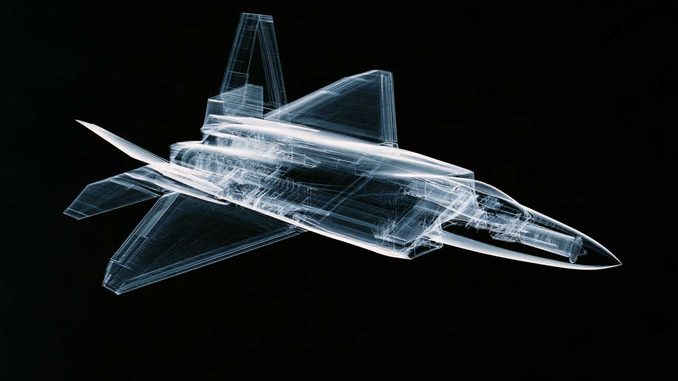
The F-47 remains at the heart of NGAD, but the USAF is betting on CCAs to contain costs, rebuild mass, and preserve its air power.
In summary
In September 2026, the US Air Force is not preparing to abandon the F-47. On the contrary, it is accelerating its development, but within a deeply rebalanced NGAD. The problem posed in 2024 was clear: the initial concept could approach $250 to $300 million per aircraft, roughly three times the price of an F-35. Washington therefore revised the equation. The F-47 remains the high-end piloted platform, while Collaborative Combat Aircraft (CCA) are meant to bring mass at a lower cost. For FY 2027, the USAF is requesting approximately $5 billion for the F-47, $1.4 billion to develop CCAs, and $1.1 billion to begin their procurement. The stakes are military, budgetary, and industrial: preserve air superiority against China, increase the number of available vectors, and extend the American technological ecosystem to allies.
The scenario of an F-47 cancellation belongs mainly to 2024
The doubt was real. In 2024, the US Air Force had paused the award of the Next Generation Air Dominance contract. Frank Kendall, then Secretary of the Air Force, estimated that the concept under study could cost about three times an F-35, or potentially $250 to $300 million per aircraft. At this level, sophistication directly threatened fleet volumes: the more capable the aircraft became, the fewer the USAF could buy.
That chapter is now in the past. On March 21, 2025, Boeing received the Engineering and Manufacturing Development contract for the F-47. Test aircraft are in production, with the first flight scheduled for 2028. The USAF plans for at least 185 units. Publicly available information indicates a combat radius exceeding 1,852 km (1,000 nautical miles) and a speed greater than Mach 2.
One clarification is essential: the current unit cost of the F-47 is not public. Presenting $300 million today as the official price of the Boeing F-47 would therefore be incorrect. That figure corresponds to the NGAD concept that had precisely led the USAF to overhaul its project.
On this pivot, see also The US Air Force’s 2026 budget cuts the F-35 to focus on NGAD.
The budget reveals the new American compromise
The Department of the Air Force’s FY2027 budget request reaches $338.8 billion. It provides approximately $5 billion for the F-47, primarily in research, development, and testing. That is about $1.5 billion more than the $3.45 billion allocated to the program for 2026. This is indeed an FY2027 request and not a procurement price per aircraft.
CCAs are progressing in parallel. The USAF is requesting approximately $1.4 billion in R&D and nearly $1 billion to launch their acquisition, added to credits preparing subsequent production runs. In the same programming, $7.4 billion is set to fund 38 F-35s and $3 billion for 24 F-15EXs.
These amounts cannot be directly converted into unit costs. The budget lines do not fund the same things. But they show the trade-off very clearly: Washington refuses to choose between technological excellence and mass.
The F-47 must handle the most demanding missions. The F-35 retains the stealth volume already industrialised. The F-15EX provides payload capacity. Autonomous combat drones add platforms without requiring a pilot and a high-end fighter for every additional sensor or missile.
CCAs become the economic variable of NGAD
The most profound change concerns Collaborative Combat Aircraft. On June 17, 2026, the USAF awarded contracts to General Atomics and Anduril, moving Increment 1 into the industrial phase. On September 14, the aircraft officially received the designations FQ-42 Vengeance and FQ-44 Fury. The American target now stands at around 1,000 CCAs, including 500 by 2032.
However, the term “swarm” must be used precisely. It is not simply a matter of sending hundreds of fully autonomous drones ahead of fighters. CCAs are designed as semi-autonomous platforms capable of cooperating with crewed aircraft. They will be able to offload sensors, missiles, electronic warfare systems, or certain reconnaissance functions.
The Loyal Wingman concept thus changes scale. The cost target articulated at the beginning of the program aimed for approximately one-quarter to one-third of the price of an F-35 per CCA. This is not a guaranteed current price. It is an initial economic target summarizing the doctrine of affordable mass: accepting less universal and sometimes more expendable platforms in order to buy significantly more.
The technical analysis of this industrialisation is detailed in The “Loyal Wingman” Takes Center Stage in U.S. Air Warfare.
China dictates range and distributed air combat
The Indo-Pacific theater largely explains this architecture. Distances are vast. Advanced American bases, tankers, and command aircraft can be exposed to long-range missiles. A short-range fighter relies more heavily on aerial refueling, which simply shifts vulnerability toward tanker aircraft.
The combat radius of over 1,852 km announced for the F-47 responds directly to this constraint. The 6th generation fighter must penetrate deeply while working with distributed sensors and effectors.
American reasoning then becomes very concrete. It is better to risk a CCA to detect a surface-to-air battery or carry two extra missiles than to systematically imperil an extremely expensive piloted aircraft. It is also better to distribute sensors and weapons across multiple aircraft than to concentrate all capability on a few platforms whose loss would be critical.
The USAF is therefore not replacing the pilot with artificial intelligence. It is distributing military value across more platforms.
The concept is explored further in The American F-47 Prepares for Aerial Swarm Warfare.
Commercial dominance now goes through the American ecosystem
This strategy also carries an industrial and commercial dimension. Today, the F-35 remains the primary export tool for American air combat. Lockheed Martin reports over 1,355 aircraft delivered and 19 allied nations having selected the program. This installed base subsequently generates decades of maintenance, training, software, engines, weaponry, and upgrades.
The F-47 does not yet possess a comparable trajectory. Donald Trump mentioned in March 2025 the possibility of offering certain allies a version with reduced capabilities. But no structured export program for the F-47 has been publicly announced since. F-47 exports therefore remain hypothetical.
CCAs offer a more immediate path. In April 2026, the United States and the Netherlands formalized a partnership covering the acquisition of prototypes and open autonomous architectures. The stake goes beyond selling a drone. If allies adopt the same data standards, autonomy software, interfaces, and weaponry, Washington extends the American ecosystem to the next generation of air combat.
The American gamble consists of selling a combat architecture
The real NGAD trade-off no longer pits the F-47 against drones. The United States is seeking to build a pyramid. At the top sit a small number of extremely survivable platforms capable of penetrating the most advanced defenses. Below them come the F-35 and F-15EX. Around them develops a mass of more affordable CCAs.
This strategy also protects the American industrial base. Boeing retains a high-tech fighter pipeline with the F-47. Lockheed Martin retains the vast global ecosystem of the F-35. General Atomics, Anduril, and companies specialized in autonomy gain access to the air combat market.
Yet the risk has not disappeared. If the F-47 returns to the costs that crippled NGAD in 2024, or if CCAs become sophisticated enough to cost nearly as much as the fighters they are meant to complement, the economic equation will deteriorate rapidly.
That is where American air dominance is played out today. Far more than in a hypothetical “miracle plane”, it relies on the ability of the United States to simultaneously develop an elite platform, a mass fleet, autonomous drones, the software connecting them, and an industrial system powerful enough to spread this entire ensemble to its allies.