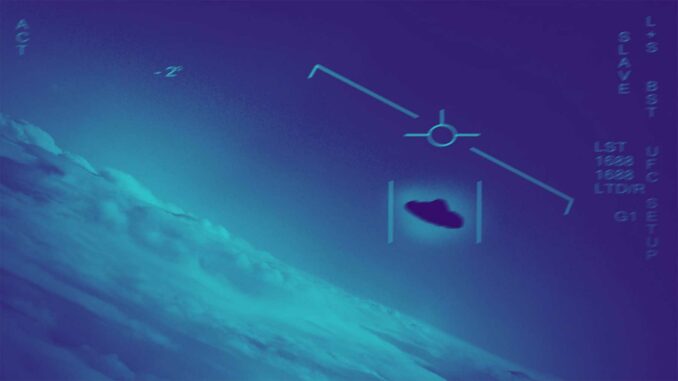
The Pentagon’s UAP files do not prove an extraterrestrial origin. Above all, they reveal the limitations of sensors, the rise of drones, and the strategic importance of aerial identification.
In summary
The Pentagon’s declassified documents on UFOs, now referred to as UAPs, do not prove the existence of extraterrestrial technology. They reveal a more concrete reality: the United States still struggles to detect certain objects moving through its sensitive airspace. Most of the cases analyzed by the AARO, the ODNI, or NASA are linked to drones, balloons, birds, satellites, aircraft, or sensor errors. However, several cases remain unexplained due to a lack of complete data.
The real issue, therefore, is not science fiction. It concerns aerial surveillance, data quality, sensor fusion, artificial intelligence, and the ability to quickly identify an unknown object. UAPs also reveal impressive technology: that of modern systems capable of capturing, cross-referencing, and analyzing weak signals in an increasingly crowded sky. The main threat does not come from evidence of extraterrestrial life, but from a more immediate risk: drones, lightweight objects, imperfect sensors, and the inability to quickly identify an anomaly in strategic airspace.
Declassified U.S. documents on UFOs, now referred to as UAPs (Unidentified Anomalous Phenomena), do not confirm the existence of extraterrestrial craft. They tell a more sober, yet far more strategic, story. They show that the United States, despite its military resources, radars, satellites, and onboard sensors, still struggles to identify certain objects moving through sensitive airspace.
The subject is therefore no longer merely one of mystery. It has become a matter of defense, intelligence, technology, and sovereignty. Reports from the AARO, the ODNI, and NASA show that most cases have a conventional explanation: balloons, drones, birds, satellites, civilian aircraft, sensor errors, or optical artifacts. But some of the sightings remain unexplained, often due to insufficient data.
This is precisely where the issue becomes significant. UAPs do not prove the existence of an advanced civilization. Rather, they reveal a modern weakness: in a sky saturated with drones, satellites, imperfect sensors, and small objects, rapid identification becomes difficult. And this difficulty can become a threat.
The Shift from the UFO Myth to a National Security Issue
For decades, the term “UFO” has been associated with popular culture, eyewitness accounts, and speculation about extraterrestrials. The Pentagon now uses the term “UAP.” This change is significant. It removes the subject from the realm of folklore and places it within the realm of military analysis.
A UAP is not necessarily an object from another world. It is first and foremost an unidentified phenomenon, observed in the air, in space, at sea, or sometimes at the intersection of multiple domains. This broader definition allows U.S. authorities to process reports without preconceptions.
The creation of the AARO, the All-domain Anomaly Resolution Office, follows this logic. The goal is to centralize observations, analyze data, cross-reference sensor data, and determine whether certain phenomena pose a risk to aviation or national security.
The 2024 report indicates that the AARO received 757 UAP reports between May 2023 and June 2024. Of these, 485 concerned recent events, while 272 pertained to older sightings. In total, the agency was reviewing 1,652 cases as of October 24, 2024. This figure does not mean that U.S. airspace is overrun. Above all, it shows that reporting procedures are becoming standardized.
The more pilots, military personnel, and civilian agencies report anomalies, the higher the number of cases rises. The statistical trend therefore reflects both improved reporting and a genuine increase in such phenomena.
What the Numbers Really Say
The available data calls for a cautious interpretation. In its 2024 report, the AARO states that it resolved 49 cases during the period under review. All were attributed to ordinary objects: balloons, birds, or drones. The agency also recommends closing 243 other cases, which are likewise associated with known objects such as satellites, aircraft, balloons, or drones.
This does not mean that all cases are straightforward. The same report mentions 21 cases that warrant further analysis. These observations exhibit characteristics deemed unusual, particularly regarding trajectory, behavior, or reported performance.
But the key point lies elsewhere. A large portion of the cases remains unsolved not because they defy the laws of physics, but because the data is incomplete. Unknown distance, unmeasured speed, imprecise viewing angle, blurry image, lack of radar, missing metadata: these gaps prevent any solid conclusions.
This is a major lesson. Even a military power equipped with advanced capabilities can detect an object without being able to identify it. Seeing is not enough. We must measure, contextualize, compare, and attribute.
Observed Performance: Between Physical Reality and Technical Illusion
Videos and reports related to UAPs sometimes describe objects capable of rapid movement, sharp turns, or trajectories with no known equivalent. These elements fuel the idea of unknown technology. But they must be analyzed methodically.
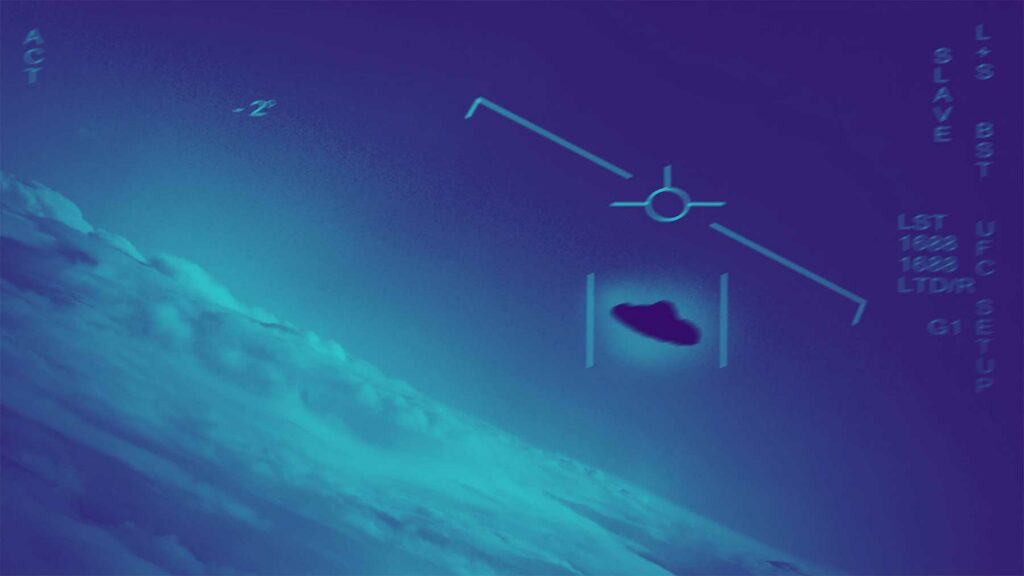
An infrared camera mounted on a fighter jet does not reveal absolute truth. It produces an image interpreted by an optical, thermal, and digital system. A slow-moving object may appear fast if the observing aircraft is traveling at high speed. A light source may appear strange due to the angle of the shot. Video compression can transform an ordinary silhouette into an atypical shape. A reflection, diffraction, or a failure in automatic tracking can create the impression of abnormal movement.
This is why claimed performance can only be considered credible if it is confirmed by multiple independent sensors: radar, infrared, video, flight data, weather, air traffic, satellite positioning, and operational context. Without this convergence, a spectacular trajectory remains a hypothesis.
This does not render the observations useless. On the contrary. They show that modern systems can be deceived, overwhelmed, or misinterpreted. In a military environment, this uncertainty is already a problem.
The Incredible Technology That Has Actually Been Demonstrated
The most interesting part of the UAP files may not be what the public imagines. The reports do not demonstrate the existence of an antigravity engine, extraterrestrial material, or impossible propulsion. Instead, they reveal impressive technology: the growing ability of modern states to observe, record, and analyze tiny, fast-moving, ambiguous, or barely detectable phenomena in a vast airspace.
The demonstrated technology is primarily found in the sensors. Military radars, civilian radars, infrared cameras, electro-optical systems, satellites, aeronautical databases, weather networks, and analysis software form a surveillance system of considerable complexity. Even when identification fails, the mere fact of detecting these anomalies demonstrates the level achieved by modern detection systems.
But the most advanced aspect concerns data fusion. The challenge is no longer simply having a good radar or a good camera. It involves connecting different sources, synchronizing measurements, comparing trajectories, ruling out ordinary explanations, and reconstructing coherent behavior.
This is where the innovation becomes remarkable. Reports mention tools like GREMLIN, developed with the Georgia Tech Research Institute, to better understand the regular behaviors of objects in certain environments. The goal is to establish a pattern of life, that is, a reference for distinguishing what is normal from what is not.
The MIT Lincoln Laboratory is also working on leveraging civilian radar data, particularly from the FAA and the National Weather Service, to detect objects that are sometimes filtered out or ignored by conventional systems. This approach is crucial. Many small objects are not invisible; they are simply treated as noise by radars designed to track aircraft, missiles, or more obvious trajectories.
The most important technology revealed by UAPs is therefore interpretation technology. It is not just about seeing farther. It is about understanding better. In a sky filled with drones, Starlink satellites, balloons, civilian aircraft, and atmospheric phenomena, the real breakthrough lies in the intelligence of sorting systems.
Ultimately, artificial intelligence will play a central role. It will be able to compare thousands of trajectories, detect anomalies, recognize recurring signatures, correct sensor errors, and establish probabilities of identification. This capability can transform air defense. It can also become a major strategic advantage for countries capable of industrializing it.
The incredible technology demonstrated is therefore not necessarily that of the observed objects. It is that of the infrastructure attempting to understand them.
Drones, the Most Credible Threat
The most concrete risk revealed by the UAP files concerns drones. Small unmanned aerial systems are inexpensive, easy to modify, and difficult to detect. They can fly low, slowly, without a transponder, and blend into the environment.
The 2024 report mentions 18 sightings related to U.S. nuclear facilities, weapons, or launch sites. Authorities classified them as UAS, i.e., drones. Some overflights lasted less than five minutes. Others were much longer, lasting 53 minutes and 1 hour 57 minutes.
This data is more concerning than a blurry video. A drone doesn’t need to be revolutionary to be dangerous. It can observe, map, test a reaction, collect images, or serve as a decoy. It can also overwhelm a local defense system if used in a swarm.
Recent conflicts have shown that inexpensive drones can disable costly systems, expose positions, or force armies to revise their doctrines. UAPs are therefore part of a broader trend: the democratization of aerial capabilities.
A Strategic Vulnerability: Detecting Without Understanding
Declassified reports reveal a profound weakness in contemporary systems. Air defenses have long been designed to detect aircraft, missiles, helicopters, or ballistic objects. They are less suited to small, slow, light, stealthy, or non-cooperative objects.
A radar may filter out a signal deemed irrelevant. A camera may distort a shape. A pilot may lack distance cues. A database may not be linked to the correct system. The result is paradoxical: the object exists in the data, but it remains misunderstood.
This uncertainty can lead to two errors. The first is inaction in the face of a real threat. The second is an overreaction to an ordinary object. In both cases, the lack of rapid identification creates an operational, political, and diplomatic risk.
The case of the Chinese balloon shot down in February 2023 demonstrated this. A relatively simple object can become a major strategic event. It does not need to be hypersonic or stealthy to trigger a crisis.
The foreign origin hypothesis remains open, but unproven
U.S. reports also examine the hypothesis of advanced foreign technologies. Could some UAPs be Chinese, Russian, Iranian, or private platforms? To date, public reports provide no solid evidence to that effect.
The AARO states that, in resolved cases, it has not identified any disruptive foreign aerospace technology. This does not mean the risk is zero. It simply means that the available data does not allow for such a determination.
Caution is therefore warranted. The United States is seeking to determine whether certain objects are related to adversarial intelligence, drone tests, surveillance balloons, passive sensors, or experimental platforms. As long as attribution remains unclear, the risk persists.
The Real Lesson from the UAP Files
The declassified Pentagon documents do not deliver the revelation many were expecting. They do not prove the existence of extraterrestrial technology. They show something else: an airspace that has become too dense, too fast, and too complex for conventional identification methods.
UAPs are a litmus test. They reveal the limitations of radar. They expose the weaknesses in procedures. They demonstrate the importance of metadata, sensor fusion, and artificial intelligence. They also serve as a reminder that drones and lightweight objects can create strategic uncertainty at low cost.
The main threat, therefore, is not the confirmed arrival of impossible technology. Nothing in public documents supports that claim. The threat is more immediate: a sky where an object can be seen without being understood, tracked without being identified, detected without being attributed.
It is less spectacular than an alien narrative. But for an army, a nuclear power plant, an airport, or a government, it is far more serious. The UAP dossier does not prove that anyone possesses impossible technology. It proves that our systems still need to improve to understand what they are observing.
War Wings Daily is an independant magazine.