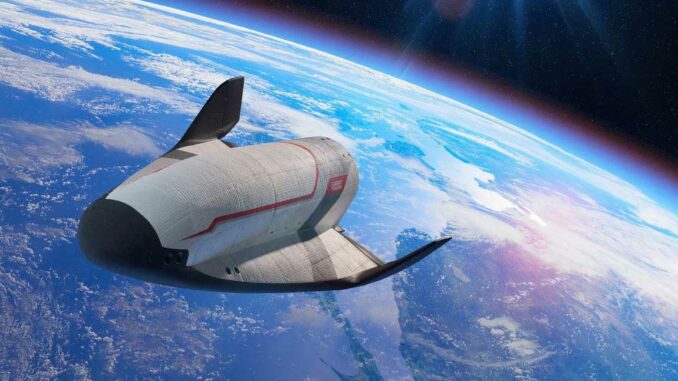
Dassault Aviation and OHB propose VORTEX-S to the ESA to build a reusable European spaceplane for civil and military use.
In Summary
Dassault Aviation and OHB announced on May 11, 2026, their partnership to propose VORTEX-S to the European Space Agency, a multi-purpose spaceplane capable of ensuring round trips to orbital stations and autonomous missions in low Earth orbit. The project fits into the VORTEX roadmap, launched by Dassault Aviation with the support of the French Ministry of the Armed Forces, the DGA, and the CNES. It targets a capability that Europe does not yet master: a reusable, maneuvering vehicle capable of returning to a runway like an airplane. Anticipated uses cover cargo transport, returning scientific experiments, in-orbit operations, inspection, satellite repair, and dual military missions. The precise budget for VORTEX-S is not public. However, the VORTEX-D demonstrator already benefits from 30 million euros in French support, toward a total estimated cost of around 70 million euros.
The Franco-German Partnership Giving VORTEX-S a European Dimension
Dassault Aviation and OHB chose the right moment to move VORTEX-S out of the category of ambitious concepts. On May 11, 2026, the French group and the German industrialist announced their intention to propose a multi-purpose spaceplane to the ESA. The vehicle would be capable of reaching space stations, returning to Earth, and conducting autonomous orbital missions, known as free flyers.
The industrial division of labor is clear. Dassault Aviation is positioning itself as the architect of VORTEX-S and the overall integrator of the spaceplane. OHB becomes the architect and integrator of the service module. This is a logical division. Dassault brings its culture of aerodynamics, flight controls, piloted architectures, complex systems, and atmospheric reentry. OHB brings its experience in space, satellites, orbital modules, in-orbit operations, and mission systems.
This partnership is politically important. Following the tensions surrounding FCAS, Dassault Aviation returns with a German partner to a different field: orbital space. The message is subtle but clear. Franco-German cooperation remains possible when industrial sharing corresponds to genuinely complementary skills. In VORTEX-S, Dassault does not relinquish control of the vehicle. OHB does not play a mere secondary role. Each group occupies a coherent technical area.
The project targets the European Space Agency. It is therefore not just a French program. Dassault seeks to embed VORTEX-S within a European framework. The ESA, for its part, has been working since 2024 on a European low Earth orbit cargo transport and return service. The context is favorable. Europe still depends largely on non-European means to send cargo to space stations and bring it back to Earth. This is a strategic weakness.
The Spaceplane Concept Altering the Logic of Orbital Return
A spaceplane is neither a conventional capsule nor a launch vehicle. It is designed to operate in orbit, reenter the atmosphere, and land on a runway. This final characteristic changes many things. A capsule returns under a parachute. It undergoes a more constrained reentry, falls into the ocean or onto a prepared land zone, and must then be recovered. A winged vehicle can better control its trajectory and target a runway with superior precision.
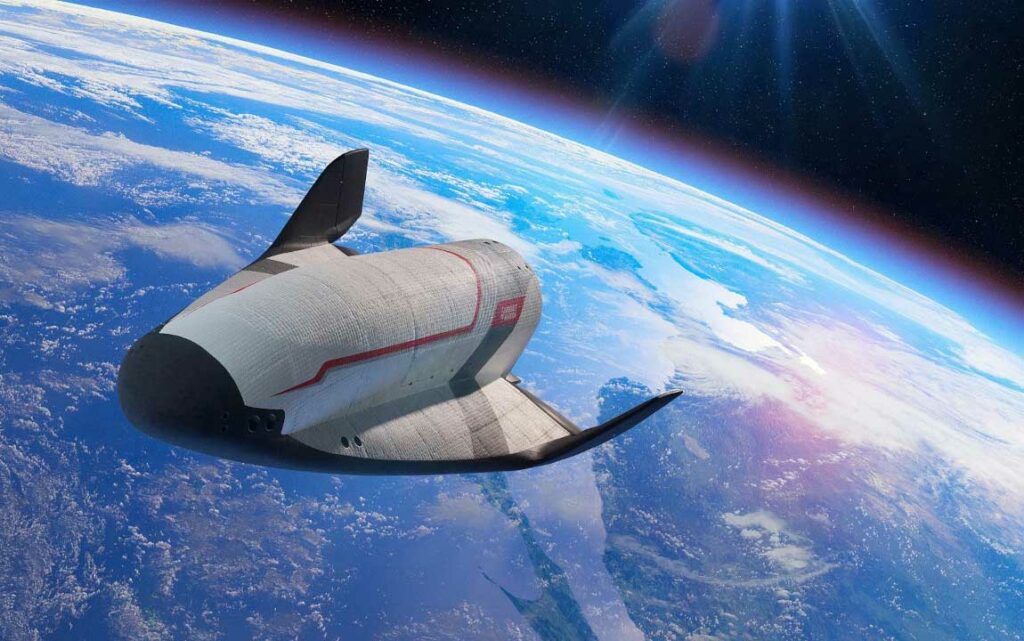
VORTEX-S belongs to this logic. It must combine several capabilities: orbital maneuverability, atmospheric maneuverability, reusability, a large cargo bay, a low g-force reentry, and runway landing. These elements are not decorative. They determine the actual uses of the system.
Returning under low g-forces is useful for sensitive payloads. Biological experiments, materials, optical equipment, or electronic components can be weakened by a brutal reentry. A spaceplane theoretically allows for a gentler return. It can also reduce recovery times. If the vehicle lands on a runway, technicians can access experiments or payloads more quickly.
Reusability is the other central point. Europe has long favored expendable launchers and non-reusable space vehicles. SpaceX changed the market with Falcon 9 and Dragon. China is also developing reusable vehicles and advanced orbital capabilities. Europe cannot remain permanently without an equivalent solution. VORTEX-S is therefore as much an industrial project as it is a strategic catch-up effort.
The VORTEX Roadmap Advancing in Stages
VORTEX stands for Reusable Orbital Vehicle for Transport and Exploration (Véhicule Orbital Réutilisable de Transport et d’Exploration). Dassault Aviation presents the program as a progressive family, rather than a direct leap to a manned vehicle. This method is cautious. It reduces technical and financial risks.
The first step is VORTEX-D. It is a one-third scale flight demonstrator. Its role is to validate critical technologies: hypersonic flight, thermal protection, flight control laws, control during atmospheric reentry, aerodynamic behavior, and general integration. This demonstrator is supported by the French Ministry of the Armed Forces. The public funding announced by Sébastien Lecornu reaches 30 million euros. Specialized sources report a total cost of around 70 million euros, with significant participation from Dassault Aviation.
The second step is VORTEX-S. Dassault presents it as a two-thirds scale Smart Free Flyer. This is where the partnership with OHB comes in. This version must transition from a technological demonstrator to a multi-purpose orbital vehicle. It targets autonomous missions and round trips to space stations.
The third step would be VORTEX-C, a full-scale cargo version. It could transport heavier payloads and fit into a commercial or institutional orbital service. The fourth step would be VORTEX-H or VORTEX-M, a manned version. The latter is the most distant and demanding. It imposes much heavier safety, redundancy, and certification standards.
This progression is intelligent. Going directly to a manned European vehicle would be politically attractive but financially risky. Starting with a demonstrator, then a cargo vehicle, is more realistic. Europe needs flight proof before promising a manned shuttle.
Civil Uses Targeting Low Earth Orbit After the ISS
The first target market is transport to low Earth orbit stations. The ISS is to be operated until 2030. Afterward, NASA and its partners are preparing a transition to commercial stations. The ESA wants to avoid becoming a simple client of American vehicles. This is why the LEO Cargo Return Service program was launched.
In 2024, the ESA awarded two initial phase contracts of 25 million euros each to The Exploration Company and Thales Alenia Space. These contracts were intended to prepare a European service capable of traveling to the ISS and returning to Earth. In 2025, ESA member states confirmed the development of this service, with two demonstration missions aiming for docking at the ISS. In 2026, the scope evolved to account for the post-ISS era and future commercial stations.
VORTEX-S therefore arrives in a strategic window. It can present itself as a solution different from capsules. The Exploration Company and Thales Alenia Space are working on more conventional cargo vehicle concepts. Dassault and OHB are proposing a winged, reusable vehicle with runway landing. This difference can become an advantage if the ESA wishes to fund multiple architectures.
Civil uses are numerous. VORTEX-S could transport scientific experiments, return samples, host payloads in orbit, serve as an autonomous laboratory, test materials, qualify equipment, and ensure rapid access to research results. A free flyer platform can also remain in orbit without being attached to a station. It then becomes an independent, recoverable, and reusable laboratory.
Military Uses Explaining French Interest
The dual nature of VORTEX is acknowledged. Dassault Aviation speaks of intrinsically dual architectures. This means that the same vehicle can serve civil, scientific, commercial, and military missions. This dimension is essential to understanding the support of the Ministry of the Armed Forces.
A reusable spaceplane can meet several military requirements. The first is observation. An autonomous orbital vehicle can carry sensors, reposition itself, and return with sensitive data or equipment. The second is inspection. It can approach space objects, observe a satellite, verify its condition, detect an anomaly, or document hostile behavior.
The third use is in-orbit intervention. This can cover repair, component replacement, object repositioning, or equipment removal. The fourth is prepositioning. A vehicle can deposit payloads in orbit, recover them, or move them. In a context where satellites are becoming military targets, this capability has true strategic value.
To be direct, space has become a confrontation domain. The United States, China, Russia, India, and Europe are developing or studying means of surveillance, defense, maneuver, and orbital resilience. A vehicle like VORTEX-S would not be a weapon by nature. However, it would give Europe a more flexible space action capability. Today, Europe observes a lot. It intervenes very little. VORTEX aims to close part of this gap.
Critical Technologies Behind the Promise
VORTEX-S concentrates major technical difficulties. The first is atmospheric reentry. An orbital vehicle reenters at very high speed. It undergoes extreme thermal constraints. Thermal protection must withstand the heating, remain lightweight, be inspectable, and be compatible with reusability. This is an area where accumulated experience counts for a lot.
The second difficulty concerns hypersonic flight. A winged space vehicle traverses several flight regimes: orbital, hypersonic, supersonic, transonic, and then subsonic. Flight controls must remain effective despite highly different aerodynamic conditions. This is precisely the type of subject where Dassault Aviation can leverage its aeronautical history.
The third difficulty is autonomy. VORTEX-S must be capable of conducting free orbital missions. This assumes highly reliable guidance, navigation, and control systems. The vehicle must manage its energy, its orientation, its communications, its safety, and its maneuvers. If it must dock with a station, extremely safe rendezvous and approach functions are also required.
The fourth difficulty is the integration of the cargo bay and the service module. The cargo bay allows for payloads to be carried. The service module provides propulsion, energy, thermal control, space avionics, and mission resources. This is where OHB’s role becomes central. A spaceplane is not just a winged fuselage. It is a complete orbital system.
The Real Budget and Financial Unknowns
The precise budget for VORTEX-S has not been published. This is an important point. One must not confuse the industrial announcement of May 11, 2026, with an already awarded ESA contract. Dassault Aviation and OHB are proposing the project to the European Space Agency. They do not yet publicly have full funding to develop VORTEX-S through to operational flight.
The available amounts concern primarily the upstream phase. The VORTEX-D demonstrator benefits from 30 million euros in French support. The total cost of the demonstrator is reported at around 70 million euros. On a space scale, this amount remains modest. It funds a technological proof, not a complete operational system.
The ESA framework provides orders of magnitude. The first LEO Cargo Return Service contracts signed in 2024 represented 25 million euros each. These are maturation contracts, not full development contracts. At its 2025 Ministerial Council, the ESA approved 22.3 billion euros in contributions, the highest level in its history. It also confirmed the development of the European low Earth orbit cargo return service, with two docking demonstrations at the ISS.
The future funding of VORTEX-S will therefore depend on several factors: whether or not it is selected by the ESA, the capacity of Dassault and OHB to expand the consortium, the participation of member states, private co-funding, French and German military interest, the post-ISS timeline, and competition with European capsules already under development. The project is promising. It is not yet secured.
European Competitors Forcing VORTEX-S to Prove Its Difference
VORTEX-S does not present itself in an industrial vacuum. The Exploration Company is developing Nyx, a reusable European capsule. Thales Alenia Space is also working on a cargo service. These projects have already received initial ESA funding. They therefore occupy a real place in the competition.
The advantage of VORTEX-S lies in its winged architecture. It can theoretically offer a more precise, more flexible return that is better suited to certain payloads. It can also appeal to states that want a dual capability more ambitious than a simple cargo vessel. Its disadvantage is complexity. A spaceplane is generally more difficult to develop than a capsule. It requires fine mastery of hypersonic aerodynamics, thermal protection, and controlled reentry.
This difference will be the core of the arbitration. The ESA may choose a simpler solution to guarantee rapid access to cargo transport. It could also decide to support multiple architectures so as not to lock Europe into a single model. In this second hypothesis, VORTEX-S would have a real card to play.
The choice will not be solely technical. It will be political. Dassault is French. OHB is German. The ESA will seek a European balance. Italy, France, Germany, Spain, and other countries will want industrial returns. As always in European space, success will depend as much on the budgetary architecture as on the vehicle’s architecture.
The Real Stake for Dassault Aviation
For Dassault Aviation, VORTEX-S is more than a space project. It is an extension of its natural domain: designing complex, reusable, controllable, or autonomous platforms capable of operating in extreme environments. The company already has a history in this area. It participated in Hermes, X-38, IXV, and several studies of hypersonic or orbital vehicles. VORTEX allows it to transform this heritage into a modern program.
The project also arrives at a strategic moment. Dassault is at the center of debates on the future European combat aircraft. The company defends a culture of architect-integrator. VORTEX-S gives it another field to demonstrate this competence, in a sector where Europe is seeking its autonomy.
For OHB, the project is equally useful. The German group is already a major player in space systems. It has worked on Galileo, SARah, and numerous institutional programs. By joining VORTEX-S, it places itself in the highly visible segment of reusable space mobility. This is a riskier market than conventional satellites, but also a more strategic one.
The European Bet Behind the Reusable Spaceplane
VORTEX-S poses a simple question to Europe: does it only want to buy space services, or does it want to master the vehicles that make them possible? Since the end of Ariane 5, the delays of Ariane 6, and the commercial dominance of SpaceX, the debate over European space autonomy has become more brutal. Europe has engineers, budgets, and agencies. However, it sometimes lacks speed, risk-taking, and industrial continuity.
VORTEX-S will not solve this problem alone. It will not replace a launcher. It does not guarantee full autonomous access to space. It must itself be launched by a rocket. But it can create a capability that Europe does not have: returning from orbit with a reusable, maneuvering vehicle, recoverable on a runway, and usable for multiple missions.
This would be a reasonable breakthrough. Not a giant shuttle like the Space Shuttle. Not an unrealistic promise of daily space transport. Rather, a specialized, dual, progressive orbital tool capable of serving exploration, science, industry, and defense.
The real question will be that of funding. Europe knows how to launch studies. It knows how to sign letters of intent. It knows how to fund demonstrators. It has more difficulty transforming these stages into rapid operational capabilities. VORTEX-S will succeed if the ESA and member states agree to move from the symbol to the budget line. Otherwise, it will join the long list of brilliant European concepts that proved their value too late, or not far enough.
War Wings Daily is an independant magazine.