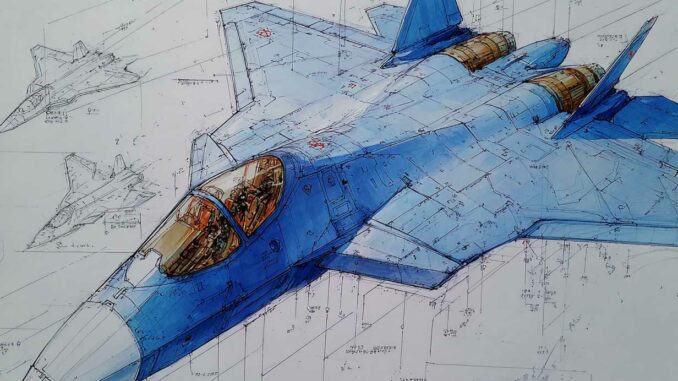
FCAS bogs down after billions committed. States pay for the loss, while industrialists keep revenues, know-how, and options.
In Summary
The collapse of the Future Combat Air System, or FCAS, leaves behind more than just a military vacuum. It also leaves behind a political, industrial, and budgetary bill. Since 2019, states have committed at least €3.42 billion to the main public phases of the program: €65 million for the joint concept study, €155 million for Phase 1A, and then €3.2 billion for Phase 1B of the demonstrator. This total does not mean that every single euro was lost without result. Industrialists delivered studies, architectures, technological building blocks, and work on sensors, the combat cloud, engines, and accompanying drones. However, no next-generation European combat aircraft ever flew. The real loss for the states is therefore not just a matter of bookkeeping. It is above all strategic: lost time, increased dependence, and a Europe incapable of deciding between sovereignty and industrial sharing.
The FCAS Program Intended to Replace Rafale and Eurofighter
FCAS was meant to be the great European aerial program of the century. Its ambition was simple to formulate but highly difficult to execute: to prepare the successor to the French Rafale and the Eurofighter Typhoon used by Germany and Spain. The project was not just about an aircraft. It was intended to create a complete air combat system, known as FCAS in both English and French.
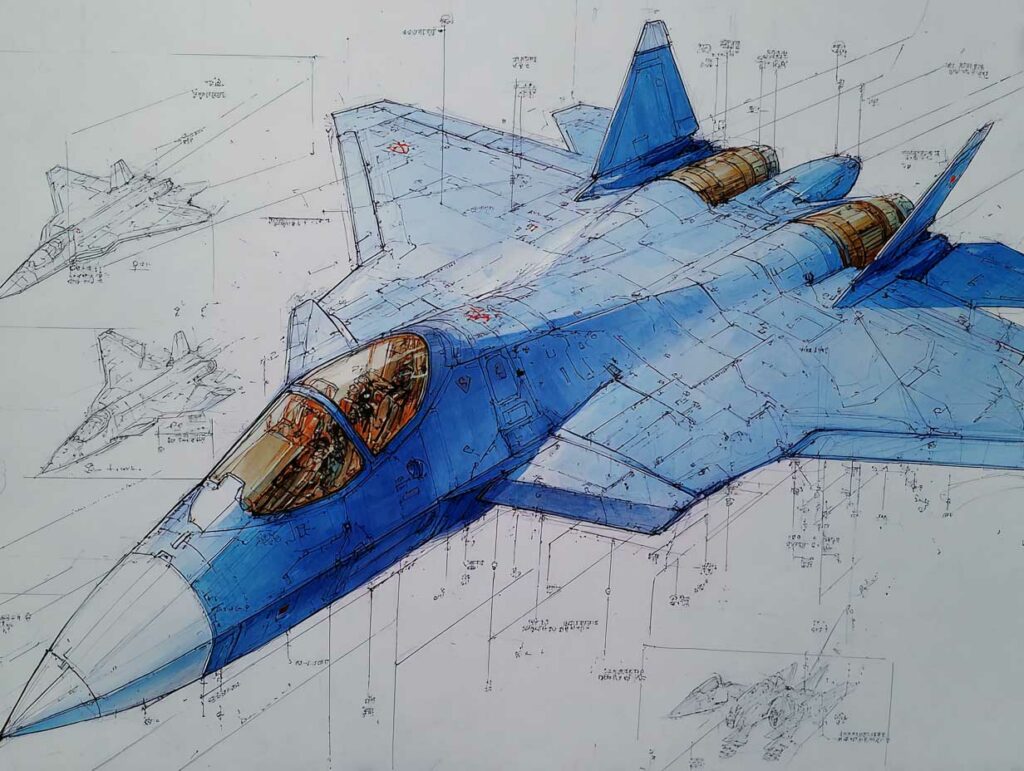
At the center stood the Next Generation Fighter, or NGF. This was the future manned aircraft. Operating around it were to be accompanying drones, called Remote Carriers, a combat cloud, advanced sensors, electronic warfare systems, artificial intelligence, secure data links, and digital architectures capable of connecting aircraft, drones, ships, satellites, and ground forces.
The program was launched politically in 2017 by France and Germany. Spain joined in 2019. The initial objective targeted an entry into service around 2040. This timeline subsequently slipped to 2045, and then sometimes to 2050 in certain analyses. This drift was not merely technical. It revealed a deeper difficulty: the states did not have the same requirements, and the industrialists did not want to lose control of their critical skills.
France wanted an aircraft compatible with its airborne nuclear deterrent and with its future aircraft carrier. Germany did not have the same constraints. Spain wanted to secure a real industrial share. Dassault Aviation wanted to be the prime contractor for the combat aircraft, by virtue of its experience with the Rafale, Mirage 2000, and nEUROn. Airbus Defence and Space, representing German and Spanish industry, refused to remain in a secondary position. The disagreement was therefore not anecdotal. It touched the very core of the project: who commands, who designs, who owns the technology, and who bills the subsequent decades.
The Bill Already Committed by States
The directly identifiable public cost begins with the joint concept study contract. In February 2019, France and Germany awarded Dassault Aviation and Airbus Defence and Space a €65 million Joint Concept Study. This first step was intended to translate operational needs into possible architectures. It had to define the main outlines of the future system: aircraft dimensions, drone types, data volume, sensor requirements, communication logic, and mission architecture.
The next phase, known as Phase 1A, was launched in 2020. It represented €155 million, funded equally by France and Germany, or €77.5 million each. It covered eighteen months of research and technology. The sums were divided among several pillars: approximately €90 million for the combat aircraft, €18 million for the engine, €20 million for the Remote Carriers, and €15 million for the combat cloud.
The real change in scale arrived in December 2022 with Phase 1B. This contract represented €3.2 billion. It covered approximately three and a half years of work on the demonstrator and its components. The prime contractors and co-contractors included Dassault Aviation, Airbus, Indra, Eumet, and several industrial partners across the three countries. Spain participated with a 33% share in the program’s technological developments. Indra announced at the time more than €600 million in contracts for its scope over three years.
Based on these public figures, the minimum committed bill reached €3.42 billion for the main joint steps: 65 million, then 155 million, then 3.2 billion. This total must be read with caution. In armaments programs, a contractual amount is not always an immediate full disbursement. States commit budgetary authorizations, then pay progressively according to progress, deliverables, technical milestones, and administrative validations. But by mid-2026, Phase 1B was approaching its contractual end. A significant portion of the credits had therefore logically already been consumed or legally committed.
The Financial Loss Beyond the Billions Spent
Discussing financial loss requires distinguishing three levels. The first is the direct budgetary cost. This is the public money paid or committed in contracts. The second is the opportunity cost. This is the lost time, the accumulated delays, and the alternative solutions that will now have to be funded. The third is the industrial cost. It concerns skills, jobs, subcontracting chains, and future market shares.
The direct loss is the most visible. States paid for studies, architectures, and developments that do not lead, at this stage, to a common aircraft. No complete demonstrator of the Next Generation Fighter has flown. No solid industrial schedule is validated. No stable sharing of responsibilities survived the conflict between Dassault Aviation and Airbus. For a program estimated at around €100 billion over its total duration, the amount already committed may seem limited. But the problem is not the proportion. The problem is the absence of the central result: the aircraft.
The opportunity loss is more severe. Since 2017, China has continued the development of the J-20 and is working on new generations of aerial systems. The United States has advanced the NGAD, the F-47, the Collaborative Combat Aircraft, and distributed combat architectures. The United Kingdom, Italy, and Japan have consolidated the Global Combat Air Programme. Meanwhile, FCAS consumed years of negotiation over governance.
The industrial loss is more ambiguous. Research offices did not work in a vacuum. They matured technologies, tested concepts, consolidated teams, produced knowledge, and prepared building blocks that can be reused. But these gains do not replace a joint program. They become fragments usable in national or alternative projects. This is useful, but it was not the initial objective.
The Budgetary Mechanism Protecting Industrialists First
A program like FCAS operates according to a logic very different from a traditional purchase. States do not order a finished aircraft. They fund studies and developments. Industrialists are remunerated to produce deliverables: concepts, architectures, simulations, feasibility studies, technology maturation work, partial demonstrators, digital tools, testbeds, and technical files.
This means one simple thing: if the program is halted after several phases, industrialists do not automatically refund the sums received, barring contractual fault or specific clauses. They were paid for work performed. If the deliverables were accepted, the payment remains acquired. The question is therefore not: did the companies make money despite the failure? The answer is yes, in terms of revenue. The real question is: did they earn as much as they would have with a program going all the way to production? The answer is no.
The upstream phases of an armaments program are often less profitable than serial production, maintenance, modernizations, and exports. They fund engineers, infrastructure, testing, software, subcontractors, and overheads. They may incorporate a margin, but they do not create the long-term profits associated with a fleet of several hundred aircraft. The real money, in a combat aircraft, arrives with production runs, parts, engines, software evolutions, training, support, and upgrades over forty years.
Industrialists have therefore earned revenues, not necessarily a windfall annuity. Dassault Aviation, Airbus Defence and Space, Indra, Safran, MTU Aero Engines, MBDA, Thales, Hensoldt, GMV, Sener, ITP Aero, and other players benefited from contracts, funded work, and accumulated skills. But they also lose the perspective of a giant joint program. The nuance is important. The taxpayer pays for the political risk. The industrialist pockets the money for work completed. But the industrialist also loses the industrial trajectory if the program disappears.
Companies Leaving Weakened but Not as Losers
It would be too easy to write that industrialists profited from a failure paid for by states. This would be partially true, but insufficient. Dassault, Airbus, and Indra do not emerge ruined from FCAS. They emerge with revenues, skills, and options. But they also emerge with a damaged image.
Dassault Aviation can argue that it defended a clear prime contractor logic. The French company believes that a combat aircraft cannot be designed as a permanent compromise between multiple decision centers. Its argument is strong. The Rafale was developed within a national framework. It was criticized for a long time, then it became an export success. Dassault can therefore defend the idea that a combat aircraft program requires a single technical authority.
Airbus, for its part, can say that a program funded by three states cannot place German and Spanish industry in a position of de facto subcontracting. The company represents thousands of jobs, skills on the Eurofighter, drones, systems, sensors, digital architectures, and major European programs. It wanted a more balanced share of governance, intellectual property, and workload.
Indra is in a different situation. Spain had obtained a stronger position than in past major programs. Indra coordinated Spanish participation and led the sensors pillar. The end of FCAS in its initial form therefore has a direct impact on its trajectory. The stock market reaction observed after the announcement shows that the market perceived a loss of potential, even if the work already completed remains valuable. For Madrid, the problem is twofold: not losing the skills gained and staying in the race for the future European air combat system.
Intellectual Property Transforming the Bill into a Battlefield
The question of intellectual property is central. It explains why the industrial conflict became insolvable. In a combat aircraft, the most sensitive technologies are not just the wings, the engine, or the cockpit. They reside in the flight control laws, stealth, avionics architecture, computers, mission software, sensors, data fusion, electronic warfare, and weapon integration.
Dassault refused an organization that could have led to sharing secrets derived from decades of French programs. Airbus refused an organization that would have limited its role to participation without control. The states, for their part, wanted a joint program without always accepting the logical consequence: a true sharing of sovereignty also supposes a true sharing of sensitive technologies. Yet that is precisely what industrialists did not want at the same level.
This is where the financial loss becomes a political loss. States paid to organize a cooperation they failed to govern. They funded teams but did not impose a sufficiently solid decision architecture. They asked competitors to build an aircraft together that was also to determine their industrial weight for fifty years. This was not just ambitious. It was almost contradictory.
States Bearing the Real Loss
The main burden remains public. States funded the program. They will also have to fund the alternatives. France will have to extend and modernize the Rafale longer, while preparing a national or reorganized solution. Germany will have to choose between additional F-35s, a modernized Eurofighter, participation in GCAP, or a new Airbus-led project. Spain will have to preserve its industrial base, manage its Eurofighter fleet, and progressively replace its F/A-18s.
The loss is therefore measured in double spending. Credits already committed to FCAS cannot simply be recovered. Future credits will have to fund something else. If France launches a national aircraft, the bill could reach tens of billions of euros. Eric Trappier mentioned the possibility of developing an autonomous aircraft for less than €50 billion. Even if this figure were met, it would represent a heavy burden for a single state.
Germany could choose another route. It can buy American, join an existing program, or support a solution led by Airbus and other European industrialists. But no option is free. Buying F-35s reduces certain technical risks but increases dependence on the United States. Joining GCAP imposes a political and industrial negotiation with the United Kingdom, Italy, and Japan. Creating a new European program starts a portion of the discussions over from the beginning.
Spain, finally, has already launched national work around the Siagen program, with a €700 million contract awarded to Airbus and Indra for technologies usable in a future sixth-generation system. This is not full compensation. It is a way of not losing the accumulated skills.
The Hidden Cost of Lost Time
The heaviest cost does not appear in annual accounts. It relates to the schedule. A combat aircraft is not developed in five years. The United States, China, the United Kingdom, Japan, and Italy are already moving forward on their own architectures. Continental Europe, meanwhile, risks losing a decade.
FCAS was intended to prepare a capability between 2040 and 2050. If the program is relaunched in another form, studies will have to be resumed, responsibilities renegotiated, budgets revoted, and architectures revised. Industrialists will not start from scratch, but they will not start from a solid agreement either. The lost time can shift the entry into service of an entire generation.
This delay can also affect exports. The Rafale remains high-performing. The Eurofighter remains modernizable. But international customers are already looking at connected combat systems, accompanying drones, stealth, electronic warfare, and distributed command capabilities. If Europe does not have a credible sixth-generation offering by the 2040-2045 horizon, market shares will go elsewhere. The F-35 will remain dominant in part of NATO. GCAP could become the most credible European option outside France and Germany. South Korean, American, or Turkish solutions could also capture markets.
The hidden cost is therefore strategic. It is not just about having paid for studies. It is about having weakened European credibility in a sector where trust is built over decades.
The Real Financial Balance Sheet for Dassault, Airbus, and Indra
Did companies make money despite the cancellation? Yes, in a specific sense. They collected or secured public contracts for research and technology work. They funded teams, increased skills, and consolidated national positions. Indra announced more than €600 million in contracts for Phase 1B. Airbus and Dassault were at the center of the initial contracts. Safran, MTU, MBDA, and Thales also benefited from work on the pillars.
But confusion must be avoided. Revenue is not profit. The exact margins of the FCAS contracts are not published in detail. Upstream defense contracts can be remunerative, but they also absorb a lot of skilled labor. They can cover expenses, fund technologies, and sustain skills, without generating the margins of a program in production.
The real gain for companies lies perhaps elsewhere. They acquired know-how funded by public money. They tested power dynamics. They now know which political and industrial red lines cannot be crossed. Dassault emerges with a reinforced position in France: if Paris wants a future sovereign combat aircraft, it has no other credible prime contractor. Airbus emerges with a political base in Germany and Spain to defend an alternative solution. Indra emerges as an indispensable Spanish pivot, even if the failure of FCAS reduces its immediate prospects.
The most obvious loser is therefore the European taxpayer. He funded useful work, but he does not get the primary object. He will also pay for what follows.
FCAS as a Brutal Lesson on European Cooperation
FCAS did not fail because European engineers lack talent. It failed because political, military, and industrial interests were not aligned. France wanted to preserve its nuclear, naval aviation, and industrial sovereignty. Germany wanted a balanced participation and protection of its industrial fabric. Spain wanted a place equal to the other two. Dassault wanted to lead the aircraft. Airbus wanted to avoid being reduced to the role of a secondary partner. Each position had its logic. Their addition rendered the program almost ungovernable.
The financial loss of FCAS must therefore be read without hypocrisy. The billions committed are not totally destroyed. They produced studies, skills, and technologies. But they did not produce the expected strategic effect. No joint aircraft is on the way. No flying demonstrator validates the European choice. No stable industrial model allows for a serene transition to the next phase.
The most serious issue is not that companies were paid. In a military program, that is normal. The most serious issue is that states paid without succeeding in imposing a decision. That is where the failure lies. A defense program cannot be merely an addition of national industrial returns. It must have an authority, a clear need, a doctrine of employment, governance, and contractual discipline.
FCAS leaves a bill. It exceeds the €3.42 billion already committed to the main public phases. It also includes lost years, postponed trade-offs, and damaged credibility. The industrialists, for their part, will continue. Dassault, Airbus, Indra, Safran, MTU, MBDA, and Thales will find other contracts, other alliances, other demonstrators. States will have to answer a more difficult question: how can one claim to build a European defense if the program meant to embody it shatters on the first real industrial decision?
War Wings Daily is an independant magazine.