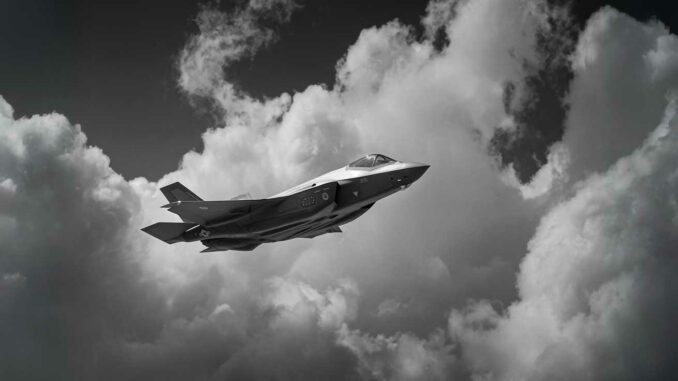
From Denmark to Canada, the F-35 is structuring NATO’s northern air defense, at the cost of growing American dependence and expensive MRO.
Executive Summary
The F-35 is rapidly becoming the backbone of airpower along NATO’s northern flank. Norway already operates its 52 F-35As. Denmark is completing deliveries of its initial 27 aircraft and expanding its fleet to 43. Finland is beginning to receive its 64 F-35As. The United Kingdom operates primarily F-35Bs but will add at least 12 F-35As. Canada, which has ordered 88, will receive its first jets in the U.S. in 2026 before their arrival on home soil in 2028. This concentration creates unprecedented interoperability around shared sensors, software, weapons, tactics, and data links. It also facilitates dispersed operations across the Arctic. Yet this standardization comes with a trade-off: what Europe gains in interoperability, it surrenders in strategic autonomy. Global sustainment, software updates, mission data, and core maintenance remain tightly bound to the American F-35 ecosystem.
The F-35 Is Progressively Becoming the Common Language of the North
It would be an overstatement to speak of a completely seamless F-35 fleet across Northern Europe. However, the strategic trajectory is no longer in doubt.
Norway completed deliveries of its 52 F-35As in April 2025. Denmark ordered 27 aircraft and decided in October 2025 to procure 16 more, bringing its planned fleet to 43 units. The final aircraft from its initial batch are slated for delivery in 2026, with full operational capability targeted for 2027.
Finland represents the third Nordic pillar of this standardization. Helsinki ordered 64 F-35As. Its first aircraft was delivered to Ebbing Air National Guard Base, Arkansas, in January 2026 to initiate pilot and maintenance training. The first jets are scheduled to arrive at Rovaniemi Air Base, Finland, late in 2026.
The United Kingdom presents a distinct case. The Royal Air Force and Royal Navy primarily fly the short takeoff and vertical landing F-35B, essential for carrier operations aboard the Queen Elizabeth class. However, London announced in June 2025 the procurement of at least 12 F-35As, a lower-cost variant intended in part to rejoin NATO’s dual-capable aircraft nuclear mission. The British government estimates these F-35As will cost up to 25% less per unit than the F-35Bs they replace in the upcoming procurement lot.
Canada completes this transatlantic axis with 88 CF-35As. The first airframes are expected in 2026 at Luke Air Force Base, Arizona, for training. The first Canadian-based F-35 is not scheduled to land in Canada until 2028, with initial operational capability projected between 2029 and 2030.
Standardization is not yet total. Yet from the North Sea to the Canadian Arctic, the center of gravity has unambiguously shifted to a single aircraft family.
The Sensor Network Matters More Than the Fighter Count
The primary military utility of the F-35 does not rest solely on its low observability.
The platform integrates an AESA radar, electro-optical targeting, distributed infrared sensors, electronic warfare suites, and signals intelligence capabilities. Fusion software combines these streams to present the pilot with a single, consolidated picture of the battlespace.
This architecture changes scale when multiple F-35s operate in concert.
The Multifunction Advanced Data Link (MADL) allows F-35s to exchange high-bandwidth tactical data with a low probability of intercept and detection. Simultaneously, Link 16 enables data sharing with a broader array of legacy NATO platforms. A Norwegian F-35 can thus feed tactical track data directly into a shared picture used by other F-35s, command centers, AWACS aircraft, or Link 16-compatible legacy fighters.
This should not be mistaken for effortless, universal interoperability. MADL is optimized specifically for F-35-to-F-35 communications. Link 16 operates under distinct throughput, emission security, and classification constraints. Tactical gateways remain necessary to bridge different networks.
Nevertheless, fielding hundreds of aircraft built around uniform standards drastically simplifies the operational challenge.
Nordic Exercises Translate Standardization into Real Capability
The benefits of this standardization are already visible in NATO exercises.
Ramstein Flag 2026 mobilized over 200 aircraft from 18 nations across more than 20 European operating sites. Danish, Norwegian, Italian, and American F-35s operated concurrently over Northern Europe. The exercise specifically tested the Alliance’s capacity to conduct complex air operations from distributed bases.
Denmark used the exercise to deploy F-35s to northern Norway utilizing a new containerized command facility. This transportable infrastructure enables mission planning and support from forward locations while maintaining a secure computing environment compliant with F-35 program security requirements. Danish forces validated this capability during the June 2026 maneuvers.
This logistical detail is critical.
In a conflict with Russia, NATO cannot assume its major airbases will remain unmolested. Master bases like Ørland in Norway, Skrydstrup in Denmark, or Rovaniemi in Finland would be primary targets for long-range missile strikes.
The operational imperative is Agile Combat Employment (ACE): dispersing aircraft, fuel, munitions, maintainers, and command nodes across multiple secondary sites, then shifting locations rapidly.
In this context, the F-35 functions less as a national asset tied to a home base and more as a node within a regional combat network.
The Arctic Gives This Convergence Strategic Dimension
This operational integration coincides with NATO’s command reorganization in the High North.
In February 2026, the Alliance launched Arctic Sentry to better coordinate Allied military activities across the region. Since December 2025, Joint Force Command Norfolk’s area of responsibility has formally included Denmark, Finland, and Sweden, alongside Iceland, Norway, and the United Kingdom. Additionally, a new Combined Air Operations Centre opened in Bodø, Norway, in October 2025.
Geography dictates the necessity of F-35 standardization.
The High North features vast distances, sparse basing options, and harsh weather that complicates logistics. Nearby, Russian forces maintain dense concentrations of airbases, surface-to-air missile networks, long-range strike assets, strategic bombers, and naval infrastructure associated with the Northern Fleet.
In this environment, sharing a track quickly is as vital as launching a weapon.
An F-35 that detects an airborne threat, radar emitter, or air defense site does not need to engage it directly. That track data can be fed into a broader command system, allowing another platform to execute the strike.
The combat power resides in the network.
Standardization Extends to Weapons and Maintenance
The operational dividend extends beyond tactical data.
Nations operating the F-35 can pool training regimes, technical procedures, simulation suites, spare parts inventories, and specialized ground support equipment. They are also standardizing common weapon inventories, such as the AIM-120 AMRAAM.
Norway offers a notable example of maintaining national industrial capability within this standard framework. In partnership with Kongsberg, Norway developed the Joint Strike Missile (JSM), designed for internal carriage within the F-35A’s weapons bay to preserve low observability. Oslo began taking delivery of operational missiles in 2025, and the United States, Australia, and Japan have since selected the JSM for their fleets.
The F-35 demonstrates an ability to standardize airframes while creating opportunities for local defense industries.
Yet the structural limitation remains: the platform is an American system at its core.
ALIS-ODIN Highlights the F-35’s Invisible Dependence
Dependence extends far beyond physical spare parts.
The F-35 was designed around a centralized digital architecture that manages fleet configurations, maintenance tracking, spare parts availability, fault diagnostics, and mission planning.
Initially designated the Autonomic Logistics Information System (ALIS), technical performance issues and a cumbersome architecture led the U.S. Department of Defense to initiate a transition to the Operational Data Integrated Network (ODIN).
However, this transition is far less instantaneous than its rebranding implies. ODIN is not a drop-in replacement for ALIS. It represents a hybrid approach combining scaled-down hardware, updated cloud infrastructure, and the gradual migration of legacy software applications. The Department of Defense continues to refine this system and establish metrics to measure its operational effectiveness.
This is where sovereignty concerns emerge.
A modern fighter fleet relies on more than airframes, engines, and mechanics; it is fundamentally tethered to software code, technical data packages, continuous software updates, and digital libraries.
The U.S. Government Accountability Office (GAO) noted that even the U.S. government lacks full data rights to certain proprietary software and technical packages owned by Lockheed Martin, as acquiring all software rights for ALIS was deemed cost-prohibitive.
For European operators, this creates a structural dependency.
Mission Data Files Remain a Strategic Chokepoint
This dependency is particularly acute regarding Mission Data Files (MDFs).
These files are not basic digital maps; they are complex threat libraries that enable the F-35’s avionics to identify, categorize, and prioritize threat radars, surface-to-air missile systems, aircraft, and electromagnetic emissions.
The fidelity of these libraries directly impacts a pilot’s situational awareness and survivability.
Partner nations have sought greater control over this process. In October 2024, Canada joined the Australia Canada United Kingdom Reprogramming Laboratory (ACURL) at Eglin Air Force Base, Florida, which develops and updates mission data for participating international users.
While ACURL grants member nations a higher degree of national input, it highlights the overarching reality: even multinational reprogramming efforts remain embedded within the U.S. F-35 technology ecosystem.
Sovereignty is neither completely lost nor fully retained.
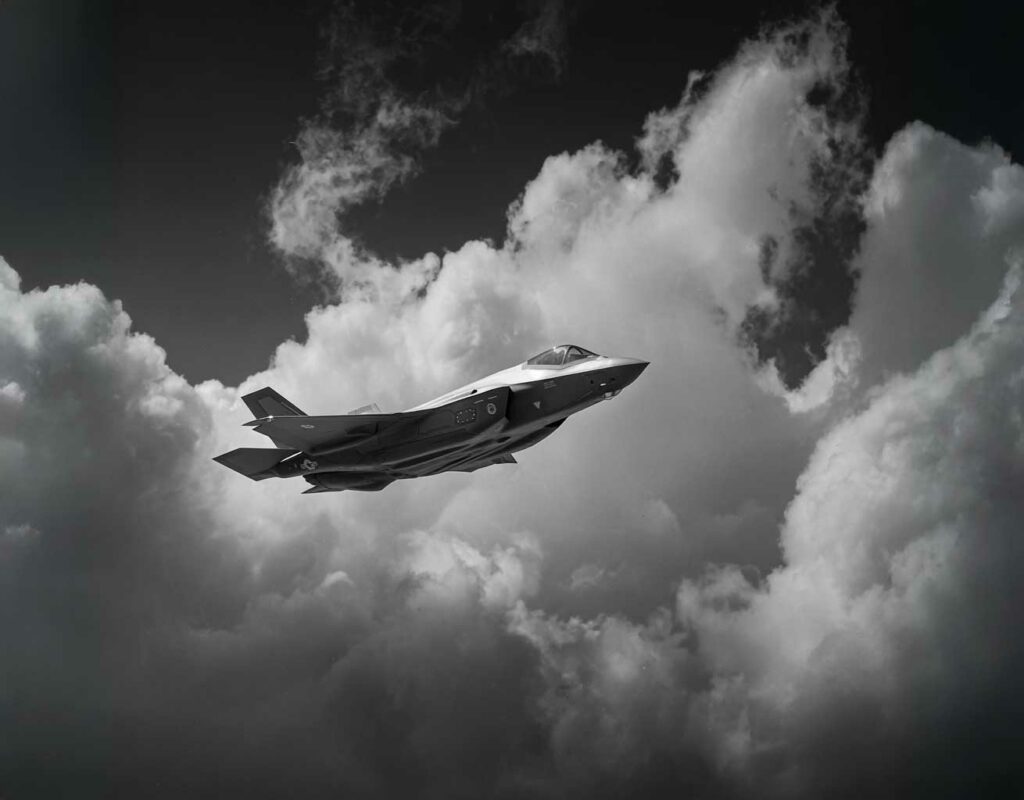
MRO Costs Remain the Achilles’ Heel of the F-35 Model
The most immediate challenge for operators remains financial.
U.S. sustainment data provides the clearer indicator of the cost trajectory facing European fleets as their airframes mature.
In June 2026, the GAO estimated total U.S. lifecycle sustainment costs for the F-35 fleet at roughly $1.6 trillion. More critically, operational availability declined despite heavy spending. Between fiscal years 2021 and 2025, the U.S. fleet’s mission capable rate—the proportion of aircraft able to perform at least one assigned mission—dropped from 67% to 44%. The full mission capable rate fell from 38% to 25%.
In response, the Joint Program Office launched the Global Support Solution Reset, an initiative requiring an estimated $13.7 billion in funding beyond previously projected sustainment baselines through 2031.
For fiscal year 2026, total U.S. F-35 sustainment requirements were estimated at approximately $9.8 billion, with identified funding falling more than $2 billion short. The GAO further projected that U.S. services could face annual funding gaps exceeding $1 billion between actual F-35 sustainment costs and service affordability targets by the mid-2030s.
These figures cannot be applied directly to smaller fleets like Denmark’s or Norway’s, as U.S. metrics reflect a vastly larger inventory split across three distinct variants.
Nevertheless, they underscore a persistent reality: the initial flyaway cost is only a fraction of the total ownership cost.
A Global Supply Chain Creates Shared Efficiency—and Shared Vulnerability
The program’s maintenance concept relies heavily on a Global Support Solution.
Rather than each operator establishing fully redundant national supply chains and depot-level repair capabilities, spare parts and specialized maintenance are distributed across a global network. In theory, this minimizes excess inventory and leverages the economies of scale of a global fleet exceeding 1,000 aircraft.
Yet a shared network introduces shared vulnerabilities.
GAO reporting in 2026 continues to cite spare parts shortages and limited depot repair capacity as primary drivers of low aircraft availability. As part of its operational recovery strategy, the Joint Program Office must secure over $7 billion in additional spare parts and materiel support from industry.
Nordic operators are actively working to mitigate these supply chain risks.
Norway constructed a dedicated F-35 maintenance facility at Rygge to build out domestic repair capacity. Finland negotiated extensive local industrial participation, establishing domestic maintenance capabilities for critical systems as part of its procurement package. Canada is working with L3Harris MAS to explore the establishment of a national maintenance, repair, and overhaul depot.
The trend is clear: nations procure the American standard for its operational capabilities, then invest heavily at home to secure enough domestic maintenance autonomy to prevent supply chain bottlenecks from becoming operational vulnerabilities.
The Northern Flank Gains Common Power, but Accepts a Strategic Bet
The F-35 is accomplishing what decades of European defense initiatives struggled to realize: a common technological baseline spanning multiple air forces across vast geographical distances.
Norwegian, Danish, Finnish, British, Canadian, and American forces can seamlessly share tactics, training infrastructure, tactical data, munitions, and forward operating sites.
For NATO, the operational gain along its northern border is substantial.
Yet “standardization” carries distinct political and industrial costs.
A disruption in the global spare parts supply chain, a delay in U.S. software delivery, a supply issue with the Pratt & Whitney F135 engine, or a delay in the Block 4 modernization package simultaneously impacts multiple air forces that rely on the same technology stack. The uniformity that streamlines coalition operations can also concentrate systemic risk.
The F-35 provides NATO’s northern flank with unprecedented military coherence. The critical test in the coming years will not be whether these nations can fly together in peacetime, but whether they can keep their fleets available, reprogrammed, armed, and repaired during a sustained high-intensity conflict.
It is then that Europe will discover whether the F-35 is merely its most effective tool for coalition interoperability—or a dependency from which it cannot disengage.
War Wings Daily is an independant magazine.