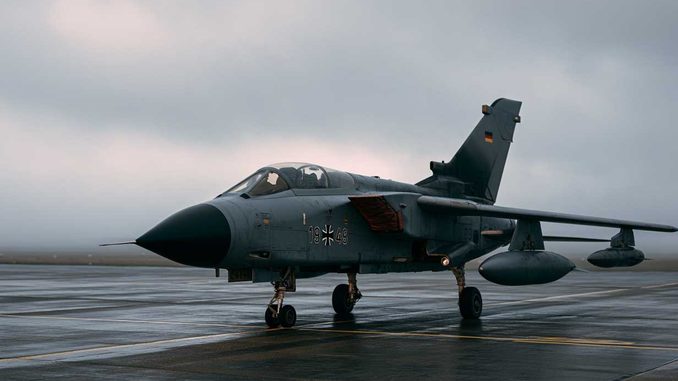
Germany is modernizing its Luftwaffe, but spare parts, maintenance, and logistics remain critical. The F-35 mitigates certain risks while creating new ones.
Summary
The low operational readiness of the German Luftwaffe is no myth, though it must be properly dated and accurately measured. In 2017, out of 128 Eurofighters, 81 were considered available to frontline units, and only 39 Eurofighters were actually mission-ready for training or operational deployment. For the Tornado fleet, 26 Tornados were ready out of 63 available, from a total force of 93 aircraft. The root causes were clearly identified: missing spare parts, extended maintenance cycles, aging airframes, and a shortage of technical personnel. Eurofighter readiness subsequently improved significantly, reaching nearly 70% in 2020–2021. The F-35A is now slated to replace the Tornado while avoiding this cycle of unserviceability. Germany has consequently purchased not only 35 aircraft, but also spare parts, weapons, and five years of initial logistical support. The challenge lies in the fact that the F-35 relies on a highly strained global supply chain. Germany’s gamble, therefore, rests as much on sustainment as it does on the airframe itself.
The Availability Crisis That Defined the Luftwaffe
The statistic that permanently marked the public defense debate in Germany dates to 2017. The official report from the Bundesministerium der Verteidigung listed 128 Eurofighters. On average, 81 were in the “Verfügungsbestand”—meaning actively available to the operational forces after excluding aircraft undergoing heavy maintenance, upgrades, or flight testing. Of those 81 aircraft, only 39 were combat-ready. That represented 48% of the available pool, but just 30% of the total physical fleet.
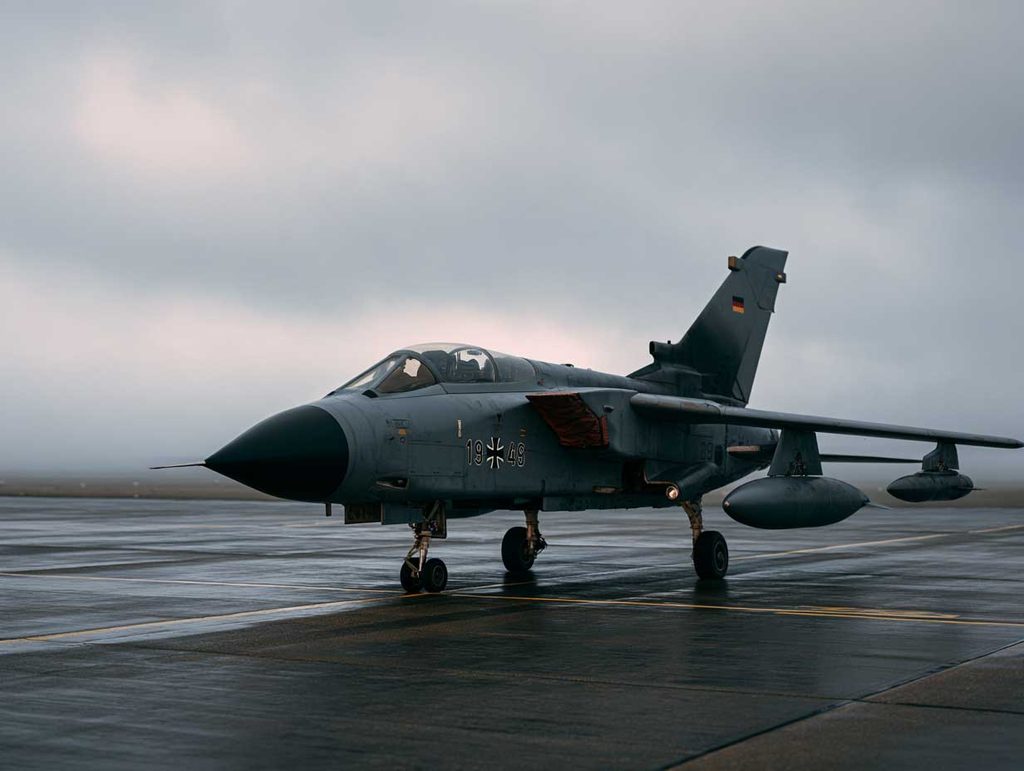
The situation was even more severe for the Panavia Tornado IDS. Out of 93 total airframes, 63 were available to operational units, and only 26 were fully mission-ready. The official readiness rate stood at 41% of the available inventory, but just 28% of the total fleet. This distinction matters: stating that less than one-third of the total force was mission-ready is accurate using that denominator, though it was not how the Bundeswehr officially calculated its readiness metrics.
Spare Parts and Maintenance at the Heart of the Crisis
The 2017 defense report left little room for doubt. For the Tornado, low availability stemmed directly from severe component shortages, airframe aging, elevated failure rates, and a lack of qualified technicians. For the Eurofighter fleet, prolonged industrial-level maintenance turnarounds and severe spare-parts bottlenecks drastically restricted the number of deployable aircraft.
Crucially, this situation did not remain static. Beginning in 2018, the Luftwaffe and Airbus restructured the sustainment architecture for the Eurofighter Typhoon. By September 2020, the Bundeswehr reported operational readiness approaching 70%. A public report in May 2021 confirmed readiness near 70%, with certain weeks exceeding 75%. The number of Eurofighters grounded specifically due to missing parts had been cut in half since 2019.
Consequently, citing 2017 figures to reflect the current state of the German fleet would be misleading. Detailed readiness metrics for specific weapon systems are now far less frequently made public. Nevertheless, the German experience illustrates an enduring operational reality: a modern combat aircraft is only as effective as the supply chains, spare parts, technical crews, and industrial support contracts backing it up.
Germany’s F-35 Purchase Built Around Integrated Support
Germany explicitly aimed to apply these lessons when procuring the F-35 Lightning II. The Bundeswehr is acquiring 35 F-35A fighters as part of a package valued at nearly €10 billion. The contract extends beyond the physical aircraft to include full weapons suites, spare parts inventories, and five years of comprehensive support and maintenance. The Bundeswehr highlighted that it had not purchased such an integrated support setup since the introduction of the F-4 Phantom.
The delivery timeline is now actively underway. The first German F-35A, serial 35+01, completed its maiden flight on September 8, 2026, and was officially handed over to Germany on September 18 at Fort Worth, Texas. Initial aircraft will remain in the United States at Ebbing Air National Guard Base in Arkansas for pilot and technician training. First deliveries to Büchel Air Base are scheduled for 2027, ahead of the Tornado’s complete retirement planned for 2030.
The F-35 Does Not Automatically Eliminate Readiness Risks
This is where the transition becomes more complex. While the F-35 is vastly more modern than the Tornado, its sustainment model is extraordinarily complex. The U.S. Government Accountability Office (GAO) reported that in Fiscal Year 2025, the “mission capable” rate of the U.S. F-35 fleet dropped to 44.1%. The “full mission capable” rate—which measures an aircraft’s ability to perform all assigned mission profiles—stood at just 24.6%.
These figures cannot be directly compared to German statistics from 2017 due to differing definitions, fleet compositions, and accounting methods. However, they demonstrate that a fifth-generation fighter does not automatically guarantee high operational availability. The GAO highlighted severe parts shortages, insufficient depot capacity, and heavy reliance on contractor support. Between 2021 and 2025, the U.S. fleet’s mission-capable rate fell from 66.8% to 44.1%.
By adopting the F-35, Germany joins this worldwide sustainment framework. A federal government response to the Bundestag confirmed that engines and power modules for German F-35s will be maintained under the global Global Support Solution (GSS) architecture. The nature of the risk thus shifts: with the Tornado, Berlin was managing the obsolescence of a legacy aircraft with a shrinking industrial footprint. With the F-35, Germany becomes reliant on a far broader international network that must simultaneously prioritize hundreds of aircraft operated across multiple allied air forces.
Infrastructure at Büchel as an Operational Prerequisite
F-35 fleet availability will equally depend on ground infrastructure. The F-35 Campus at Büchel must house maintenance hangars, specialized wash facilities, spare parts depots, and mission planning facilities. The Bundeswehr aims to have this infrastructure operational by November 2026, prior to the arrival of the first airframes on German soil in 2027.
This infrastructure effort is critical. The F-35’s stealth coatings, cybersecurity protocols, mission planning systems, and specialized support equipment demand dedicated, highly controlled facilities. An undamaged aircraft will remain grounded if specialized tools, parts, software updates, or qualified technicians are unavailable—a primary lesson the Luftwaffe learned through its experience with the Tornado and Eurofighter.
The Ultimate Test: Logistics Over Technology
The F-35 will deliver a step-change in stealth capabilities, sensor fusion, and NATO interoperability for the Luftwaffe. However, its real-world impact will depend on a far more practical metric: how many aircraft can be generated daily in the proper mission configuration, with updated software and full ordnance suites.
Germany took an important precautionary step by procuring initial spare parts packages and multiple years of integrated support from the outset—a direct response to past fleet management shortfalls. Yet the ongoing readiness challenges documented in the United States demonstrate that support contracts alone cannot fully eliminate industrial supply bottlenecks or depot repair backlogs.
Ultimately, while the F-35 will significantly enhance Germany’s air combat capabilities, it does not automatically solve the Luftwaffe’s historical fleet availability challenges. Success will be measured less by the total number of F-35s acquired than by the number of aircraft fully mission-ready when called upon.