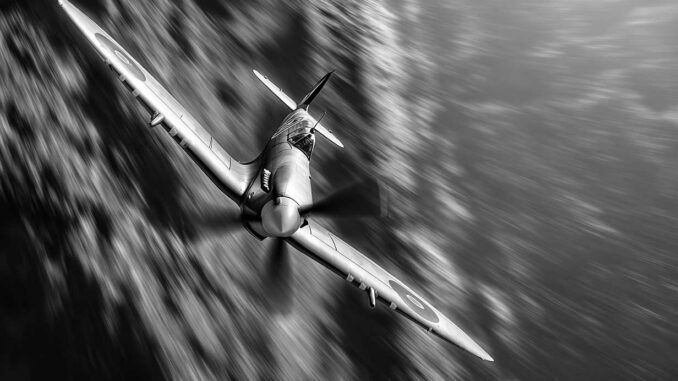
The Spitfire came to embody British victory. Yet, it was the more numerous and robust Hurricane that destroyed the majority of German aircraft.
In Summary
The Supermarine Spitfire remains the dominant image of the Battle of Britain. Its silhouette, speed, and elliptical wings made it the symbol of British resistance. However, the Hawker Hurricane formed the bulk of the fighter force deployed by the Royal Air Force. Commonly cited historical records attribute more than 60% of German losses inflicted during the campaign to the Hurricane. It was slower than the Spitfire, but more numerous, stable as a gun platform, relatively simple to maintain, and often easier to repair. It frequently attacked bomber formations while Spitfires attempted to contain the Messerschmitt Bf 109s. This division of labor, however, was never quite so clear-cut in the chaos of combat. The Hurricane did not win the battle alone, nor did the Spitfire. The British victory was the result of a complete system linking aircraft, radar, command centers, observers, mechanics, pilots, and industrial capacity.
The Myth of the Spitfire Eventually Erased the Reality of Combat
In popular memory, the Battle of Britain is often reduced to a simple scene: a handful of Supermarine Spitfires appear above the white cliffs of Dover, confronting a superior German force. Their victory saves the United Kingdom from invasion.
This image is powerful, but it is incomplete.
The Battle of Britain, officially fought from July 10 to October 31, 1940, was not won by a single type of aircraft. It was not even won by fighter pilots alone. British success rested on an integrated air defense organization, sustained industrial production, and the ability to replace damaged aircraft.
The Spitfire occupied an essential place in this system, but it was not the most numerous component. During the campaign, RAF Fighter Command deployed approximately 32 Hurricane squadrons compared to 19 Spitfire squadrons. While these numbers fluctuated based on dates, losses, re-equipment, and unit transfers, the trend remains undeniable: the Hurricane provided the mass.
The Imperial War Museums estimates that the Hurricane was responsible for more than 60% of German losses during the battle. The Royal Air Force Museum goes further, indicating that Hurricanes destroyed more enemy aircraft than all other British air and ground defenses combined.
This statistic is enough to dismantle the idea of a victory achieved by the Spitfire alone. However, it does not prove that the Hurricane was intrinsically superior; it was simply present in greater numbers. It flew more often, encountered more targets, and logically achieved more victories.
Victory Statistics Should Be Read as Estimates
Air combat figures should never be viewed as flawless bookkeeping. Multiple pilots could fire at the same aircraft. German planes reported as destroyed by the RAF sometimes managed to return to base. Conversely, a damaged bomber might crash after leaving the observed area.
British claims were frequently higher than the actual losses recorded by the Luftwaffe. This phenomenon was by no means exceptional; all air forces overestimated their results when multiple fast-paced dogfights occurred simultaneously.
The claim that Hurricanes inflicted roughly 60% of German losses should therefore be understood as a reasonable historical breakdown, rather than a strictly precise tally.
It confirms a more significant reality: the Hurricane did the daily heavy lifting of the campaign. It scrambled in numbers, intercepted raids, attacked bombers, and confronted German fighters whenever the situation demanded it.
The Hurricane Represented a Pragmatic Transition to Modern Fighters
The Hawker Hurricane is sometimes described as an archaic aircraft made of wood, canvas, and metal. This characterization is oversimplified.
The aircraft, designed under the direction of Sydney Camm, combined several techniques. The forward fuselage relied on a metal tubular structure, while the rear section utilized wooden elements and a fabric covering. Early production models also featured fabric-covered wings, which were progressively replaced by metal-skinned versions.
This architecture was derived from methods used on Hawker biplanes of the 1920s and 1930s. It appeared less modern than the Spitfire’s all-metal monocoque structure, yet it offered immediate advantages in wartime.
Ground crews were familiar with these techniques. A punctured fabric section could be repaired quickly if the load-bearing elements, flight controls, or fuel tanks remained untouched. Superficial damage did not always require replacing a large, precision-engineered metal panel.
The Hurricane was also renowned for its stability. This trait made it easier to aim at a bomber, particularly when a pilot needed to keep his gunsight on a target during a brief burst of fire.
However, this robustness should not be mistaken for invulnerability. The fabric skin could burn, the radiator positioned beneath the fuselage was vulnerable, and the liquid-cooled engine could be knocked out by a single leak. Like the Spitfire, a Hurricane could be lost to a few well-placed hits.
Its value came less from absolute resilience than from its tolerance for minor damage and its relative ease of maintenance.
Traditional Design Favored Operational Availability
An air battle is not won solely by maximum speed. It is also won on the dispersal pads, in the workshops, and around ammunition trucks.
A fighter unavailable for repair protects no airfield. An aircraft grounded for several days directly reduces the number of possible interceptions. In this regard, the Hurricane was well-suited to the constraints of 1940.
Its mechanics could quickly access numerous components. Its construction leveraged skills already widespread within the British aviation industry. Local repairs were often simpler than on the complex structure of the Spitfire.
This does not mean that every damaged Hurricane returned to combat the same day. Engines, propellers, landing gear, and spars still required heavy engineering when struck. But the aircraft had been designed with a logic compatible with mass production and maintenance.
During a campaign of attrition, this quality mattered just as much as a few extra dozen kilometers per hour.
The Spitfire Was the Superior Interceptor Against the Messerschmitt
Acknowledging the weight of the Hurricane does not require diminishing the Spitfire, which possessed genuine technical advantages.
The Mk I versions deployed in 1940 could reach approximately 570 to 580 km/h (355 to 360 mph), depending on altitude, propeller type, fuel quality, and engine settings. The Hurricane Mk I, by contrast, operated closer to 510 to 530 km/h (317 to 329 mph).
These figures varied from one aircraft to another. Not all fighters were immediately equipped with constant-speed propellers. The use of high-octane fuel and modifications to the Rolls-Royce Merlin also influenced performance.
The gap remained large enough to yield tactical consequences. The Spitfire could climb, accelerate, and re-engage after an attack with greater ease. It was better positioned to counter the Messerschmitt Bf 109E, the Luftwaffe’s primary escort fighter.
The Bf 109 also possessed distinct advantages. Its direct-injection engine tolerated negative-G maneuvers without the temporary cutouts that plagued the carburetor-fed British engine. It benefited from excellent diving acceleration and an armament that generally included 20 mm cannons on some versions deployed.
The Spitfire countered with its maneuverability, speed, and high-altitude handling. It was therefore logical that controllers and squadron leaders sought to pit it against German fighters.
Spitfire Technology Also Anticipated Future Warfare
The Spitfire possessed another decisive quality: its airframe had superior development potential.
More than 20,000 units were produced between 1937 and 1947. The aircraft evolved from the Mk I to the Mk 24, receiving more powerful engines, modified wings, cannons, new equipment, and various propeller types. Its output rose from roughly 1,000 horsepower in early versions to more than 2,000 horsepower in late models equipped with the Rolls-Royce Griffon.
The Hurricane also underwent numerous upgrades, receiving 20 mm cannons, bombs, rockets, and even twin 40 mm anti-tank guns on certain variants. However, its thicker architecture and aerodynamic drag limited its future as a air superiority fighter.
By 1941, the Spitfire had firmly established itself as the RAF’s primary daylight fighter. The Hurricane transitioned toward ground attack, secondary sector defense, shipborne operations, and theaters where its simplicity remained highly valuable.
Posterity has remembered the aircraft that stayed at the forefront throughout the war. This continuity heavily contributed to the Spitfire’s cultural dominance.
The Division of Mission Profiles Was Logical but Rarely Maintained
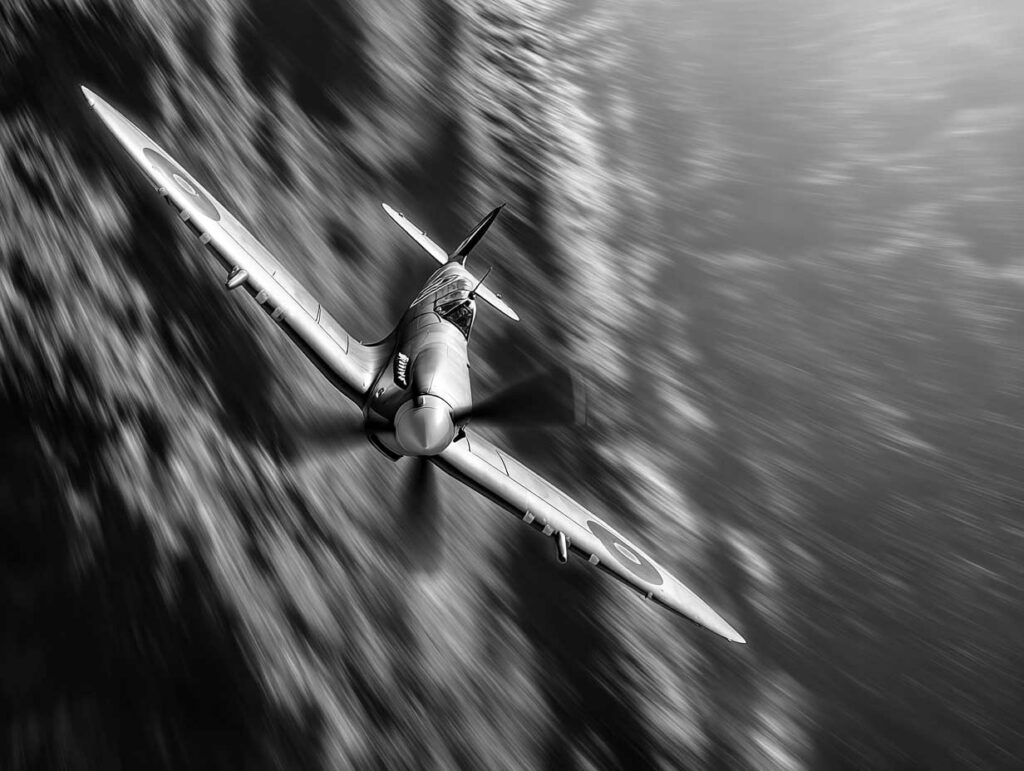
The most widespread formula states that Spitfires attacked German fighters while Hurricanes took care of the bombers. This describes a genuine tactical preference, but it does not accurately depict every engagement.
The RAF wanted to use the Spitfire’s performance against the Bf 109s, intending to let the Hurricanes break through the escort screen to reach the Heinkel He 111s, Dornier Do 17s, and Junkers Ju 88s.
On a staff map, this distribution was rational. In the sky, it quickly broke down.
German raids could span several kilometers. Escort fighters were positioned above, to the sides, or ahead of the bombers. British squadrons arrived at varying altitudes; some were too low, while others were in a position to immediately attack an unintended target.
Once combat began, a Hurricane pilot could not ignore a Bf 109 in front of him on the pretext that the target was meant for the Spitfires. Nor would a Spitfire pilot abandon an unescorted bomber formation if given a clear shot.
The Royal Air Force Museum summarizes this reality clearly: the British believed that Hurricanes could target the bombers while Spitfires fought the fighters. As soon as the battle commenced, the distinction ceased to be so distinct.
Presenting the Hurricane as the exclusive bomber hunter and the Spitfire as the sole adversary of German fighters replaces one legend with another.
Both Fighters Utilized Nearly Identical Armament
Debates surrounding the Spitfire and the Hurricane often overlook an essential point: in 1940, their main versions shared the same basic engine and a comparable armament.
Both aircraft used the Rolls-Royce Merlin, a liquid-cooled V12 engine with a displacement of approximately 27 liters. The primary versions engaged during the battle carried eight 7.7 mm (.303 inch) Browning machine guns.
These weapons possessed a high rate of fire, but their rifle-caliber projectiles had limited destructive power against large twin-engine bombers. A 7.7 mm round caused far less damage than an explosive projectile from a 20 mm cannon.
German bombers were not all “heavily armored” in the strict sense—an expression that can be misleading. Their resilience stemmed from their size, structure, redundant systems, self-sealing fuel tanks on some versions, and multiple defensive gun positions.
A bomber could continue flying after numerous hits if no engine, crew member, fuel tank, spar, or essential circuit was critically damaged.
The concentration of fire therefore became decisive. The machine guns were harmonized so that their trajectories converged at a specific distance ahead of the aircraft. A pilot firing from too far away dispersed his rounds over a large area, whereas a close, properly aligned shot concentrated more energy on an engine, cockpit, or wing root.
The Hurricane featured a thicker wing, which allowed its weapons to be mounted in a configuration favorable to an effective concentration of fire. Its stability made it an excellent gun platform. The Spitfire possessed a thinner, more complex wing, requiring its machine guns to be spaced further apart.
This difference did not automatically turn the Hurricane into a better bomber destroyer. Attack position, range, pilot accuracy, and escort reactions remained far more important variables.
The British Network Decided Where and When Fighters Fought
The true British advantage was neither the Hurricane nor the Spitfire in isolation. It was the Dowding System.
The Chain Home radar network detected incoming German formations approaching the coast. Its range could reach approximately 129 km (80 miles) under favorable conditions. The Royal Observer Corps then tracked the aircraft once they crossed into British airspace.
This information was centralized, verified, and filtered down to groups and then to sector stations. Controllers could then scramble the best-positioned units, providing them with an altitude, vector, and estimated enemy strength.
This organization avoided the need to keep fighters constantly in the air—a practice that would have exhausted pilots, drained fuel, and worn out engines. The system allowed aircraft to remain on the ground until the moment their intervention was required.
The RAF estimates that a German raid could reach its target roughly 20 minutes after detection. It could take up to 16 minutes to scramble fighters and guide them onto an interception flight path. British commanders therefore had only a few minutes to analyze the situation and decide which units to engage.
The Hurricane benefited fully from this network. Its lower speed would have been a greater handicap without early warning. Guided directly toward an interception point, it did not need to patrol aimlessly to find the bombers.
Radar did not win the battle alone; it did not always provide an exact altitude and failed to cover all zones perfectly. But it transformed hundreds of scattered fighters into an organized force.
British Production Prevented the Depletion of Fighter Command
Another common misconception presents the RAF as a force constantly on the verge of running out of aircraft. While the situation was tense, British industry continued to deliver fighters in large quantities.
Between June and October 1940, roughly 2,000 Hurricanes and Spitfires were built. The British generally succeeded in replacing material losses. The most critical shortfall often concerned trained pilots, particularly within the units of No. 11 Group located in southeastern England.
The Hurricane was well-suited to this war economy. It already existed in large numbers before the campaign began, as its production had been launched earlier. Its architecture facilitated the use of existing labor forces and familiar industrial methods.
The Spitfire demanded significantly more labor for certain components. Its elliptical wing was highly efficient but complex to manufacture. The Imperial War Museums highlights that this wing could require roughly three times as many man-hours to produce as that of a mass-produced Messerschmitt Bf 109.
This complexity did not make the Spitfire impossible to build—more than 20,000 were ultimately produced—but it explains why the Hurricane remained indispensable in 1940. The United Kingdom could not afford to wait until its highest-performing fighter was available in sufficient quantities.
In an emergency, available quantity often carries greater value than a theoretical superiority that remains inside the factories.
The Beauty of the Spitfire Shaped a Selective Memory
The glory of the Spitfire does not rest on crude manipulation. It is explained by a combination of technical and cultural qualities.
Its silhouette was instantly recognizable. Its elliptical wing, narrow fuselage, and flowing lines fit the image of a modern fighter. Its name was memorable, and its performance allowed it to be presented as the equal of the Bf 109.
It also embodied the most spectacular aspect of the battle. Fighter-versus-fighter duels command more attention than an attack launched against a bomber formation. The twisting dogfights between Spitfires and Messerschmitts lent themselves better to individual memoirs, posters, and, later, cinema.
The Spitfire continued its career throughout the entire war. Its successive versions saw action in Europe, the Mediterranean, and Asia, and it flew long after 1945. Each new variant reinforced the fame of the name.
The Hurricane followed a different path. It was gradually moved toward missions that were less prestigious in the popular imagination, though often highly dangerous. It attacked armor, escorted convoys, operated from ships, and fought on multiple remote fronts.
Collective memory thus easily confuses the overall duration of the Spitfire’s career with its relative weight during a few critical months of 1940.
Victory Belongs to the System, Not to a Silhouette
The Hurricane deserves greater recognition. It formed the numerical backbone of Fighter Command and claimed the majority of victories credited to British fighters. Its stability, availability, and repairability matched the demands of a battle of attrition.
The Spitfire equally deserves its reputation. Its performance was superior, providing a better counter to the Bf 109, and its developmental potential allowed the RAF to maintain a competitive fighter throughout the war.
Asking which of the two “won” the battle leads to the wrong question. Without the Hurricane, Fighter Command would have lacked the aircraft to absorb the volume of incoming raids. Without the Spitfire, it would have faced far greater difficulties containing German escort fighters.
Without radar, command centers, observers, communications, mechanics, armorers, and factories, neither aircraft would have sufficed.
The distortion lies not in making the Spitfire a symbol, but in allowing that symbol to occupy the entire frame. The Battle of Britain was a collective victory, achieved just as much by the reliable mass of the Hurricane as by the performance of the Spitfire.
War Wings Daily is an independant magazine.